

What Is Sales Intelligence? The Complete Guide for B2B Sales Teams
Read more insights from SUPPLYCO AI → Supplyco Blog AI-powered sales intelligence for industrial manufacturers and distributors.
Sales intelligence is the collection, analysis, and application of data about prospects, customers, and market conditions that helps sales teams identify the right buyers, personalize outreach, and close deals faster. It combines contact data, company firmographics, buyer intent signals, and engagement tracking into actionable insights — replacing guesswork with evidence at every stage of the sales process.
If your sales reps spend more time researching prospects than actually selling to them, you already understand the problem sales intelligence solves. The average B2B salesperson spends only 28% of their week on actual selling, according to Salesforce's State of Sales report. The rest disappears into CRM updates, internal meetings, and manual prospect research. Sales intelligence platforms eliminate that research burden by delivering verified, enriched, real-time data about who to call, when to call them, and what to say.
This isn't a nice-to-have anymore. The global sales intelligence market reached an estimated $3.5 billion to $4.5 billion in 2024 and is growing at roughly 11–13% annually, projected to surpass $8 billion by the early 2030s. For industries with complex sales cycles — particularly manufacturing, industrial equipment, and distribution — the stakes are even higher. When a single deal can take 12 months and involve a dozen decision-makers, having the right intelligence isn't just efficient. It's existential.
Sales intelligence vs. CRM: they solve different problems
One of the most common misconceptions in B2B sales is that a CRM is your sales intelligence. It isn't. A CRM is a system of record — it stores data about interactions that have already happened. Sales intelligence is a system of insight — it finds and enriches the data you need before those interactions begin.
Your CRM tells you that a prospect opened your email last Tuesday. Sales intelligence tells you that the prospect's company just broke ground on a new manufacturing facility, their current equipment supplier lost a major contract, and three engineers at the company have been researching automation solutions for the past six weeks.
The distinction matters because 81% of B2B buyers already have a preferred vendor before they ever reach out to sales, according to the 6sense Buyer Experience Report. If your team only reacts to inbound CRM activity, you're entering the conversation after your competitors have already shaped the buyer's shortlist.
Here's how sales intelligence and CRM systems differ across key dimensions:
The most effective sales organizations use both. Sales intelligence feeds high-quality, enriched leads into the CRM, and the CRM tracks how those leads progress through the pipeline. Think of sales intelligence as the engine that drives new pipeline creation, and the CRM as the dashboard that monitors it.
For industrial and manufacturing companies that rely on ERP systems like SAP or Epicor alongside their CRM, the integration story becomes even more important. The best sales intelligence platforms connect with both your CRM and your operational systems, ensuring that intelligence flows into the tools your team already uses — not another dashboard they'll ignore.
Sales intelligence vs. lead generation: scope and depth
Lead generation and sales intelligence overlap, but they're not the same thing. Lead generation is a single activity — finding potential buyers. Sales intelligence is the broader ecosystem of data and insights that makes every sales activity more effective, from prospecting through negotiation to close.
Think of it this way: lead generation hands your team a list of names. Sales intelligence tells them which names matter, why they matter right now, and how to approach them.
The difference is particularly stark in industries with long sales cycles. In manufacturing, where the average deal takes 6 to 18 months from first contact to close and the full buyer journey can stretch to 379 days, a raw lead list goes stale long before it converts. Sales intelligence keeps that data alive — continuously updating contact information, tracking new intent signals, and flagging changes in the account that create openings for outreach.
The four core components of sales intelligence
Sales intelligence platforms aggregate data from dozens of sources into four primary categories. Each serves a distinct purpose in the sales process, and the most effective platforms combine all four into a unified view.
Contact data: the foundation
Contact data includes names, titles, email addresses, phone numbers, and organizational roles of individual buyers. This sounds basic, but accuracy is everything — B2B contact data decays at roughly 2% per month, meaning nearly a quarter of your database is wrong within a year. People change jobs (about 30% of employees switch roles annually), companies restructure, and direct lines get reassigned.
High-quality sales intelligence platforms don't just provide contact data. They verify it continuously, map organizational hierarchies, and identify the full buying committee — not just the one person who filled out a form on your website.
This is especially critical in manufacturing, where buying committees typically include 6 to 13 stakeholders spanning engineering, operations, procurement, finance, and executive leadership. Knowing the plant manager's name is useful. Knowing the full committee — and each member's role in the decision — is what wins the deal.
Company data: firmographics and beyond
Company data (often called firmographic data) includes revenue, employee count, industry classification, location, technology stack, and operational details. Standard firmographics help with basic targeting — finding companies of the right size in the right industry.
But the best sales intelligence goes deeper. For manufacturers and industrial companies, relevant company data might include production capacity, number of facilities, equipment installed, supply chain relationships, and recent capital expenditure patterns. This operational intelligence is far more valuable than a generic SIC code when you're selling a $500,000 CNC machining center or an industrial robotics cell.
Technographic data — which technologies a company uses — is equally valuable. If a prospect runs an outdated automation system from a competitor, that's a signal. If they just hired three robotics engineers, that's a bigger one.
Intent data: the timing advantage
Intent data reveals which companies and individuals are actively researching solutions like yours, even before they contact you directly. It's arguably the most transformative component of modern sales intelligence because it solves the timing problem that plagues B2B sales.
Only 2 to 5% of any market is actively looking to buy at any given moment. Without intent data, your sales team is essentially cold-calling the other 95%. With it, they can focus on the small group of buyers who are actually in-market right now.
Intent signals come in two flavors. First-party intent tracks activity on your own digital properties — website visits, content downloads, webinar attendance. Third-party intent aggregates behavior across the broader web: what topics companies are researching, which review sites they're visiting, what search terms they're using, and what content they're consuming across thousands of publications and platforms.
The results speak for themselves. Research from Bombora and RollWorks found that 96% of B2B marketers report success when using intent data, and campaigns driven by intent signals see dramatically higher engagement — up to 220% higher click-through rates compared to non-intent-based campaigns.
For manufacturing, intent data takes a more physical form alongside digital signals. A company filing permits for a new production facility, purchasing land adjacent to their current plant, or posting job listings for process engineers — these are all intent signals that indicate upcoming equipment purchases. Sales intelligence platforms designed for industrial markets track these signals specifically, going beyond generic web-browsing behavior to capture the real-world triggers that precede large capital purchases.
Engagement tracking: measuring momentum
Engagement tracking monitors how prospects interact with your sales and marketing efforts — email opens, link clicks, call responses, meeting attendance, and content consumption. This data layer transforms raw intent into a measurable narrative of buyer momentum.
When combined with intent and firmographic data, engagement tracking lets sales teams see the full picture. A prospect who matches your ideal customer profile, shows strong third-party intent, and has engaged with your last three emails is a fundamentally different priority than one who just matches the profile.
Engagement tracking also helps identify when deals are cooling. If a manufacturing prospect who was actively engaged suddenly goes silent, that's a signal to investigate — maybe a budget freeze hit, maybe a competitor entered the picture, or maybe the champion you were working with changed roles. Sales intelligence surfaces these signals so reps can act before the deal dies.
Five tangible benefits of sales intelligence
1. Reps spend time selling, not searching
When AI-powered sales intelligence handles prospect research, lead enrichment, and contact verification automatically, reps reclaim hours every week. Studies show that AI can shorten prospect-research cycles from 3 to 5 hours down to 10 to 15 minutes by processing signals across thousands of sources simultaneously. That's not incremental — it's a structural shift in how selling time gets allocated.
2. Pipeline quality improves dramatically
|
Sales intelligence replaces spray-and-pray prospecting with data-driven targeting. Instead of working a list of 1,000 generic contacts, reps focus on the 50 accounts showing active buying signals. The impact is measurable: organizations using intent data report 30–50% increases in qualified pipeline without proportional increases in marketing spend. |
30–50%
Increase in qualified pipeline reported by teams using intent-driven sales intelligence
|
3. Win rates go up because conversations are relevant
Sellers who effectively leverage AI-driven intelligence tools are 3.7 times more likely to meet quota, according to Gartner. The reason is personalization grounded in real data. When you know a prospect's specific pain points, current technology stack, and recent business changes before the first call, the conversation starts at a fundamentally different level. Personalized B2B selling drives 1.4x revenue growth over generic approaches (McKinsey).
4. Sales cycles compress
Better targeting and richer account intelligence reduce the number of wasted touchpoints in a deal cycle. Organizations with strong revenue operations — fueled by sales intelligence — achieve 21% shorter sales cycles on average. In manufacturing, where cycles already stretch 6 to 18 months, shaving even 15 to 20% off that timeline has enormous compounding effects on annual revenue.
5. Forecasting becomes reliable
When every deal in your pipeline is backed by verified data, intent signals, and engagement metrics, your forecast is built on evidence rather than rep optimism. Sales leaders can identify which deals are genuinely progressing and which are stalled, making resource allocation far more precise.
How sales intelligence works in practice
The workflow of a modern sales intelligence platform follows a clear sequence from raw data to closed revenue.
Step 1: Define your ideal customer profile. The platform analyzes your historical wins to identify patterns — which industries, company sizes, geographies, and attributes correlate with your best deals. In manufacturing, this often means filtering by specific equipment types installed, production volumes, number of facilities, or end-market served rather than generic firmographic criteria.

Get the Training You Need for a Safer Workplace!
Autonomous mobile robots are one of the fastest-growing segments of the robotics industry. During this live virtual training, you'll be introduced to safety protocols and best practices for working with mobile robots in industrial settings.
Learn more and register now for upcoming training dates.
Related Posts
Appointment of Tom Crane as Fortress Safety’s New Managing Director
Kentucky, USA/Wolverhampton, UK, 1 October 2026 – Fortress Safety announces the appointment of Tom Crane…
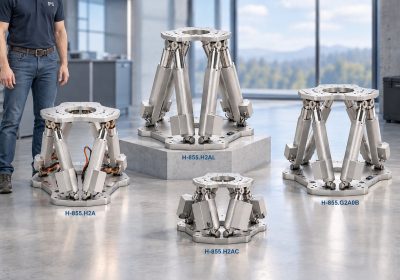
Hexapod 6-Axis Robot Moves 1100lbs Load with Sub-Micron Precision
PI Introduces High-Load Hexapod 6-DOF Family for Precision 6-Axis Positioning of Loads up to 500…
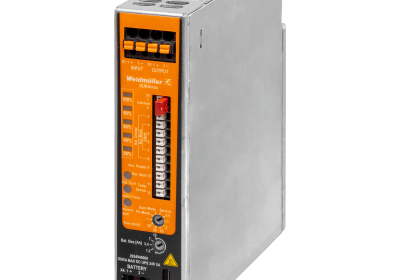
Weidmuller USA Introduces DURAmax DC UPS for Safe, Uninterrupted 24V Power Supply
Weidmuller USA, a leading provider of smart industrial connectivity and automation products and solutions headquartered…
Leave a Reply