

Can Your Machine Vision System Handle 10 G at the Edge?
Why 10 Gb/s, 25 Gb/s, or 100 Gb/s?
High-speed data interfaces are essential in today’s machine vision and automation systems. A single 4-lane MIPI camera can output 10 Gb/s of image data, while CoaXPress (CXP-12) cameras deliver 10 Gb/s per lane, supporting up to four lanes per camera. These data rates not only support high-resolution, high frame-rate imaging but also reduce latency per frame — a critical advantage in real-time control systems where tight sense-compute-communicate-actuate loops are necessary for precision in factory automation and robotics.
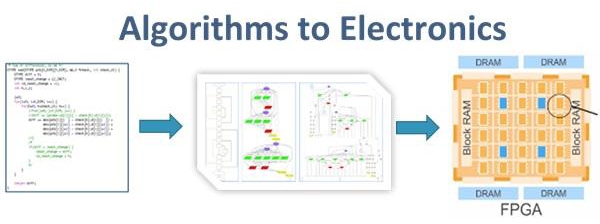
While modern PCs — oftentimes augmented with GPUs — are sometimes used in high-speed, high-data rate applications, FPGAs offer a more compact and cost-effective option for powerful processing.
Why Not Just Use a PC?
While modern PCs can support 10 Gb/s networking, they are often impractical for embedded industrial environments for three key reasons:
- High power consumption: Embedded PCs typically draw 100–250 W, requiring active cooling and clean airflow, which limits deployment in harsh or space-constrained environments.
- Bulky enclosures: Support for high-speed I/O requires add-in PCIe cards, which increase system size and reduce flexibility.
- Custom I/O challenges: Integrating specialized interfaces often demands significant engineering and validation effort.
Why Use a System-on-Module (SOM)?
Adaptive compute SoMs — combining CPUs, FPGA logic, and 10–100 Gb/s interfaces in a single compact module — are an ideal solution for high-performance embedded applications.
Don't Miss These Industry-Leading Events!

.png)
(1).png)
- Cost-effective: Compared to custom “chip-down” hardware designs (which can exceed $100K in NRE), SoMs have no up-front cost and are available off-the-shelf.
- Faster time-to-market: Focus on your application, not your hardware. SoM vendors handle component selection, board design, and supply chain logistics
- Small and power efficient: Perfect for OEM integration, especially in tight spaces or thermally constrained environments.
- Customizable: Need a specific I/O, connector, or form factor? Every SoM platform can be customized and scaled to your needs.
How Do You Choose the Right SOM?
With more than 500 SoMs available — varying by performance, I/O, size, and power — how do you choose the right one? We can help. Our engineers will guide you to the best solution, whether you're targeting 10 Gb/s, 25 Gb/s, or even 100 Gb/s applications. If an off-the-shelf SoM doesn’t meet your needs, we can have a custom module created for your product. We specialize in embedded high-speed systems and are here to ensure your success, especially at 10 Gb/s and beyond. Schedule a call with an engineer at Concurrent EDA.

Concurrent EDA
Concurrent EDA is a provider of custom high-performance cameras, networks, FPGA modules, IP cores, and FPGA design services. We are an AMD Elite-certified partner and a distributor of FPGA and SoC modules, high-speed machine vision cameras, and more.
Discover how Concurrent EDA a can support your automation journey with their complete range of solutions and expertise.
Related Posts
High-resolution 1.2 MP time-of-flight technology for fast, precise 3D data in any environment
IDS Imaging Development Systems GmbH is expanding its 3D portfolio with Nion, an industrial ToF…
IDS at VISION 2026
Product and technology innovations from IDS at booth 8C60: Trends, innovations, future. IDS Imaging Development…

SinceVision to Unveil New 3D Laser Profiler with Embedded Vision at VISION 2026
The manufacturing floor is getting a major visual upgrade. As industrial automation demands higher throughput…
Leave a Reply