

Case Study: How Our Engineering Team Helped a Client Save Millions in Downtime
The words that are dreaded most in the world of manufacturing and engineering are downtime. It is not simply idle machines, but it means lost revenue and disrupted schedules and missed customer commitments, and in many cases, reputational damage that take months to rebuild.
Research shows that downtime may cost any given company between hundreds of thousands of dollars to millions of dollars per hour, depending on the industry. These figures combine to billions of dollars per year to the global manufacturers.
In this case study, we will look at how our engineering department was able to help a mid-sized manufacturer that was experiencing frequent and costly unplanned downtimes.
A combination of root-cause analysis, predictive maintenance, and smart procedural changes reduced downtime almost by half in six months, which saved the business millions of dollars. It is not just an account of technology, but of the organization to solve a problem with precision and a team effort, and how engineering best practices can be used to change the way business is done.
The Problem that the Client Faced
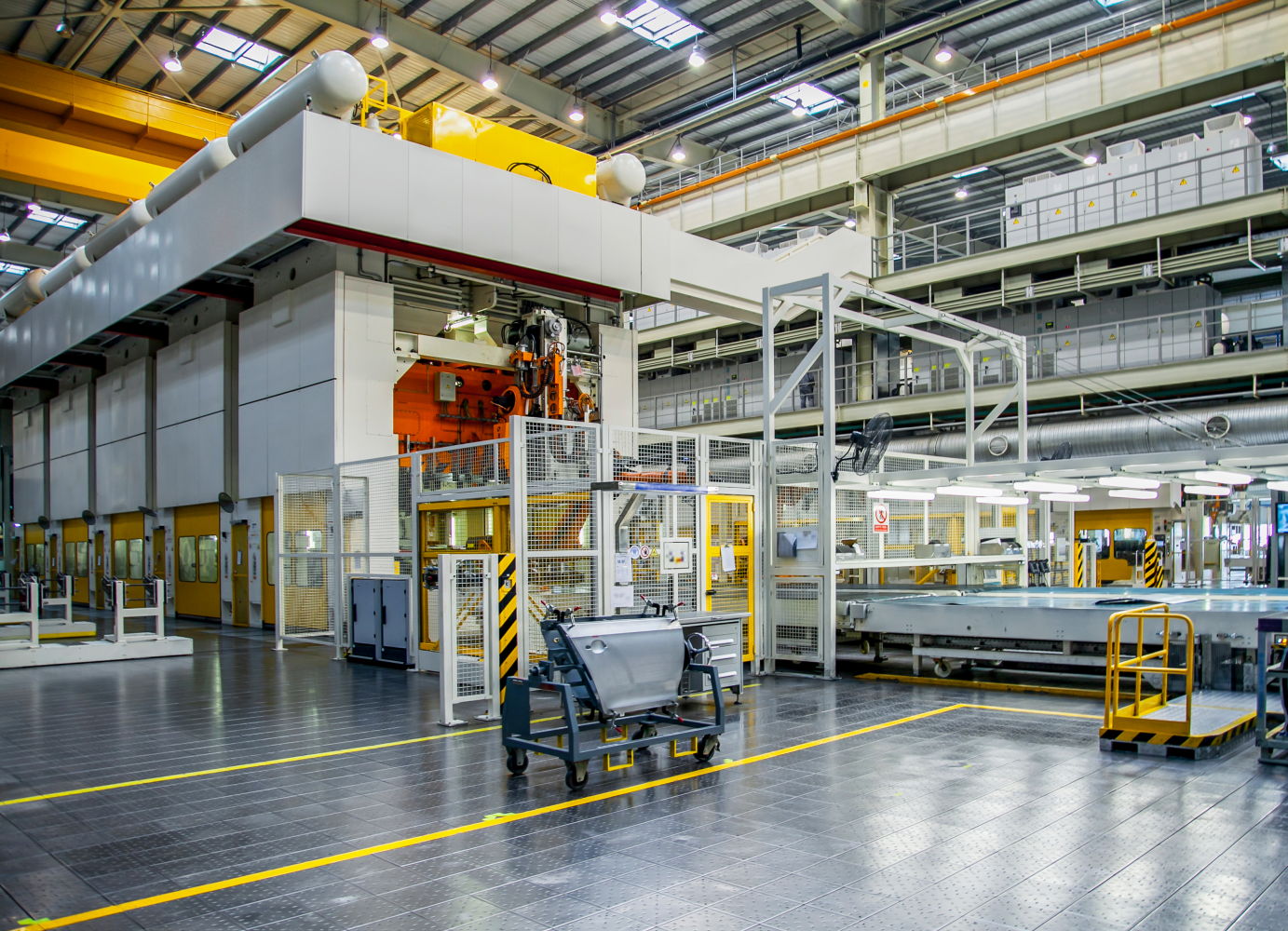
Our client is a multi-site manufacturer of precision-engineered components which are used in heavy machinery. Although they were considered one of the most high quality product manufacturers, their operations team was faced with a problem that had been crippling their operations for a long time: a growing amount of unplanned downtimes on their bottleneck line. After two consecutive quarters, customers started to miss their orders, lead times were increasing and employees were working extra hours in order to make up the situation. Finance reported an alarming pattern- costs of downtime had increased twice as much as in the previous year.
At the time we evaluated their operations, the following was the case:
- Overall Equipment Effectiveness (OEE): This places them in the average category but way below the 85% measurement that is interpreted as world-class.
- Unscheduled Downtime: roughly 16 hours a month on their key production line, which occasionally goes up to 24 hours in a bad week.
- Mean Time to Repair (MTTR): averaging 3.1 hours each time a breakdown occurred. This meant that all incidents were overly prolonged.
- Estimated Cost of Downtime: their finance team estimated it to be conservative at 125,000 dollars per hour. They had 16 hours of downtime every month and this was costing them almost 2 million dollars per month in this line alone.
This was not sustainable for a mid-sized company. Our mandate as the leadership team was to go in and stop the bleeding and get the business in a position where we could have long-term stability.
Our Two Track Approach
We had the experience of knowing that quick fixes would not alone be sufficient, but it also could not take six months to implement advanced solutions. We would approach it in a two-track basis:
1. Stabilize immediately: fix quickly, make quick implementations to solve the problem in the short term.
2. Build resilience: use technology and intelligent processes to avoid failures and decrease long-term repair time.
Step 1: Discovery and Root-Cause Analysis
The initial days were spent on getting to know the problem in and out. Our engineers conducted a discovery sprint which involved:
- An examination of 18 months of maintenance records, alarms, and use of spare parts.
- Talking to operators and technicians to gather unwritten know-how and workarounds.
- Using traditional problem solving techniques like the 5 Whys technique and fishbone diagrams to draw up potential causes.
The results of the analysis showed three large culprits.
1. Hydraulic Power Unit Failures: 38% of all stoppage minutes were due to one hydraulic power unit. Constant breakdowns were caused by pressure falls, oil contamination, and thermal cycling.
2. Ineffective Changeovers: Changeovers between product runs had drifted over time with operators making improvised adjustments and working with worn tools. This produced set up errors and micro-stoppages.
3. Inefficient Spare Parts Management: Sensitive sensors and filters were not stored at the facility. A $120 sensor may be shipped in 3-5 days, increasing downtime.
With these being the underlying causes, we knew where to start.
Step 2: Quick Wins in the First 45 Days
We immediately took low-cost-rapid improvements:
- Standard Work Instructions: Designed eight one-page visual instructions on the hydraulic unit, including oil checking, filter replacement and cooler inspection.
- Spare Parts Kanban: Improved their inventory system so that they always had key parts on hand, and technicians would not be waiting days to get minuscule, but vitally important parts.
- Changeover Standardization: You video-taped a perfect setup process and turned it into 20 steps with torque values, pictures and clear tooling information.
These changes produced immediate results: downtime dropped by 18% in just six weeks, and MTTR shrank from 3.1 hours to 2.4 hours simply because the right parts and procedures were now available.
Step 3: Smart Monitoring and predictive maintenance

When the basics were under control, we proceeded to the next step: prevention of failures before they occur. We had targeted the hydraulic power unit as it was the single largest cause of downtime and put the effort of instrumentation into this.
We put in place sensors to measure:
- Oil particle contamination
- Hydraulic pressure variation
- Oil temperature
- Motor current
Data was passed onto a small scale anomaly model that generated baseline readings. Rather than bombarding staff with complex dashboards, we made small, actionable notifications. To illustrate, rather than reporting that there is an anomaly, the system would report that: Oil filter should be replaced within 8 hours.
Don't Miss These Industry-Leading Events!

.png)
(1).png)
Such a transition made their maintenance condition-based (requiring action only when the data suggested it was necessary), as opposed to the calendar-based (e.g., replace every 30 days regardless of whether it is necessary or not). This got rid of pointless PMs and ended up intercepting actual problems before they turned into a breakdown situation
Step 4: Minimizing of MTTR using Digital Playbooks
The half of the battle was to prevent down time. We also had to do repairs quicker in case of failure. In order to do this, we designed digital troubleshooting playbooks:
- QR codes were placed on key equipment.
- Scanning the code opened a mobile guide with a decision tree (symptom – cause – test – fix).
- Every guide contained part numbers, torque values, and a series of short video clips that were recorded by senior technicians.
This has democratized expertise and now younger technicians can handle a problem without the most senior engineer having to be called in. This saved an average of 45 minutes per repair
Step 5: Procedural and Cultural Change
To be able to continue the improvements, we integrated changes into the everyday activity:
- Change over optimization: Pre-staging of tools and use of color -coded jigs led to 22% reduction in change over time and minimized errors, keeping the lines flowing.
- Alarm Hygiene: We reduced the 37% nuisance alarm of the SCADA system, so that the operators could concentrate on genuine issues.
- Tiered Daily Reviews: Stoppages that occurred the previous day were reviewed daily during a 15-minute huddle. Every week, the review of the top issues was closed by engineers during a 30-minute meeting.
These may sound simple, but the discipline of consistent follow-up ensured that improvements didn’t fade.
The Six- In Month Results

The effect was tremendous
- Unplanned Downtime: this decreased by 48 percent (16 hours a month to approximately 8.3 hours).
- TTR: decreased by 39% (3.1 hours to 1.9 hours).
- OEE: up 9-12 percentage points and stabilizing in the low 70s.
- Schedule Adherence: There was an improvement in the on-time delivery of 87 to 96%.
Financially, the results spoke for themselves. By eliminating roughly 7.7 hours of downtime per month, the company avoided nearly $1 million in losses monthly. Over six months, that amounted to $5.8 million saved, without massive capital investment or a complete system overhaul.
The main lessons were learned:
There are three things that I learnt in this project:
1. Before running after the advanced solutions, get the basics right. Sophisticated analytics will be of no use when filters are not being checked or when spare parts are unavailable.
2. Concentrate on the things that cause the most pain. Rather than instrument everything, we looked at the single line that gave rise to 38% of losses.
3. Reduce repair times to an equal extent with which you avoid breakdowns, whereas preventing failures also resulted in almost equal savings, TTR reductions led to TTR reductions.
We also got to know that it is not just technology that counts, but also change management. The operators and the technicians were involved in the development of checklists and recording of video guides, hence the adoption increased tremendously. They perceived the system as owned by them and not one that was imposed on them.
A Playbook You Can Apply
Any manufacturer who wants to address downtime can use the following framework to begin eliminating it tomorrow:
1. Measure downtime. Work out an hourly rate that both the finance and operations agree upon.
2. Pareto the top issues. Track two weeks of stoppages and identify the top three causes.
3. Run 5 Whys. Don’t stop at explanations that are superficial and go to the bottom of the issue to identify the root cause.
4. Instrument one major asset: Select the machine which causes the greatest losses and equip it with some high-signal sensors.
5. Build digital playbooks. Make troubleshooting simple and accessible to every technician.
6. Review regularly. Incorporate daily check-ins and monthly check-ups to monitor and maintain progress.
CONCLUSION
Downtime is a reality in manufacturing but uncontrolled downtime is not. By combining the proper ratio of disciplined problem solving, condition-based maintenance and common senses digital tools, companies can make a difference in their operations.
In the case of our client, the outcome was transformational: 48% less downtime, almost 6 million dollars saved within six months and a more empowered, confident workforce. What is more important, they became resilient and had a map of continuous improvement.
This lesson is obvious: the way to resolve downtime is not to follow every new technological hype, but rather prioritize what is most important, arm the teams with the necessary tools, and develop systems that identify issues and prevent their escalation. Each minute not used is profit back in the business and each more intelligent process is a step toward operational excellence.

Asamaka Industries Ltd
Asamaka Industries Ltd specializes in providing comprehensive control automation solutions across multiple industries including automotive, power generation, and distribution. From electrical design to implementation of advanced technologies like robotics and vision systems, we cater to the unique needs of each sector, ensuring safety, quality, and efficiency in every project.
Discover how Asamaka Industries Ltd a can support your automation journey with their complete range of solutions and expertise.
Related Posts

Physical AI & The Leadership Gap
PHYSICAL AI & THE LEADERSHIP GAP THE COMPANIES WINNING IN PHYSICAL AI HAVE ONE THING…
NSF puts $30M behind the next challenge for physical AI: Humans
The University of Texas at Austin will lead a new $30 million National Science Foundation…

Pentastar Puts Autonomous Wingwalking Robots Into Daily Operations
Pentastar Aviation has begun deploying autonomous robots alongside aircraft during towing operations at its facility…
Leave a Reply