

The Rise of Smart Factories: Engineering Beyond Automation
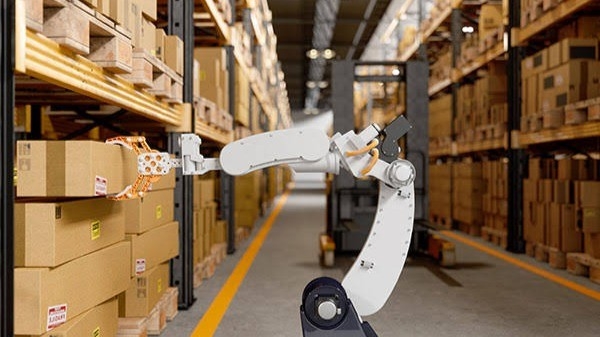
There is now a transformation in the factory floor. What was once considered a row of machines and manual checkpoints is now an alive and connected ecosystem of sensors, algorithms and adaptive robots. This is not just a case of automation of a task: smart factories are the integration of Industrial Internet of Things (IIoT), artificial intelligence (AI), digital twins, edge computing and sophisticated automation to redefine the design, production and delivery of products.
This article describes what smart factories are, the difference between them and traditional automation, the technologies behind them, the business value they generate, the practical issues of scaling them, and a practical roadmap that manufacturers can follow to get started.
From automation to autonomy
Conventional automation was the codification of repetitive work into authority and patterns. Repetitive human movement was substituted with deterministic machines by conveyors, programmable logic controllers (PLCs) and robotic arms.
Smart factories go a step further: systems feel, reason and learn and act. Instead of having a scheduled service event, a machine can anticipate an impending failure and can schedule maintenance during a natural lull in production.
Software-defined production cells can be reconfigured on-the-fly to mixed-model production, rather than a fixed line optimized to a single product. The change is not just about replacing human hands, it is more about taking human control and decision-making a step higher. Individuals shift to manual processes into exception handling, process enhancement and systems design.
Technologies that run smart factories
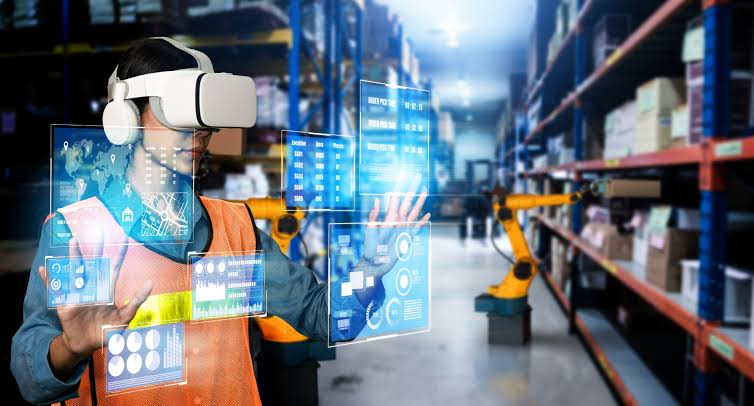
The smart factory can be described as a stack of a number of technologies that can be combined with each other:
• Industrial IoT (IIoT): a network of sensors, actuators and gateways that translate physical measurements (temperature, vibration, current, position) into data streams.
• Edge Computing: on-equipment processing to provide deterministic control, low-latency responses and less cloud-reliance.
• AI and machine learning: anomaly detectors, computer vision defect classifiers, scheduling optimization and demand prediction.
• Digital Twins: computer-based copies of machines, production lines or entire plants that allow engineers to simulate changes, test conditions and forecast their results without putting production at risk.
• Cloud Analytics and Platforms: for large-scale model training, lifecycle management, and multi-site coordination.
Together, these elements enable factories to be seen, described, and responsive to transition away to a continuous improvement loop.
Business value and real-world wins
Smart factories provide quantifiable productivity, quality and flexibility benefits. Predictive maintenance cuts unplanned downtime and maintenance costs. AI-based visual inspection minimizes scrap and defect.
Digital twins reduce time-to-market with simulated production tests and capacity planning without interfering with live lines. Lighthouse factories demonstrate what can be done: as an example, the Electronics Works of Siemens in Amberg is frequently mentioned as an example of how scale-based output consistency and quality can be achieved, through the use of integrated sensor networks and analytics. Those examples give the blueprints of large scale, data-driven manufacturing transformations.
Increasing trends 2024 – 2025
There are several market trends that have boosted investment in smart-factory in the recent past. First, there is a significant increase in the adoption of AI by enterprises: manufacturers are implementing AI in the planning, design and operations of their enterprises, and not just in the IT functions.
Second, the digital twin market is growing at a fast pace, with companies de-risking changes using virtual models to optimize processes and sustainability metrics.
Third, there is increased adoption of edge computing due to the need to perform deterministic, low-latency computations on many manufacturing control tasks that cloud-only architectures cannot assure. All these trends reduce the technical barriers and augment the payback of manufacturers who are ready to modernize.
Workforce, skills and organizational change
Certified System Integrator Program
Set Yourself at the Forefront of the Global Vision Market
.jpg) Vision system integrators certified by A3 are acknowledged globally throughout the industry as an elite group of accomplished, highly skilled and trusted professionals. You’ll be able to leverage your certification to enhance your competitiveness and expand your opportunities.
Vision system integrators certified by A3 are acknowledged globally throughout the industry as an elite group of accomplished, highly skilled and trusted professionals. You’ll be able to leverage your certification to enhance your competitiveness and expand your opportunities.
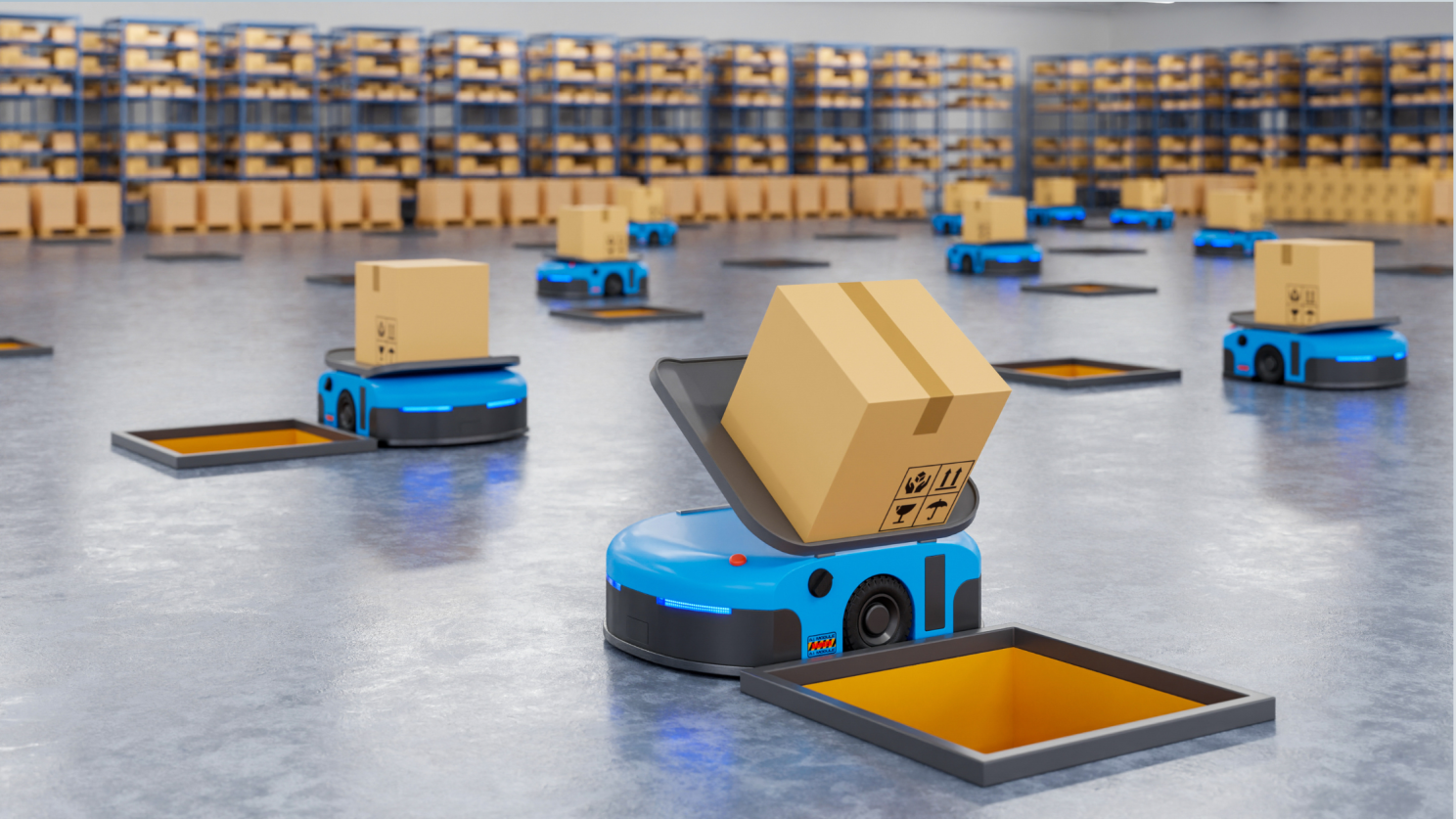
Smart factories redefine jobs, not merely kill them. Old-fashioned maintenance technicians transform into technician-analysts, line operators develop into supervisors of automated processes, process engineers work with data scientists to turn models into operations.
The surveys of manufacturing leaders indicate that talent and organizational change are the most common barriers to scaling smart manufacturing efforts. The companies need to invest in training, new hiring strategies, and cross-functional teams to achieve the maximum of their technology investments.
Challenges and practical pitfalls
Intelligent factories are not assured. Several projects fail due to inadequate data preparedness: raw sensor streams need to be cleaned, put into context and labeled to allow models to learn a reliable pattern. Legacy equipment and siloed systems complicate integration across OT (operational technology) and IT.
The risks to cybersecurity grow as the operational networks become linked to wider enterprise systems. Last, misalignment in an organization, such as piloting technology without defined KPIs or lack of proper change management, transforms good pilots into shelfware. Mitigations that are necessary include preparing data pipelines, establishing clear business outcomes, and phased integration of the same.
Creating Tough and Sustainable Intelligent Factories
The concepts of sustainability and resilience are becoming part of the smart-factory design. Predictive maintenance will lengthen the useful life of assets (lessening embodied carbon), and energy-sensitive scheduling will move high-power operations into lower-carbon grid windows or periods when onsite renewable is plentiful. Digital twins also allow teams to measure trade-offs between throughput and environmental impact so that decisions can be made to optimize business and sustainability KPIs. Other advanced factories combine smart-energy management, rooftop solar, and energy storage to reduce peak demand and enhance grid resilience to grid disruption.
A Practical Blueprint for Manufacturers
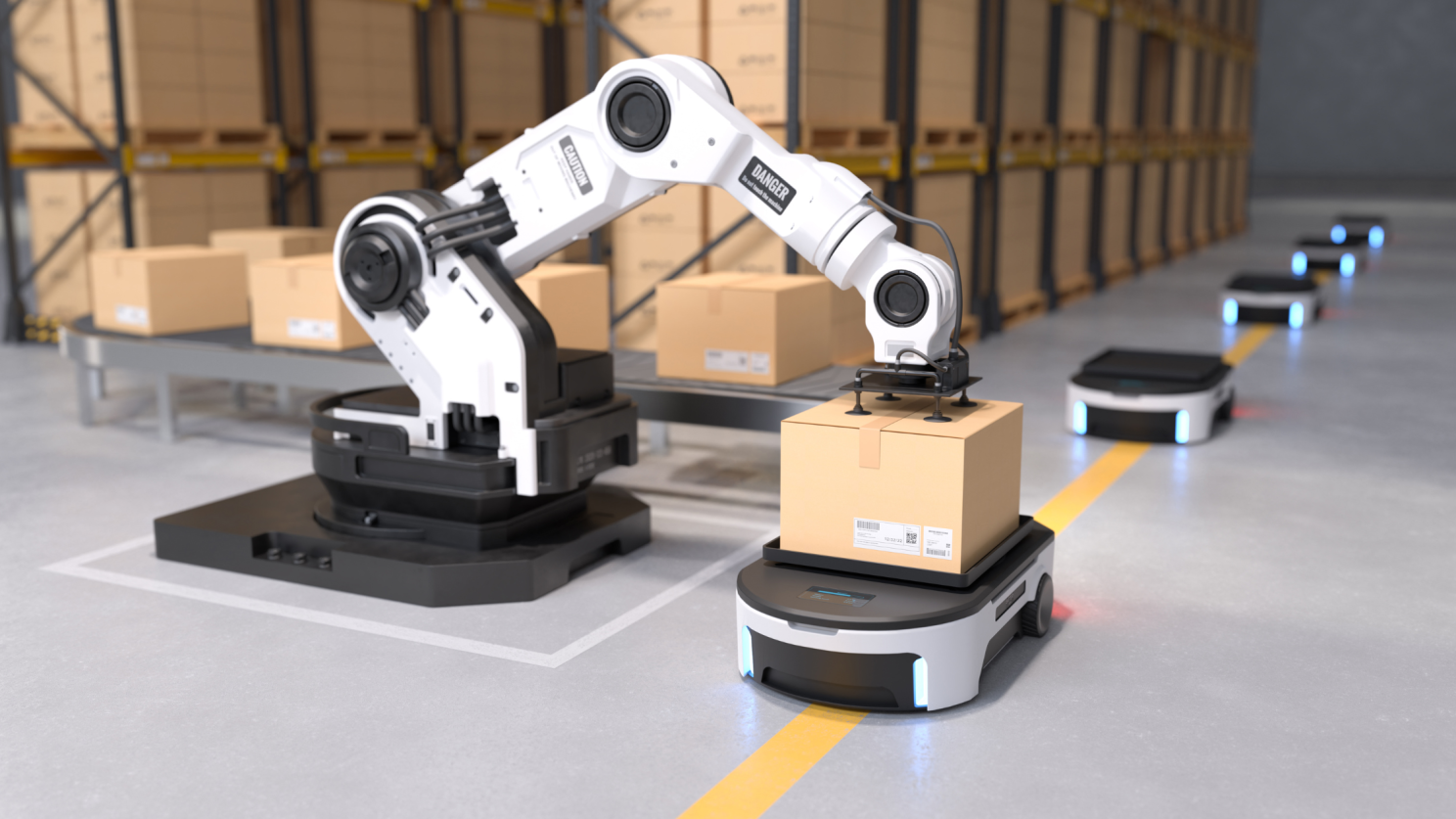
In the case of organizations initiating or expanding smart factory initiatives, a practical roll-out can enable them to transform experiments into lasting value:
1. Choose a high-impact, quantifiable use case to start with (predictive maintenance, AI-based quality inspection, energy optimization).
2. Audit data preparedness: identify governance gaps, catalog sensors, data formats and storage.
3. Create interoperable, modular stacks that span OT and IT – prefer standards and open interfaces in order to prevent vendor lock-in.
4. Test pilot in real conditions at a small scale, representative scale and quantify ROI (less downtime, less defects, less energy used) and not just technical measures.
5. Invest in people: retrain employees who have hybrid OTIT skills, form cross-functional teams and make domain specialists work with data teams.
6. Build security and compliance into the design from day one.
These measures minimize risk and maximize the likelihood of smart factory initiatives to scale and produce business change that is sustainable.
CONCLUSION
Smart factories are not only a continuation of industrial automation: they are a new paradigm in engineering in which sensing, modeling and autonomous decision-making are integrated into production. The enabling technologies IIoT, edge computing, AI, and digital twins and cloud analytics are mature enough that real benefits are being achieved today. However, technology is not enough: it needs clean, contextualized data, competent multidisciplinary teams, articulated business outcomes and prudent change management processes.
Going forward, intelligent factories will also become a mixture of human ingenuity and machine effectiveness and durability as well. It is not soulless, unattended production but resilient, responsive and sustainable manufacturing that produces customer value more quickly and consumes less. Those manufacturers who combine pragmatic engineering and considerate people strategies will be in the best position to capture value. The future is flexible, humanitarian engineering.

Asamaka Industries Ltd
Asamaka Industries Ltd specializes in providing comprehensive control automation solutions across multiple industries including automotive, power generation, and distribution. From electrical design to implementation of advanced technologies like robotics and vision systems, we cater to the unique needs of each sector, ensuring safety, quality, and efficiency in every project.
Discover how Asamaka Industries Ltd a can support your automation journey with their complete range of solutions and expertise.
Related Posts

Physical AI & The Leadership Gap
PHYSICAL AI & THE LEADERSHIP GAP THE COMPANIES WINNING IN PHYSICAL AI HAVE ONE THING…
NSF puts $30M behind the next challenge for physical AI: Humans
The University of Texas at Austin will lead a new $30 million National Science Foundation…
Pentastar Puts Autonomous Wingwalking Robots Into Daily Operations
Pentastar Aviation has begun deploying autonomous robots alongside aircraft during towing operations at its facility…
Leave a Reply