


The Importance of Quality Control in Engineering and Manufacturing
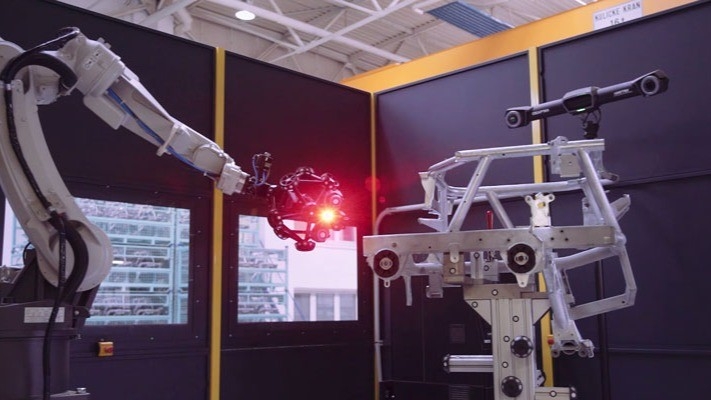
The pressure on engineering and manufacturing companies in the modern competitive business environment is enormous to produce products that are not only innovative, but reliable, safe as well as cost-effective.
It is either electronics, automobiles, medical devices, or industrial machinery: the stakes are high: one defect may ruin the reputation, result in some regulatory punishment, or, to be even more, cause harm. The central role in this is played by quality control (QC).
Quality Control is defined as organized procedures and practices of products that are of a set standard. It entails the identification of defects and rectification, observation of production and process improvement.
In this article we will discuss the importance of Quality Control in the field of engineering and manufacturing, consider some of the recent issues and developments of the field and provide recommendations of what a good implementation of QC should resemble.
What Is Quality Control?
Quality control is a subset of quality management focused on operational techniques and activities used to fulfill quality requirements. Although quality assurance deals more with establishing the guidelines, processes and systems required to eliminate defects, QC is more practical: it involves inspection, testing and correcting the results of production to ensure that it meets the requirements.
QC involves checking of the raw materials, checking the production process, testing of the final products, and even post-market surveillance. They are implemented with the help of different approaches and tools, such as, statistical process control, Six Sigma, Total Quality Management, lean manufacturing, etc.
Why Quality Control Matters

a) Safety and Compliance
There are numerous industries that are highly rated; automotive, pneumatic, pharmaceuticals, and food production. Poorly specificizing products may be dangerous: faulty electronics, structural problems, health risks. Quality control systems facilitate observing the standards and regulations, which minimize the risks of injury, legal liability, and recalls.
b) Brand Reputation and Customer Satisfaction
As customers get to receive products that are reliable, consistent and safe, trust is developed. The content customers will be regular buyers, make positive reviews, and serve as brand ambassadors. One bad encounter can destroy trust, even forever. Quality control assists in providing the type of consistency, which is the base of decent reputation and client loyalty.
c) Cost Reduction
Defects are expensive. They are the causes of scrap, rework, warranty, returns, and even product recalls. All these eat up resources and decrease profits. Early detection of defects in materials or at the production process itself can cost much less than the price of Quality Control itself.
d) Operational Efficiency
Quality control can be used to enhance operations. Monitoring process variation, defects and bottlenecks allow firms to optimize processes, minimize wastage and enhance throughput. Efficiency is not only speed but also quality should be the right quality with minimum waste.
e) Innovation and Sustainability
Quality control does not only help in failure protection, but it also encourages continuous improvement. Using information and feedback of QC processes, companies may improve the design, manufacturing process through a more robust way, and make the processes more environmentally friendly with less waste and energy consumption. The concept of sustainability is becoming more closely associated with quality: the lower the number of defects, the less products are being discarded, and the less resources are consumed, etc.
Modern Challenges in Quality Control

As much as the advantages are obvious, it is not a smooth sail when it comes to the implementation of good QC.
I. Product Complexity: The more complex engineering products are (electronics, embedded systems, smart components), the more difficult it is to detect all of the defects. Certain defects can be insignificant or can only be observed in some conditions.
II. Data Overload and Signal vs. Noise: Quality Control systems (in particular, automated ones) produce a lot of information. It takes proper statistical and analytics to differentiate between true indicators of quality issues and false positives or variation in the background.
III. Cost vs. Benefit Trade-offs: Quality Control costs, not only in inspection equipment, but also in labor, training, downtime, and so on. Organizations need to make a trade-off between the cost of providing more QC and the risk and the cost of failures.
IV. Regulatory & Standards Compliance: The maintenance of changing standards (safety, environmental, performance) can be challenging and complicated. Quality control systems must adapt.
V. Human Factors: Despite machinery and automation, humans are needed. Defects may be brought about by mistakes, lack of training, exhaustion.
New Ideas and Trend in Quality Control
In order to surmount these challenges, the field is changing. The following are the recent trends and technologies that are assisting Quality Control to be more effective:
a) Automation and AI / Machine Learning
Real time defects detection is being done using automated visual inspection, machine vision, and AI/ML algorithms. To illustrate, Ford has recently installed AI cameras ( AiTriz, MAIVS) to detect mistakes during assembly and not send them out of the line.
The tools will be able to identify minor discrepancies, absence of components, or changes that human inspectors will not notice.
b) Monitoring and Sensors in Real-time
The process (e.g. in additive manufacturing) can be monitored in real-time with more embedded sensors. The deviations are identified early, and they can be flagged or automatically fixed. This will save waste and enhance reliability. There are research projects underway on other areas such as piezoelectric sensors in additive manufacturing.
c) Statistical Process Control and Advanced Analysis
Monitoring trends and variation with the aid of statistical control charts, failure mode and effects analysis (FMEA), multivariate control charts, etc. are useful in catching defects before they become failures. New structures combine probability-based techniques with verification in order to determine the most important parameters.
d) Software Platforms and Tools Digital
Quality Control software solutions that combine test results, inspection data, production data, reporting, and workflow monitoring are contributing to the lessening of manual paperwork, enhancement of traceability, and agility of QC processes. Digital twins, live dashboards, cloud analytics become more and more popular.
e) Lean, Six Sigma, TQM & Design to be Verified
The traditional quality improvement philosophies remain rather relevant, particularly when they are used with the new tools. Design for Verification (DfV) helps engineers plan for inspection and measurement early in product design so that verification steps are efficient and cost-effective.
How to Implement Quality Control Well

After discussing the meaning of Quality Control and the importance of it, the following are some best practices and steps to proper implementation:
1. Leadership and Culture
Top management should be devoted to quality in order to have QC successful. Culture is important- quality must become a collective effort of engineering, production, supply chain, and management. The employees should be empowered to report defects, suggest improvements.
2. Ensure Well-defined Specification and Standards
Without clearly defining just what is meant by quality: performance measures, tolerances, safety specs, you can not control quality. Apply standards in the industry where needed (e.g. ISO 9001, GMP, etc.).
3. Prevention and Proactive interventions
Strive to avoid defects as opposed to post inspection. Apply design reviews, process controls, statistical techniques and predictive tools. The defects previously found are cheaper and easier to correct.
4. Appropriate Tools and Technologies used
This can consist of automated inspection, sensors, machine learning, and control charts, among other statistical tools, depending on scale and product. Choose tools which are appropriate to your product complexity, volume, cost limits.
5. Training and Human Factors
Ensure that all those concerned such as operators and inspectors are knowledgeable by understanding Quality control procedures, know how to operate tools, know what is important. In many cases, human error is the cause of the problem and both good training and clear processes could help in alleviating these problems.
6. Constant Observation, Feedback and Improvement
Quality control is not a one-time exercise. It is a process that must continue; measure, analyze, act, and improve. Detect data, analyze the defects that are being produced, back this into the design or process phases. Apply failure mode investigations, root cause investigations.
7. Documentation and Traceability
It is important to keep the records of inspections, corrective measures, and process modifications. Not only to audit or comply with the law, but to know what has worked or not and be consistent.
Conclusion
Quality control is not a luxury or an added value, it is a keystone to engineering and manufacturing excellence. It ensures safety, instills confidence with the customers, saves money and keeps the organizations in check and in the game. In the new era of sophisticated products, changed regulatory environments, and increased customer demands, effective Quality Control is more significant than ever.
Advances in automation, AI, real-time feedback and sophisticated analytics are providing companies with new opportunities to enhance quality more quickly and accurately and in many cases at reduced cost. But tools alone won’t suffice. Being successful requires a set of standards, leadership, culture, competent individuals, and continuous measurement and improvement.
To any engineering or manufacturing business seeking to prosper, investing in quality control is an investment in the future. The benefits are observed to not only be in reduced defects or recalls, but also in stronger brands, customer loyalty, reduced waste, and sustainable growth.

Asamaka Industries Ltd
Asamaka Industries Ltd specializes in providing comprehensive control automation solutions across multiple industries including automotive, power generation, and distribution. From electrical design to implementation of advanced technologies like robotics and vision systems, we cater to the unique needs of each sector, ensuring safety, quality, and efficiency in every project.
Discover how Asamaka Industries Ltd can support your automation journey with their complete range of solutions and expertise.
Related Posts

Physical AI & The Leadership Gap
PHYSICAL AI & THE LEADERSHIP GAP THE COMPANIES WINNING IN PHYSICAL AI HAVE ONE THING…
NSF puts $30M behind the next challenge for physical AI: Humans
The University of Texas at Austin will lead a new $30 million National Science Foundation…

Pentastar Puts Autonomous Wingwalking Robots Into Daily Operations
Pentastar Aviation has begun deploying autonomous robots alongside aircraft during towing operations at its facility…
Leave a Reply