

Bridging the Gap: How Engineers Are Designing Resilient Systems for Climate Change
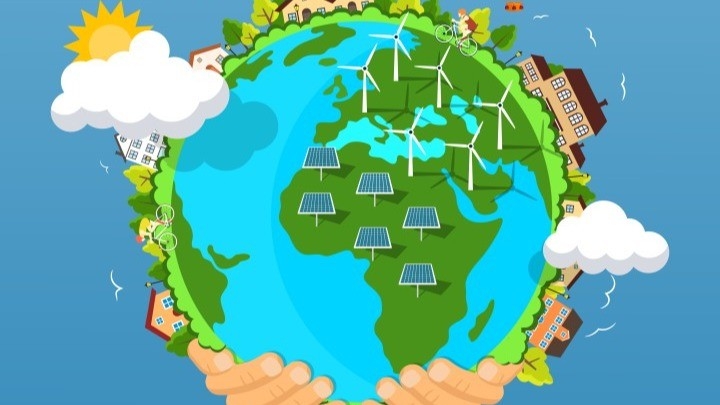
Change in climate is redefining the way we build cities, power systems, transport corridors and the materials we work with.
The Engineers are translating the science of climate in a practical system that is able to endure storms, floods, and heat waves and is able to recover within a short time.
This article will discuss these methods, technologies, and practical examples in current use, including nature-inspired flood control and microgrids, high-tech materials, and explain why greater interdisciplinary, cross-community, and policy collaboration is the key.
Reconsidering the design objectives: sustainability instead of the status quo.
Historical engineering was concerned with safety. Nowadays, such baselines are outlived. In modern resilience, engineering systems are expected to predict a wider set of future conditions, survive disruption, recede quickly, and occasionally adapt to a safer form.
Practically, Engineers are working to extreme precipitation, rising sea levels, higher temperatures, and long droughts, not mediocre conditions.
Climate risk assessment through scenario-based on climate risks is now one of the tools of design guidance, and agency plans in budgeting and infrastructure choices.

Nature Based Solutions: Ecosystem Based Engineering.
To safeguard the community, engineers are increasingly using wetlands, floodplains, bioswales, urban parks and restored riverbanks instead of concrete or supplementing concrete with living landscapes.
These green-blue solutions capture the stormwater, reduce the peak flows, reduce urban temperatures, and provide biodiversity and social benefits at reduced life-cycle costs compared to most of the grey solutions.
It has been demonstrated that nature-based solutions can protect the transport corridors and neighborhoods when they are deployed in a wise way.
Good examples include large-scale restoration of rivers and parks, that trap and store storm water and offer communal areas.
Practical learning: Co-design and regenerative multifunctional infrastructure with ecologists, landscape architects, and communities.
Energy Resilience: Distributed Controls, Smart Controls, And Micro Grids.
The necessity of a flexible grid can be proven by power outages during hurricanes, wildfires, and heatwaves. Resilience is created by engineers by installing microgrids and distributed energy resources such as rooftop solar, batteries, and smart controls which allow the communities to act on their own in the event of outages.
Microgrids ensure that hospitals, water pumps and emergency centers stay up during peak outages of the main grid; they are faster to recover and the security is concentrated. The development of cybersecurity, control algorithms, and hardware reliability is vital as the systems become tighter and smarter.
Practical example: when communities put resources into the resilient local energy systems, they are able to recover more quickly after the disaster and they control the energy day by day, which reduces costs, and emissions.
Materials, Standards Of Design as well as climate-informed Engineering.
Engineers test low-carbon, strong materials, high-performance concrete, and corrosion-resistant alloys, cooling facades, and revise the standards, to demonstrate the risks of the future.
New models are also based on climate projections and percentile-based design to size drains, bridges and coastal defenses, rather than using historical periods of returns.
This brings trade-offs between the immediate cost and long-term reduction of risks and asks who is going to pay the costs of adaptation. Professional bodies and research groups produce advice on how design firms can cope with an increasing standard of care, as courts and clients seek climate conscious design.

Computer-aided Design and Data Mining.
Engineers can apply sophisticated simulation technologies, hydrodynamic flood maps to the CFD of city airflow, and thermal comfort to test operation in extreme conditions.
Probabilistic modeling and machine learning help to determine interventions that minimize the risk the best. The combination of high-resolution climate projections and asset inventories aims to enhance the upgrades, e.g., what bridges are to be raised or which substations are hardened.
These tools explain the decisions, yet, they demand the investment of the data infrastructure and interdisciplinary training.
Case Studies: action design innovation.
Urban parks that handle floods: Cities such as Bangkok are leading the practical use of multifunctional parks and porous urban spaces which harness storm water to use in urban parks and cool down urban environments. Local efforts and landscape design demonstrate the beauty and safeguarding qualities of design.
Floating communities and waterfront innovation: In places with persistent flood risk, floating neighborhoods and adaptive waterfronts (e.g., pilot projects in Europe) demonstrate alternative settlement patterns that accept water as part of the urban fabric rather than fight it indefinitely. These prototypes inspire scalable options for delta cities worldwide.
Large-scale nature-based flood control: Restoration of nature and ecological restoration through international programs and projects funded by banks are used to mitigate flood risk in megacities, through a combination of engineering control with ecological control.
Social, Governance, And Finance.
The solutions required are engineering solutions. This requires supportive policy, climate-informed procurement and financing mechanisms that are biased towards resilience grants, blended finance, resilience bonds.
Fair design is incredibly imperative: the low-income communities are often exposed to the greatest and unable to recover the most.
Participatory planning makes interventions consistent with local needs.
There is integration of resilience metrics by governments and agencies into their planning and funding, however there is a significant challenge in scaling this up to regional levels.

The Human Aspect: Talent and Cross-functional Groups.
Resilient systems need more than technical expertise to be designed. The engineers will have to work cooperatively with climate scientists, ecologists, data scientists, urban planners, and local stakeholders.
System thinking, scenario planning and communication skills are now taught in educational programs and professional development, to ensure that engineers are able to convert complex risk into actionable infrastructure decisions.
There is a tendency to find practical solutions to the problems that models may not capture, based on the knowledge of the environment and experience.
CONCLUSION
Climate Resilience Engineering is a social and technical project. It requires newer equipment, new and better materials, innovative design, including nature-friendly design and policy changes that focus on long-term safety rather than short-term affordability.
The current engineers in are already closing the divide between climate science and the practical infrastructure and they design strong, flexible yet inclusive systems.
However the magnitude of the challenge demands more rapid efforts by engineers, communities, funders and governments. When better data, equitable policy and nature are the guiding principles on better design as opposed to being an afterthought, we create infrastructure that not only endures climate shocks but also assists communities to flourish.

Asamaka Industries Ltd
Asamaka Industries Ltd specializes in providing comprehensive control automation solutions across multiple industries including automotive, power generation, and distribution. From electrical design to implementation of advanced technologies like robotics and vision systems, we cater to the unique needs of each sector, ensuring safety, quality, and efficiency in every project.
Discover how Asamaka Industries Ltd can support your automation journey with their complete range of solutions and expertise.
Related Posts
High-resolution 1.2 MP time-of-flight technology for fast, precise 3D data in any environment
IDS Imaging Development Systems GmbH is expanding its 3D portfolio with Nion, an industrial ToF…
IDS at VISION 2026
Product and technology innovations from IDS at booth 8C60: Trends, innovations, future. IDS Imaging Development…

SinceVision to Unveil New 3D Laser Profiler with Embedded Vision at VISION 2026
The manufacturing floor is getting a major visual upgrade. As industrial automation demands higher throughput…
Leave a Reply