


Overcoming Signal Interference in Plant Cell Fluorescence: The Impact of High-QE sCMOS Technology on Stress Response Research

In plant fluorescence microscopy is perennially complicated by endogenous optical interference and the delicate nature of living botanical specimens. Traditional imaging sensors often lack the quantum efficiency (QE) and noise suppression necessary to distinguish faint biological signals from dominant background noise. This article explores the transition to back-illuminated sCMOS (scientific Complementary Metal-Oxide-Semiconductor) technology, specifically the Solis-B0465, and its role in optimizing the signal-to-noise ratio for live-cell plant imaging. By achieving unprecedented photon utilization efficiency, researchers can now observe rapid stress signaling pathways with minimized phototoxicity and enhanced kinetic resolution.
Introduction: Navigating Endogenous Signal Interference
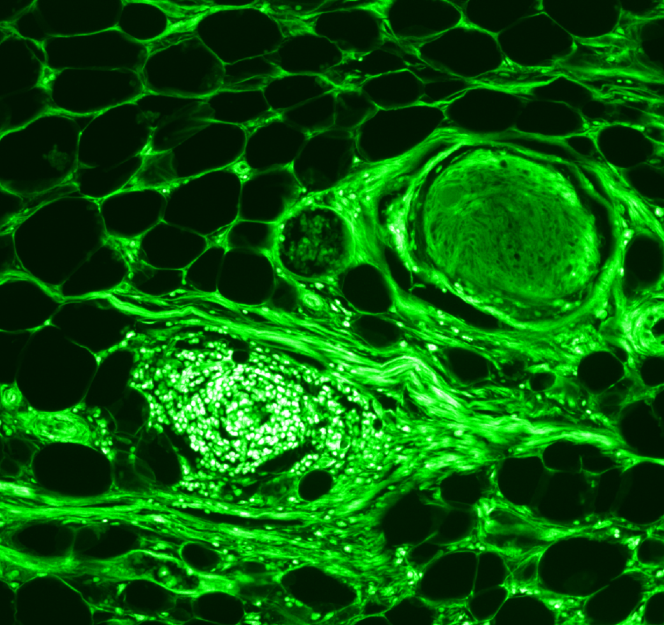
For plant biologists, the primary barrier to high-fidelity imaging is the plant cell itself. Chloroplasts exhibit intense red and near-infrared autofluorescence, while lignin within the cell wall creates significant background scatter. These factors create a high-noise environment where target fluorophores are often obscured. Standard industry solutions, typically limited to 30–40% quantum efficiency in the critical 500–700 nm band, necessitate high excitation light intensities to extract usable data. However, this intensity frequently induces photo-oxidative stress, altering the very physiological responses under investigation and compromising the integrity of the research.

The Technological Shift: From Standard CMOS to BSI sCMOS
The evolution from traditional front-illuminated CMOS sensors to back-illuminated (BSI) sCMOS architecture represents a paradigm shift in photon-level detection. In standard sensors, the metal circuitry layers precede the photodiode, physically obstructing a portion of the incident light. BSI technology inverts this architecture, allowing photons to hit the silicon substrate directly. This architectural refinement, combined with signal-to-noise optimization, allows for a leap from the modest efficiencies of the past to the elite performance required for modern quantitative microscopy.
Methodological Advancements via the Solis-B0465 sCMOS Technology
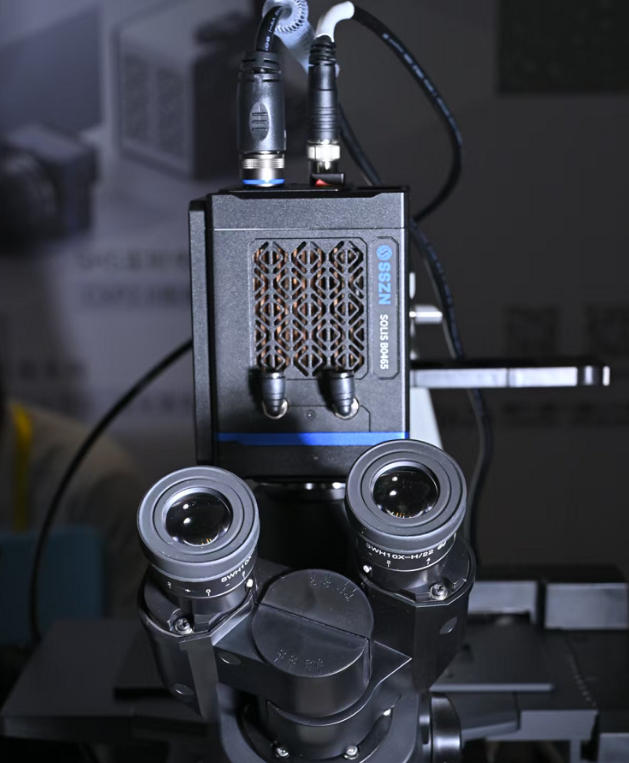
The implementation of the SinceVision Solis-B0465 addresses the specific rigors of botanical research through several key engineering breakthroughs:
- Photon Utilization Efficiency: Equipped with a back-illuminated sCMOS sensor, the Solis-B0465 achieves a peak Quantum Efficiency of 95% @ 560nm. Its broad spectral response (190–1100nm) allows for versatile multi-channel imaging across a wide array of fluorophores.
- Thermal and Dark Noise Management: Utilizing a 55°C cooling differential through multi-stage TEC and a proprietary vacuum-sealed sensor chamber, the system suppresses dark current to negligible levels. This is critical for the long-exposure protocols often required in low-light plant studies.
- Spatiotemporal Resolution: With a 2048×2048 resolution and 6.5μm pixels, the camera provides the high spatial fidelity needed for subcellular localization, while the 100 fps full-frame output ensures the kinetic resolution necessary to track rapid molecular movements.
Impact on Plant Stress Research: Real-Time Physiological Insights
The most significant breakthrough afforded by the Solis-B0465 is the ability to conduct low-phototoxicity microscopy. Because the sensor is so efficient, researchers can reduce excitation light doses by over 50% compared to standard industry solutions.
Certified System Integrator Program
Set Yourself at the Forefront of the Global Vision Market
.jpg) Vision system integrators certified by A3 are acknowledged globally throughout the industry as an elite group of accomplished, highly skilled and trusted professionals. You’ll be able to leverage your certification to enhance your competitiveness and expand your opportunities.
Vision system integrators certified by A3 are acknowledged globally throughout the industry as an elite group of accomplished, highly skilled and trusted professionals. You’ll be able to leverage your certification to enhance your competitiveness and expand your opportunities.
This reduction is vital for studying plant stress responses, such as calcium signaling and Reactive Oxygen Species (ROS) bursts. These signals are transient and highly sensitive to external stimuli; using excessive light to capture the image can trigger a "false" stress response in the plant. By capturing weak fluorescence signals with ultra-low readout noise, we can now observe the true, unadulterated signaling cascade as a plant responds to drought, salinity, or pathogens. This allows for a deeper understanding of the spatiotemporal dynamics of how plants perceive and adapt to environmental fluctuations.
Conclusion
The transition to high-performance, back-illuminated sCMOS technology is no longer a luxury but a necessity for advanced plant photobiology. The Solis-B0465 provides the requisite sensitivity and stability to overcome the inherent challenges of autofluorescence and light sensitivity. By enabling high-fidelity, live-cell imaging with minimal sample disturbance, this technology provides a robust foundation for the next decade of breakthroughs in plant stress physiology and molecular biology.
About SinceVision
SinceVision is a global manufacturer of industrial sensors and scientific cameras. We have installed over 100,000 3D sensors globally to keep inspection stable, repeatable, and reliable at full production speed.
Our solutions are trusted by more than 10,000 customers worldwide, including Apple, Tesla, Samsung, LG, CATL, BYD, and Foxconn. We support industries such as food, pharmaceuticals, consumer electronics, lithium batteries, semiconductors, automotive, aerospace, and academic research.

Shenzhen SinceVision Technology Co. Ltd.
SinceVision is a world-class sensor technology manufacturer for 3D laser profilers, high-speed cameras, laser displacement sensors, spectral confocal displacement sensors, full-spectrum sensors, and through-beam edge sensors.
Discover how Shenzhen SinceVision Technology Co. Ltd. can support your automation journey with their complete range of solutions and expertise.
Related Posts
ABB Robotics launches PickMaster Lite to simplify & accelerate robotic picking
ABB Robotics launches simplified version of its PickMaster software for packaging OEMs and system integrators…

ABB Robotics launches new automated surface finishing cell
New, plug-and-play OmniVance Collaborative Surface Finishing Cell empowers small and medium-size enterprises to automate key…

Fraunhofer IPA certifies knife edge for Montech cleanroom belt conveyors
Charlotte, April 27, 2026– Montech brings its proven knife edge into the cleanroom: The product…
Leave a Reply