

When Automotive Safety Meets Machinery Safety
The Differences Matter
Technological advancements are increasingly dissolving the traditional boundaries between different safety domains. As industrial machines capable of both perception and manipulation acquire mobility, they begin to exhibit characteristics reminiscent of road vehicles. The convergence of these features means that the distinctions between automotive safety and machinery safety are no longer as clear as they once were, leading to new challenges and considerations for safety professionals in both fields.
Autonomy is driving the merging of these domains, increasing the need for software complexity and artificial intelligence in safety. Compounding the issue, societal expectations for automation safety relentlessly soar higher.
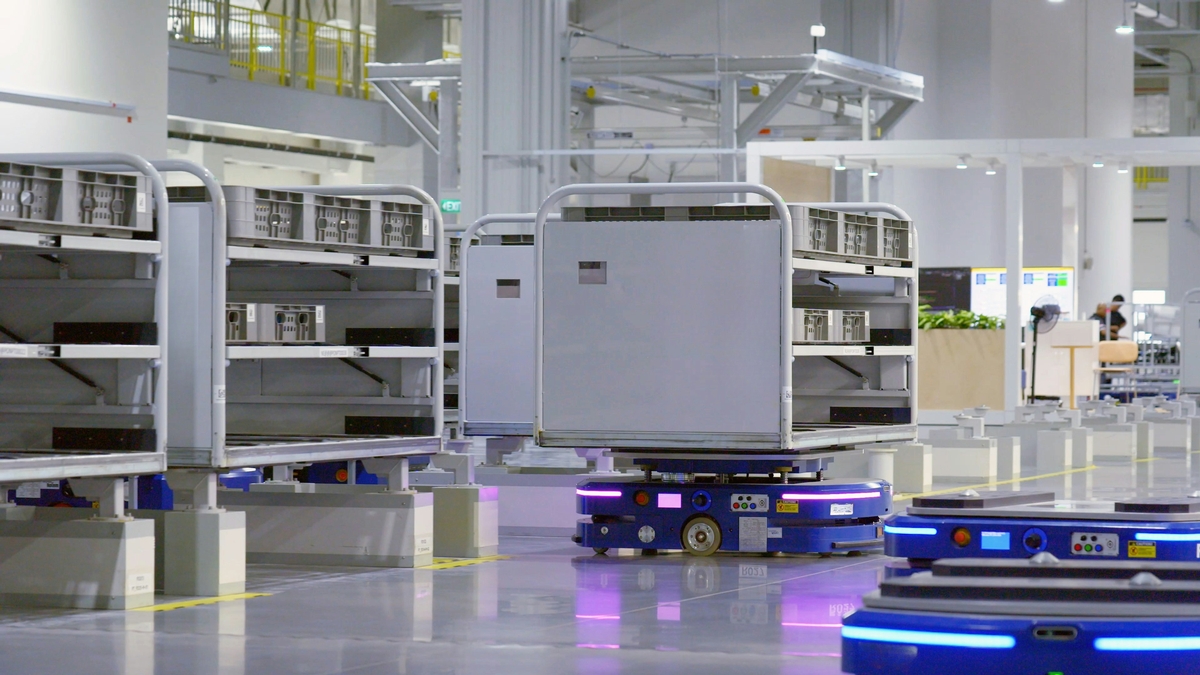
Due to this overlap, companies frequently move technologies across domains. A perception module developed for road vehicles may be considered for a warehouse robot. A safety controller designed for industrial machinery may be evaluated for a mobile autonomous platform. At a high level, both domains follow structured functional safety processes. Both perform hazard analysis, assign integrity levels, implement diagnostics, and validate performance.
However, the use cases under the scope of a specific standard can vary drastically, although the technology developed under multiple standards may be similar. The use cases are what shape each standard and therefore define the processes’ guidance within. A sensor designed for a mobile application with speeds up to 2 m/s wouldn’t be a fit for an application reaching 67 m/s, therefore you wouldn’t want to use a LiDAR certified under ISO 13849 to be used in an application to be certified under ISO 26262. Recognizing these differences early is essential for an efficient and defensible transition.
A Shared Foundation in Functional Safety
Automotive and machinery safety both use a systematic lifecycle approach. It starts with identifying hazards, followed by assessing risks and establishing safety requirements. These requirements guide design and architecture and are confirmed through verification and validation to ensure risks are minimized. Documentation and traceability throughout the process provide evidence that safety has been thoroughly addressed.
In automotive safety, this lifecycle is primarily governed by ISO 26262, with growing integration of ISO 21448 to address performance limitations in advanced driver assistance and automated systems. IEC 61508 provides the foundational principles for functional safety, while ISO 13849, IEC 62061, and ISO 10218 build upon these principles to address safety requirements in specific sectors such as machinery and industrial robots.
At the process level, the workflows look familiar to engineers in either domain. The structure of safety management, independence in review, and requirements traceability are highly transferable.
Implications for suppliers: Core functional safety practices, including disciplined requirements management, failure analysis, and verification rigor, typically carry over well when moving between automotive and machinery domains. Investments in process maturity are rarely lost.
Implications of the Environment
Automotive systems are deployed into public environments at large scale. The end user is typically an untrained member of the general public. Roadways are shared with pedestrians, cyclists, and other vehicles under unpredictable environmental conditions. Risk models therefore incorporate severity, exposure, and controllability. There is strong emphasis on perception reliability, performance limitations, and fail operational behavior.
Machinery safety evolved in industrial settings. Equipment is often installed within defined workspaces where hazards can be physically separated and access by untrained persons controlled. Risk models focus on severity, frequency of exposure, and possibility of avoidance. Physical safeguarding measures, presence-sensing devices, and machinery-controlled stops are central to risk reduction.
Implications for suppliers: A system or component developed under automotive assumptions may require additional consideration of physical safeguarding integration when entering machinery environments. Conversely, a machinery system may require additional performance limitation analysis and operational scenario definition when entering public or mixed environments.

Integrity Levels Are Not Interchangeable
Automotive systems assign Automotive Safety Integrity Levels (ASIL) from ASIL A through ASIL D, while machinery frameworks use Safety Integrity Levels or Performance Levels. While these categories appear similar, they differ in derivation, architectural metrics, and validation expectations, as well as framing methods used for diagnostic coverage assumptions and hardware metrics.
ASIL decomposition rules differ from SIL and Performance Level determinations. Therefore, no direct one-to-one equivalence could be drawn between ASIL D and SIL 3 or Performance Level e. Any mapping requires structured technical analysis.
Implications for suppliers: A previously certified integrity level does not automatically translate into compliance in another domain. Expect to perform a formal gap analysis and potentially update architectural evidence, safety analyses, and/or validation artifacts.
Regulatory and Certification Models
Automotive compliance in markets such as the United States operates largely under a self-certification model. Manufacturers declare compliance with applicable regulations and become subject to post-market investigation or recall if deficiencies emerge. Although manufacturers typically maintain each safety case internally, it must withstand legal and regulatory scrutiny.
Machinery compliance, particularly in the European context, follows a conformity assessment framework. Manufacturers affix the CE (Conformité Européenne) marking based on compliance with essential health and safety requirements and harmonized standards. Equipment classification determines the need for notified body involvement, but more explicit standards apply to documentation structures and conformity declarations.
Implications for suppliers: Documentation format and evidence presentation often require adaptation when crossing domains. Automotive documentation may need restructuring to align with technical file requirements in machinery contexts. Responsibility allocation between component supplier and system integrator must be clearly defined.
Lifecycle and Modification Expectations
Automotive products are typically highly controlled after production, with strict configuration management and limited post-sale modifications.
Machinery systems are frequently integrated with interfacing systems. System integrators may combine multiple components into bespoke installations. Therefore, safety assumptions must be clearly bound and interface responsibilities precisely documented.
Implications for suppliers: When entering machinery markets, clearly define intended use, operating assumptions, and integration constraints. When entering automotive markets, anticipate tighter configuration control and more formal change management expectations.
Convergence and Emerging Complexity
Automation is dissolving traditional boundaries. Mobile robots operate in warehouses and sidewalks. Agricultural machines combine vehicle and equipment functions. Construction platforms function in mixed public and industrial spaces.
Both automotive and machinery standards are evolving to address software complexity, autonomy, and artificial intelligence. However, the pace and framing of that evolution differ. Automotive frameworks have formalized performance limitation analysis through structured guidance. Industrial and other sectors are adapting the standards, yet some interpretation remains more context-dependent.
Implications for suppliers: Moving into robotics and autonomy may require extending traditional functional safety analysis to address performance limitations, operational design domains, and perception uncertainties, regardless of originating domain.
Realizing the Safety Transition from Automotive to Robotics
As automation accelerates, safety frameworks are not converging into a single unified model. Instead, they are intersecting. Organizations that treat standards as interchangeable checklists often encounter redesign cycles, documentation gaps, and unexpected regulatory hurdles.
However, organizations that understand the underlying assumptions, risk models, and compliance philosophies behind each framework transition more efficiently. They preserve what carries over, address what changes, and design transitions deliberately rather than reactively.
Companies that adapt safety-certified components across domains do not limit themselves to a technical approach. They also incorporate architecture, regulations, and strategy.
At Reynolds & Moore, we work with teams navigating exactly this transition. By clarifying carryover, identifying domain-specific impacts, and structuring a defensible path forward, safety challenges become engineered realities. If your organization is evaluating that transition, the right analysis early can save significant effort later.
Authors
Paul Schmitt
Director of Engineering, Reynolds & Moore
Boston, Massachusetts
[email protected]
Lorenzo Nava
EU Managing Director, Reynolds & Moore
Brescia, Italy
[email protected]
David Beam
Principal AI Safety Engineer, Reynolds & Moore
Danby, Vermont
[email protected]
-Tagline-Logo.png)
Reynolds & Moore
Reynolds & Moore is a functional safety engineering firm dedicated to bridging the gap between groundbreaking innovation and uncompromising safety in complex industries. Whether it is a novel technology or a first-ever application, we build entirely new safety cases.
Discover how Reynolds & Moore can support your automation journey with their complete range of solutions and expertise.
Related Posts
DEVELOP LLC Joins TLMI to Bring End-of-Line Automation Expertise to the Label Industry
DEVELOP LLC Joins TLMI to Bring End-of-Line Automation Expertise to the Label Industry FANUC Authorized…
The Emerging Direction of ISO/IEC TS 22440
This excerpt was originally published as part of a full article on the SRES website. Introduction…
Mainstay Digital Announces Mainstay One 3D Digital Asset Program for Automation OEMs
Plano, TX, September 29, 2026 Mainstay Digital, an industrial product visualization studio specializing in complex…
Leave a Reply