

Pentastar Puts Autonomous Wingwalking Robots Into Daily Operations
Pentastar Aviation has begun deploying autonomous robots alongside aircraft during towing operations at its facility at Oakland County International Airport in Waterford, Michigan, moving an unusual aviation automation application from testing into day-to-day use.
The robots, developed by Cincinnati-based Airtrek Robotics, perform the observation role traditionally handled by human wingwalkers. During a tow, wingwalkers position themselves near an aircraft's wings to monitor clearances, identify obstacles and communicate potential hazards to the tug operator.
Pentastar and Airtrek say the deployment is the first use of autonomous wingwalking robots in routine aviation operations. Aviation International News has more narrowly described Pentastar as the first fixed-base operator, or FBO, to adopt the technology. Pentastar began deployment in August and expects full implementation by the fourth quarter of 2026.
The significance goes beyond replacing a person walking beside an aircraft. Airtrek is automating a narrowly defined perception and safety task while leaving the larger towing operation under human control. The same mobile platform could eventually perform inspections and foreign-object-debris detection, potentially giving operators more ways to use the equipment between aircraft movements.

How Do Autonomous Wingwalkers Work?
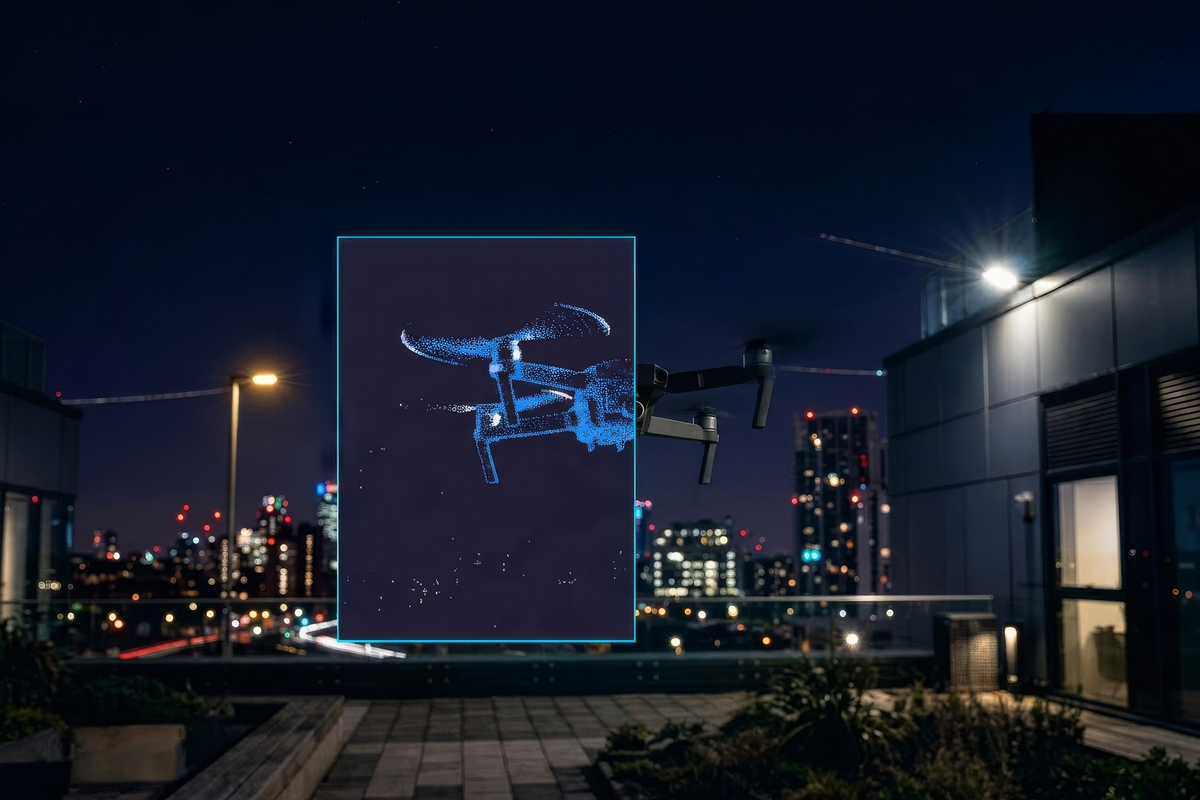
Airtrek's Groundwatch system uses two autonomous mobile robots operating alongside an aircraft during towing, typically with one positioned near each wingtip. Cameras and LiDAR monitor the aircraft and surrounding environment for obstacles and clearance issues while the tug operator remains responsible for moving the aircraft.
Airtrek says the system is designed to operate under varying lighting and weather conditions, including darkness and glare. The operator interface provides four camera feeds, a bird's-eye view and information on clearances and alerts. If the system detects a potential conflict, it can alert the operator so the tow can be stopped.
That division of responsibilities is important. Groundwatch does not make the tug autonomous or automate the aircraft. Instead, it automates the observation task around the tow while keeping a person responsible for the movement itself.
For aviation operators, that could provide another path to automation in a safety-sensitive environment: automate a constrained task with measurable inputs and outputs rather than attempting to automate the entire operation at once.

What Changes for the Ground Crew?
The workforce implications are more complicated than replacing human wingwalkers with robots. A technician initiates the Groundwatch robots, and Airtrek says one technician can initiate multiple units. Pentastar has said employees affected by the deployment can be reassigned to other activities, including customer service.
“Our high standard for safety requires precision and constant awareness, and Airtrek has created a solution that complements our crew and their expertise,” Ben Hammond, vice president of FBO services at Pentastar Aviation, said in announcing the deployment.
The key operational question will be whether that model reduces the total labor required around aircraft towing while maintaining or improving safety. Pentastar and Airtrek have not publicly disclosed enough operating data to calculate labor savings, cost per tow or a payback period.
Those numbers will matter as other FBOs evaluate the technology. Demonstrating that a robot can follow an aircraft is one step; showing that the system improves safety, utilization or operating costs enough to justify the investment is the commercial test.

The Robots Also Create a Record of Every Tow
Groundwatch adds something conventional wingwalking generally does not provide: a digital record of the operation. Airtrek says the platform records missions, alerts and events that operators can review for incident investigation, training and safety documentation.
That could become an important part of the value proposition. A conventional wingwalker observes the environment and communicates information during a tow, but much of that information is temporary. A robotic perception system can preserve video, clearances, alerts and other operational information after the aircraft has been parked.
Over hundreds or thousands of aircraft movements, those records could give an operator data to identify recurring clearance problems, examine near misses and improve procedures. The value of the system could therefore extend beyond the labor associated with individual towing operations.
It is too early to know how much operators will use that data or whether it produces measurable safety improvements. Pentastar's deployment should provide one of the first opportunities to evaluate those questions under routine operating conditions.

How Did Airtrek Get From Testing to Deployment?
The Pentastar installation follows a series of demonstrations and an operational pilot rather than a direct jump from prototype to commercial use.
Airtrek spent 2025 demonstrating its aircraft-protection technology under different operating conditions. In January 2026, the company was selected for the FLITE innovation program at Gerald R. Ford International Airport in Grand Rapids, Michigan, where Avflight agreed to host a proof of concept in an operating FBO environment.
The FLITE program provides companies with access to an airport environment for testing emerging aviation technologies. Previous projects have included autonomous baggage equipment, robotics and other ground-operations technologies.
Pentastar now moves Groundwatch into routine operations. That progression of demonstration, operational pilot and commercial deployment is particularly important for robotics systems intended for safety-sensitive environments.
A successful demonstration establishes that the technology can perform a task under defined conditions. Routine deployment tests whether it can perform that task repeatedly while fitting into existing workflows, training requirements and safety procedures.
Chris Lee, co-founder and CEO of Airtrek Robotics, said Pentastar contributed operational expertise during development that helped the company refine how the technology works in practice.
“Together, we've created a new approach to a longstanding component of aircraft ground operations that, we believe, will become a model for others across the industry,” Lee said.
Whether it becomes that model will depend on the results Pentastar produces after full implementation.
Can the Same Robot Do More Than Wingwalking?
Airtrek's longer-term opportunity may depend on using the same mobile platform for more than aircraft towing. The company is already developing Groundwatch applications for foreign-object-debris detection and aircraft inspection.
For FOD (Foreign Object Debris) detection, Airtrek says robots can autonomously move through gates, ramps and taxiways, use machine perception to identify potential debris and geotag objects for removal. For aircraft inspections, the platform can move around an aircraft, scan its surfaces and create a digital inspection record.
That broader application set could materially change the economics. A robot dedicated exclusively to aircraft towing can generate value only when aircraft are being moved. A mobile perception platform that assists with towing, searches for FOD and performs inspections could potentially operate for a larger share of the day.
Utilization is one of the fundamental challenges in robotics economics. A technically successful machine can still be difficult to justify if it spends most of its time parked. Adding applications to common hardware is one way robotics companies can improve utilization without requiring customers to purchase a separate machine for every task.
What Should the Industry Watch Next?
Pentastar's deployment is small compared with the robot fleets operating in warehouses and factories, but the application has characteristics that could make it well suited to automation. Aircraft towing takes place in a relatively constrained environment, movements occur at low speeds, clearances can be measured and the assets being protected are expensive.
More importantly, Airtrek isn't attempting to automate the entire towing process. It has isolated the perception and monitoring function and built automation around it while leaving control of the aircraft movement with the operator.
The next test is economic and operational rather than technological. Pentastar's planned full implementation should begin providing evidence about robot utilization, labor requirements, reliability and how effectively the recorded data improves ground operations.
If the same machines can also inspect aircraft and detect FOD between towing assignments, the potential market becomes broader than autonomous wingwalking. The more important question may ultimately be whether Groundwatch can evolve from a robot built for one unusual airport task into a multipurpose perception platform for the ramp.
Association for Advancing Automation
Discover how Association for Advancing Automation can support your automation journey with their complete range of solutions and expertise.
Related Posts

Physical AI & The Leadership Gap
PHYSICAL AI & THE LEADERSHIP GAP THE COMPANIES WINNING IN PHYSICAL AI HAVE ONE THING…
NSF puts $30M behind the next challenge for physical AI: Humans
The University of Texas at Austin will lead a new $30 million National Science Foundation…
A3 and Mahoning County Career & Technical Center Expand Access to No-Cost Robotics Training in Ohio
Nearly $500,000 workforce grant will support approximately 3,000 individual course enrollments to help Ohio build skills…
Leave a Reply