


Green Engineering: Building Sustainable Cities of the Future
Introduction
It is in the city where we live, work, and build our future and it is also in the city that we find the largest environmental issues of the planet.
Green Engineering provides science-based instruments to reengineer urban life in such a way that cities become a part of the climate solution, and not the problem.
This article defines the concept of green engineering in relation to contemporary cities, discusses practical examples and successful solutions, and demonstrates what can be done by planners, engineers, businesses, and citizens today to develop a healthier and more sustainable urban-based future.
Short Definition: Green Engineering = system and infrastructure design which reduces emissions, consumes resources in a more efficient manner, safeguards the natural systems, and enhances the quality of life. We will see that that works out in energy, buildings, transport, water, soil and green space and policy.
What is Green Engineering for cities?

Green engineering applies engineering standards to enhance environmental performance, human health and long-term resiliency.
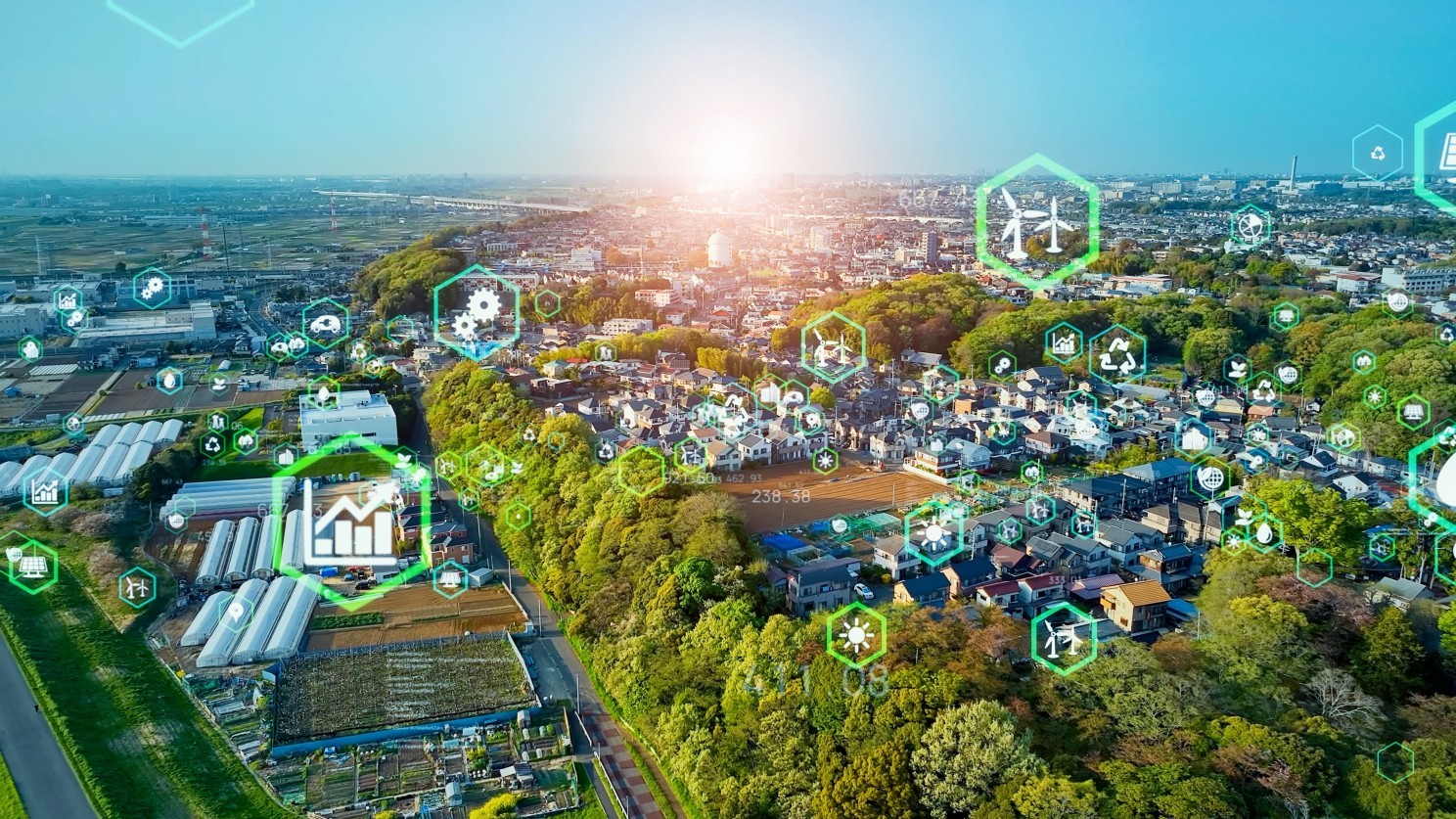
In cities, it implies combined strategies that involve mixing low-carbon energy, efficient and flexible buildings, mobility systems which lessen reliance on cars, nature-based systems which cool and clean urban areas, and digital technologies such as smart grids which maximize energy, water and waste flows.
It is not just to reduce emissions but to have quieter streets, cleaner air, safer neighborhoods, reduced utility bills, and communities that can cope with floods, heat and shocks.
Core pillars of Green-engineered cities
1. Clean Energy + Smart Grids
It is important to transition an energy system of a city out of fossil fuels and toward renewables. However, panels and wind turbines are not the solution. Smart grids, energy storage, micro grids and demand management enables cities to utilize clean energy in a reliable manner.
With a smart electrical system, solar on the rooftop, building batteries, EV charging and city services give it a balance so the renewable energy can be used when and where it is generated and not wasted. Pilot projects all over the world demonstrate the saving of bills and emissions and the increase of the local energy resilience.
2. Low-carbon, high-performance buildings
The greatest urban energy is used in buildings. Green engineering addresses this in two aspects: minimize demand by improving insulation, passive and efficient HVAC; and decarbonize the energy supply, using electric heat pumps, solar panels and low-carbon materials.
Systems like LEED and BREEAM have become even stricter in order to prioritize carbon reductions, not just on operational carbon (energy consumed during the life of a building), but on embodied carbon (emissions caused by materials and construction). The more recent standards and codes are rewarding decisions on life-cycle thinking and change design at the onset.
3. Sustainable Streets and Streetscapes
Transport is a significant urban pollutant and a quality-of-life problem. Green engineering redesigns streets to focus on walking, bicycle and bus, electrifies buses and taxis, implements smart traffic control to reduce congestion and idling, and smart traffic cameras.
The idea of the 15-minute city (where every day necessities are within short walking/biking distance) will minimize the quantity of miles travelled in vehicles, make neighborhoods more secure and social, and decrease emissions and enhance air quality.
4. Nature-based solutions and climate resilience
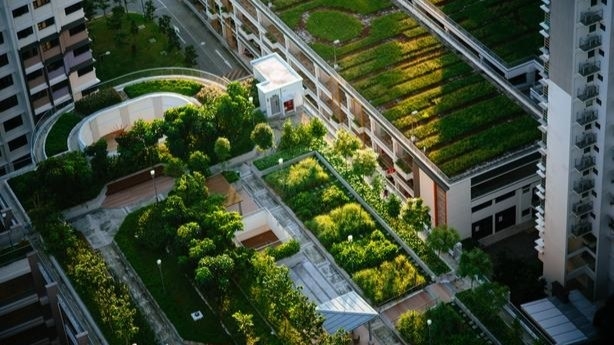
Parks, street trees, green roofs, wetlands and permeable pavements are not mere nice extravagant but are engineering means. Greening cities is a solution that cools heat islands, takes up stormwater, biodiversity, air and mental health.
City climate is increasingly being focused on nature-based solutions, due to their ability to provide multiple benefits at a lower cost than hard-engineered solutions. The latest research and urban initiatives demonstrate a quantifiable cooling and stormwater decrease due to the focused greening initiatives.
5. Circular systems for water and materials
Green engineering fosters cycling: managing waste as a resource. Cities can recycle water using decentralized treatment systems, use organic waste to make compost or biogas, and design to reuse materials in such a way that a building can be easily retrofitted but not demolished.
Circular methods will reduce the need of virgin materials, minimize landfill, and establish domestic jobs in recycling and repair. The benefits of globally structured and locally operated circular strategies are great in terms of energy and emissions reduction as the approaches are scaled.
Real-world signposts: what cities are doing now.
I. A good example of an urban climate ambition goes to Copenhagen. Its strategies combine residential, mass cycling, mass transit, which is electrified, and waste to energy. Such actions will keep the city on the path to its initial emission-reduction goals, and encourage other cities to have ambitious timelines. Copenhagen today is carrying that momentum, which carries its iterative plans to the next level.
Certified System Integrator Program
Set Yourself at the Forefront of the Global Vision Market
.jpg) Vision system integrators certified by A3 are acknowledged globally throughout the industry as an elite group of accomplished, highly skilled and trusted professionals. You’ll be able to leverage your certification to enhance your competitiveness and expand your opportunities.
Vision system integrators certified by A3 are acknowledged globally throughout the industry as an elite group of accomplished, highly skilled and trusted professionals. You’ll be able to leverage your certification to enhance your competitiveness and expand your opportunities.
II. Singapore has a national Green Plan that combines tree planting, waste minimization, and urban innovation, i.e. green roofs, energy efficiency, and sustainable food production. Green engineering is compact, high tech and people centered, as demonstrated by dense cities such as Singapore.
III. Abu Dhabi is the site of Masdar city which is a low-carbon urban design living lab. It trials energy saving structures, renewable energy frameworks, and the new models of mobility. Its massive ambitions may change but to date Masdar still accommodates research, pilots and demonstration projects that are used to educate other cities.
IV. Carbon-neutral Neighborhoods: Bahnstadt in Heidelberg and the Bryant neighborhood at Ann Arbor are examples of how carbon neutrality can be applied at the scale of the neighborhood. They apply deep energy retrofits, solar, and district-energy systems. Work at the community level is commonly quicker and more community-centered in comparison to the plans that are city-wide.
How engineers and planners translate ideas into streets and rooftops

Green engineering succeeds when it is incorporated. Solutions are co-designed by engineers, planners, ecologists and community groups. Key levers include:
I. Adaptive building codes with energy-performance as well as low-embodied-carbon material requirements.
II. Incentives and funding—green bonds, public- private partnership and performance based contracts decreases initial cost and risk dispersion.
III. Data and digital twins: Software representations of city systems allow planners to experiment with changes to their systems, e.g., the extent to which a tree canopy can reduce summer peak cooling demand.
IV. Pilot -first strategy: start with the demonstrators that can be scaled-solar carports, EV bus corridors, rain gardens in flood-prone areas.
V. Planning focused on the community: initiatives that avoid displacement and increase accessibility are popular with the community and bring benefits in social and environmental terms.
These levers transform technical solutions into experienced improvements, cooler streets, lower energy costs, safer trips to work, and more appealing neighborhoods.
Common pitfalls (and how to avoid them)
I. Technology-only thinking: the use of gadgets only, without re-examining land use and social systems.
Fix: integrate technology and planning policies and behavior-oriented policies.
II. Short-term cost orientation: life-cycle savings are not taken into consideration.
Fix: apply whole-life costing and consider health and nursery benefits.
III. One size fits all solutions: what is effective in Copenhagen might not be effective in Lagos or Manila.
Fix: localizing- climatic, cultural and institutional capacity is important.
IV. Equity gaps: green upgrades which increase rents and evict tenants.
Fix: accompany physical upgrades with housing affordability protecting policies.
What can be done today by the citizens and businesses.

I. Local government is requested to provide more environmentally friendly buildings and mass transit.
II. Planting of support trees and greening of neighborhoods.
III. Select suppliers of low carbon and promote corporate net -zero scopes that include embodied carbon.
IV. Retrofit your building, which management should consider to invest in energy retrofits, as they can usually reimburse with lower bills.
V. Participate in local planning: 15 -minute neighborhoods and safer streets are developed when residents give their opinion.
CONCLUSION
Green engineering is a viable positive way of leading to healthier and stronger cities. It is neither magic nor witchcraft but the design of a multi-disciplinary approach, better policy, and the continued involvement of the public.
Mixed densities of energy, efficient buildings, people-focused mobility, solutions based on nature, and circularity will reduce emissions and enhance everyday life in cities.
Real world experience teaches us this: it is best to small-scale the idea at the beginning, experiment, and then scale if it works, and make equity a priority. The cities of the future are not merely low-carbon, but habitable and affordable and positioned to meet the changes that are already taking place.

Asamaka Industries Ltd
Asamaka Industries Ltd specializes in providing comprehensive control automation solutions across multiple industries including automotive, power generation, and distribution. From electrical design to implementation of advanced technologies like robotics and vision systems, we cater to the unique needs of each sector, ensuring safety, quality, and efficiency in every project.
Discover how Asamaka Industries Ltd can support your automation journey with their complete range of solutions and expertise.
Related Posts

DEVELOP LLC Joins TLMI to Bring End-of-Line Automation Expertise to the Label Industry
DEVELOP LLC Joins TLMI to Bring End-of-Line Automation Expertise to the Label Industry FANUC Authorized…

The Emerging Direction of ISO/IEC TS 22440
This excerpt was originally published as part of a full article on the SRES website. Introduction…
Mainstay Digital Announces Mainstay One 3D Digital Asset Program for Automation OEMs
Plano, TX, September 29, 2026 Mainstay Digital, an industrial product visualization studio specializing in complex…
Leave a Reply