

Building a Resilient Future: How Engineering Principles Strengthen Corporate Sustainability Strategies
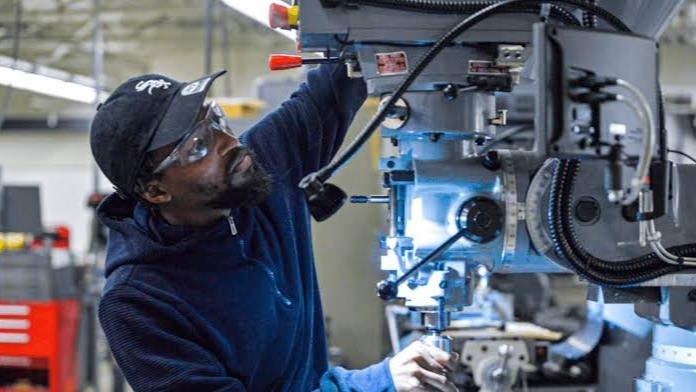
Picture this: a manufacturing company whose facilities are fitted with intelligent sensors that optimize energy in real time; or a construction company using low carbon materials that reduce emissions as well as costs. It is not futuristic fantasy, this is how actual businesses are enjoying the twin benefits of sustainability and engineering ingenuity.
In the current volatile world, businesses need to manage the increasing energy prices, consumer pressure to make greener products, tightening environmental regulations, and the demand to meet the Environmental, Social and Governance (ESG) commitments by investors. The message is apparent: we have to survive, we have to succeed and the only way to do that is by implementing resilience by adopting sustainable, engineered solutions.
Firms now have the option to persist with the historic playbook of short term benefits at environmental cost or invest in engineering-based sustainability solutions that will yield long term resilience, competitive advantage and economic returns.
This article will explain why the latter is not only altruistic, but also good business.
1. Engineering-Driven Efficiency = Real Savings
When a business integrates engineered solutions into business processes, the dividends are actual. In industries like manufacturing, logistics and IT services, energy is usually the largest driver of cost. Efficiency gains can be measured and reproduced by engineering interventions.
- Energy saving designs including efficient layouts and controls can reduce bills by up to 30%.
- Digital analytics-based predictive maintenance cuts down maintenance costs and downtime by about 50%.
- Green infrastructure is cheaper (at least in the case of Philadelphia, whose citywide plan costs 1.2 billion dollars, as opposed to the conventional alternatives of 6 billion dollars) and has the added benefit of improving air quality and health outcomes.
These savings don't just lie in balance sheets, they are available to be reinvested in growth. Using an example of a logistics company, optimizing the routes to cut on fuel wastage will not only cut the cost but also the emissions, which will have benefits to both the company and society.
The outcomes are plain: engineering is not just a self-paying discipline, but a self-accelerating money-maker. A dollar saved in energy or maintenance cost today compounds into millions of generated savings throughout an entire supply chain tomorrow.
2. Unlocking New Revenue and Strategic Advantage
Engineering-led sustainability goes beyond cost savings, opening up opportunities to grow, innovate and differentiate. Businesses that practice sustainable design enjoy the accessibility of markets that used to be closed since consumers around the world are changing their spending habits.
- Companies can appeal to eco-aware buyers who are usually ready to pay a higher price. Studies indicate that approximately 70% would pay more to buy sustainably produced goods.
- Innovating low-carbon materials, clean-tech products, or recyclable packaging is one way to distinguish a brand in overcrowded markets.
- An advantage of being a first mover in the sustainable innovation world is that the industry standards are established and the customer loyalty is secured.
This advantage can spell the difference between life and death of startups. A recent report indicates that green start-ups survive almost two times as long as non-green start-ups.
That is, sustainability is not just a moral decision: it is a money maker. Businesses of the future will not be selling on cost or quality alone, but also on the responsibility and sustainability of operations.
3. Enhancing Resilience and Decreasing Risk
One of the main lessons that the pandemic taught businesses is that resilience is invaluable. The experience of the post-COVID supply chain shocks demonstrated that more sustainable supply chains are more resilient, less risky, and trusted by stakeholders.
Such engineering-driven systems as Life-Cycle Engineering (LCE) challenge enterprises to consider the complete environmental and economic costs of products, beginning at cradle and continuing through to the grave. This will guarantee that the possible dangers are foreseen and planned in advance; be it material shortage, disposal fees, or some future carbon tax.
In other words, imagine a business that uses rare metals and has not planned around recycling or alternatives is setting itself up to be vulnerable. Engineering circularity, the design of products with reuse and recycling in mind, gives another firm the resilience to shortages, as well as to price volatility.
A business that engineers resilience is in a better position to survive shocks, maintain continuity and scale sustainably.
4. Satisfying Investor and Regulatory Requirements

The corporate world is under greater scrutiny than ever before. Investors and regulators are no longer content with promises of vaguely-defined initiatives; they seek quantified response. Sustainability supported by engineering offers the solution to achieve these requirements.
- 90% of the studies indicate that higher ESG standards reduce capital costs, and 80% are associated with stock performance.
- Major investment firms such as BlackRock are increasingly directing funds towards companies that can demonstrate that they are managing their sustainability.
- Compliance is becoming more stringent, the EU Corporate Sustainability Reporting Directive (CSRD), net-zero requirements and greater carbon disclosure regulations require engineering-based compliance.
The alignment of the investor priorities and the government regulations increases the stakes. Companies that do not pay attention to sustainability risk face fines, restricted access to funding, and damage to reputation. The firms that adopt it have more fluent investor relations, regulatory preparedness, and security in the long-term.
5. The Role of Technology and Innovation
Digital technology is turbocharged in modern engineering solutions, Innovation has made sustainability goals that previously appeared to be aspirational achievable.
- Sustainable IT already takes over a third of digital transformation budgets, including renewable-powered data centers to low-emission software systems.
- Digital twins and predictive analytics enabled by AI can help companies reduce waste, extend the life of equipment and simulate operations.
- Circular engineering and decarbonization models will make sustainability principles part of the products throughout their lifecycle.
The true beauty of this is scalability: a technology used in a single factory or office can be reproduced throughout operations anywhere around the world. Digital innovation and engineering combined can transform sustainability into a competitive advantage rather than a compliance check box.
6. Real-World Perspective: Companies as Role Models

It is not hypothetical, companies around the globe are already demonstrating the business case on engineering-led sustainability.
- In fashion manufacturing, companies such as Epic Group and Arvind are making investments in net-zero factories and biomass boilers in India, demonstrating the initiative at a time when some companies are backtracking on climate pledges.
- In Ireland, the startup Flex Power Solutions uses surplus renewable energy to create industrial heat, reducing emissions by 30% and reducing operational costs. There are other ways of rethinking the construction sector with low-carbon concrete and food systems with AI-driven waste minimization.
- A Financial Times study showed that global industry could save 437 billion dollars a year by 2030 through scaling energy efficiency.
These examples demonstrate a very important fact, which is that the businesses that integrate engineering into sustainability are not only doing well, they are leading the way of the new economy.
CONCLUSION
The road to sustainable development is not a financial load; it is a strategic investment in resilience, innovation, growth and reputation. By joining engineering and sustainability, companies have more to gain than low emissions: they can achieve savings, customer loyalty, regulatory compliance and cash.

Asamaka Industries Ltd
Asamaka Industries Ltd specializes in providing comprehensive control automation solutions across multiple industries including automotive, power generation, and distribution. From electrical design to implementation of advanced technologies like robotics and vision systems, we cater to the unique needs of each sector, ensuring safety, quality, and efficiency in every project.
Discover how Asamaka Industries Ltd a can support your automation journey with their complete range of solutions and expertise.
Related Posts

DEVELOP LLC Joins TLMI to Bring End-of-Line Automation Expertise to the Label Industry
DEVELOP LLC Joins TLMI to Bring End-of-Line Automation Expertise to the Label Industry FANUC Authorized…

The Emerging Direction of ISO/IEC TS 22440
This excerpt was originally published as part of a full article on the SRES website. Introduction…
Mainstay Digital Announces Mainstay One 3D Digital Asset Program for Automation OEMs
Plano, TX, September 29, 2026 Mainstay Digital, an industrial product visualization studio specializing in complex…
Leave a Reply