

Digital Twins and the Future of Smart Manufacturing
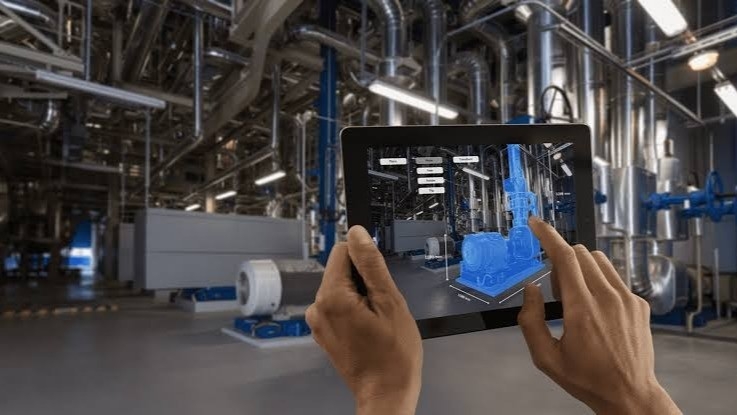
Imagine a factory floor you can inspect, test and optimize without setting foot inside it, experiment with, and with which you can enhance, and each machine, conveyor, and robot has a living virtual counterpart, which replicates its real-time behavior.
That’s the promise of the digital twin, a dynamic, data-driven simulation of a physical asset, system or process, which promises to be so.
Digital twins are also real-time, though
This article defines digital twins, their relevance today, actual applications in the real world, technical and organizational challenges they pose, and how manufacturers can start using them to develop resilient and efficient operations.
The Simple Definition of a Digital Twin.
they play a bigger role in strategic decision-making at scale, accelerating product development, minimizing breakdowns, streamline operations, and reducing them.

A digital twin is not only a 3D model, but it is a living simulation that consumes data and operates on three planes: a data plane (sensors readings, historical records, maintenance records, quality metrics, etc.), a behavior plane (physics, control logic, machine-learning predictions) and a visualization and analytics plane (dashboards, simulation tools, decision engines, and so on).
All these layers combined, allow teams to operate the actual system in software; simulate, predict failures, test upgrades, and measure their impact before wasting time and money on the physical world. Large suppliers like Siemens, IBM, and PTC regard digital twins as the means of integrating product design, production engineering and service workflow throughout the lifecycle.
The Importance of Digital Twins to Manufacturing Today.
Digital twins are relevant today because three forces come together:
1. Ubiquitous Sensors and IIoT: Modern equipment transmits temperature, vibration, power consumption, and other signals in real-time and digital twins consume the data.
2. Affordable Compute and Advanced Analytics: Cloud-coded, edge computing, and established machine-learning libraries enable simulations and predictive models to run on-demand and at scale.
3. Pressure to be resilient and fast disruption to supply chains, shortage of skilled workforce, and the necessity to reduce time-to-market push manufacturers to virtualize decisions before changing hardware. Researchers at McKinsey and others view digital twins as one of the most important scaling capacity levers and resilience building tools.
4. Market Estimates mirror this Momentum: More recent market assessments indicate that digital twins will grow fast in the coming decade and draw investments in most sectors.
Material Compensation: The Real Advantages of Factories.
Here are the tangible ways digital twins change outcomes on the floor:
1. Both Predictive Maintenance and less Downtime.
In the real world, digital twins provide physical shop floor advantages through predictive maintenance and downtime minimization. A twin compares real-time sensor data to models and thus identifies the patterns of anomalies which in most cases are indications of imminent failure. Premeditative maintenance reduces unexpected downtimes, reduces the cost of maintenance, and enhances the life of equipment.
According to case studies and industry reports, there have been less downtimes and less maintenance expenses by the twin-driven programs.
2. Faster Product and Process Development.
Products and processes are also developed faster with the help of digital twins. Design validation Design testing assembly sequences Design test process change Engineers are able to check designs, test assembly sequences and test process changes in a virtual environment rather than construct expensive prototypes. Certain companies have recorded drastic reductions in the development time and commissioning overheads.
3. Real-time Optimization and What-if Planning
Digital twins allow real-time optimization and what-if planning. Using new shift patterns, supplier delays or re-routed conveyors, planners can simulate and then execute scenarios to measure trade-offs; throughput, energy consumption, staffing, and lead time, before making any alterations on the shop floor.
4. Improvement in Quality and Traceability
Coupling of product and process twins results in quality improvements and traceability. Manufacturers get end to end traceability, the ability to identify the precise conditions of the line that produced a defective batch, simulate corrections and apply them with confidence. This lowers scrap, quickens recall reaction, and enhances compliance.
5. Training and Remote Support
Virtual replicas provide the training conditions of the operators into a realistic environment and enable the specialists to support remote plants. With complicated installations, this results in a quicker troubleshooting and safer changeover.
An Example of the Headline: Hyundai has a new AI-powered Meta plant in Georgia: this time the central digital twin is used to reflect the activities of the plant in real time, optimizing quality and speeding up troubleshooting, as well as making an AI-first approach to plant-scale manufacturing.
The sheer size of such large plants indicates that digital twins can be used as the main operation centers and not an engineering tool only.
The Organizational and Technical Issues

Digital twins are strong, and the implementation is not a pain-free affair. Expect to wrestle with:
I. Data Quality and Integration
Twins need clean time synchronized information provided by PLCs, MES, ERP, and sensor networks. The largest integration headaches can be the legacy equipment and silos.
II. Validation and Model Accuracy is Critical
The models of a twin are the only good that it is. Constructing artificial intelligence that can support a physics-based or hybrid approach to machine learning demands expertise of the domain and validation on an ongoing basis. Anomaly detection of false positives is resource wasted and false negatives can be dangerous.
III. Cybersecurity and Governance
Cybersecurity and governance are aimed at securing the living model reflecting the critical assets. It is necessary to have secure data flows, identity management and governance policies. Studies show that twins may also be used to test cyber defenses even though this must be designed intentionally.
IV. Change in Skills and Processes
This requires engineers and operators to acquire new tools and working processes. Companies should undertake change management: establish twin ownership, change procedures and boarding of the twin feeds into decision making.
V. Cost and ROI Clarity
A twin program can be a very expensive undertaking in terms of sensors, software and integration. Being able to measure ROI before scaling, manufacturers must determine high-impact use cases such as predictive maintenance on a bottleneck asset.
Practical Roadmap: how to start (without wasting money).

I. Begin small, targeting a high-value asset or line. Select equipment on which there exists a definite financial effect of downtime or quality defect, and show the value of the twin before scaling.
II. Prioritize data plumbing. Normalize timestamps, develop safe pipelines to ingest data, and resolve the most evident data quality holes. The twin will not be able to cope without reliable data.
III. Use hybrid models. Combine predictable dynamics, that can be modeled analytically, with complex patterns that are difficult to model analytically, using machine learning. These balances balance explain ability and performance.
IV. Establish governance during inception. Determine ownership of twin ownership, alter the processes, and model validation and deployment; combine cybersecurity reviews.
V. Measure and scale. Measure KPIs like downtime, OEE, and scrap rate and expand the program initially to single asset and then to lines and eventually to an entire plant.
In the future, we can expect to see digital twins and the industrial metaverse.
Digital twins will be integrated in the near future. The product twin will be linked to a process twin which will then be linked to the supply chain and even twins of employees or workflow can be incorporated.
The analysts predict that vast market expansion and novel products that would integrate real-time simulation with AI agents that have the capacity to independently recommend optimizations will emerge.
Once these tools are applied in conjunction with the digital-thread practices which is the connection of data at all the lifecycle phases, the factory can be made adaptive, predictive and more autonomous. This turn gives significant concerns regarding the reskilling of the workforce, the ethics of data, and the responsible AI governance.
CONCLUSION
Digital twins are not just a headline-technology, but offer a viable mechanism that manufacturers can use to reduce downtimes, reduce development processes, and make more intelligent decisions in a shorter period of time.
Its advantages are concrete and quantifiable, although its success depends on effective use cases, data management discipline, proven models, and good governance and security.
To manufacturers who think intelligently, digital twins can map a new path to more resilient, efficient and responsive operations, and make the basis of the factories of tomorrow.

Asamaka Industries Ltd
Asamaka Industries Ltd specializes in providing comprehensive control automation solutions across multiple industries including automotive, power generation, and distribution. From electrical design to implementation of advanced technologies like robotics and vision systems, we cater to the unique needs of each sector, ensuring safety, quality, and efficiency in every project.
Discover how Asamaka Industries Ltd can support your automation journey with their complete range of solutions and expertise.
Related Posts
DEVELOP LLC Joins TLMI to Bring End-of-Line Automation Expertise to the Label Industry
DEVELOP LLC Joins TLMI to Bring End-of-Line Automation Expertise to the Label Industry FANUC Authorized…

The Emerging Direction of ISO/IEC TS 22440
This excerpt was originally published as part of a full article on the SRES website. Introduction…
Mainstay Digital Announces Mainstay One 3D Digital Asset Program for Automation OEMs
Plano, TX, September 29, 2026 Mainstay Digital, an industrial product visualization studio specializing in complex…
Leave a Reply