

Engineering the Future: How Climate Change Is Reshaping Design Standards

Uncertainty has always been there in the hands of engineers, but now climate change is altering the point of departure. What is thought to be rare nowadays is common: long heat waves, rains that flood sewers, and rising seas every year.
The planet is also warming in 2024, approximately 1.55°C higher than in 1850-1900 and sea-level is accelerating. These are not abstract headlines to designers, they are new boundaries. To ensure the built environment is sustainable into the 2050s and 2060s, we cannot afford to use historical data only. The loads, temperatures, flowing water, durability and risk are all changing throughout the life of a building.
Such a change is quietly transforming codes, standards, and professional practice. Flood heights are climbing. HVAC computations are now made with hotter design days and warmer nights. The greenhouse-gas emissions are counted in transportation plans. The planning, procurement, and operation of international standards place climate adaptation within them. Moving away Resilience is becoming not an optional piece of advice, but a demand.
This article demonstrates how climate change modifies design standards and what engineers can do now in order to construct projects that can withstand the future.
Reasons climate risk should be in design

Science recommends that humans have warmed our planet, extreme events are becoming stronger. According to the recent reports, there was record heat, warmer oceans, and rising seas that will continue to rise in centuries. Even a project that is up to date in terms of codes might fail in the event that it overlooks future risk. We require targets which capture changing baselines, larger probability tails, and cascading dangers, like flooding which layers storm surge and heavy rain, heatwaves which add wildfire smoke, or coastal storms which strike higher sea levels.
The central transformation is both philosophical and technical: climatic hazard is not an edge case anymore; it becomes an in-design input.
Standards and codes are starting to keep pace
A number of powerful frameworks have shifted aspirational language to written requirements.
- Flood loads and elevations (ASCE/SEI 7 -22): The recent changes reinforce flood provisions. They explain hydrodynamic forces, impact of the debris and combinations magnified by floods. Anticipate more detailed treatment, elevated freeboard, and more prudent assumptions in flood plain, especially with critical facilities and coastal locations.
- U.S. federal flood policy (FFRMS): FEMA has developed its Federal Flood Risk Management Standard, and it is currently applicable to FEMA funded projects. Agencies are required to consider future circumstances by raising, flood-proofing or locating projects beyond an increased floodplain. Alternatives are approaches to climate-informed science, a freeboard approach, or a 500-year flood approach. The outcome is an increased design floor on the public works and a break in the rebuild and repeat cycle.
- European structural codes (second-generation Eurocodes): The revision focuses on climate resilience. Work programs seek climate-proof priority standards. Although national annexes vary, foreseeing revised reference conditions, enhanced durability provisions related to evolving classes of exposure, and the direct use of climate-informed datasets during the design life should be anticipated.
- HVAC and envelope climatic data (ASHRAE 169): The standard now contains updated climatic design values dry-bulb temperature, wet-bulb temperature, humidity ratios, degree-days and climate zones at thousands of locations. With the most up-to-date tables, plant sizing, envelope specifications, ventilation plans, and comfort modeling can be materially altered on constructing hotter design days and warmer nights.
- Adaptation management systems (i.e. ISO 14090): This standard is an international standard which establishes principles and demands of integrating climate adaptation into organizational operations. It challenges asset owners and design teams to evaluate exposure, take actions, manage performance and continuously increase and refine, making do something about climate as part of the management cycle.
- Transport performance and emissions (FHWA GHG rule): Highway agencies in the United States should establish declining CO2 levels and disclose their developments. This regulation does not supersede resilience design, but converts network planning to emissions targets. The rule affects the choice of material, project options and the corridor strategies.
What’s shifting on the drawing board
These policy shifts translate into concrete moves across sectors:
- Cities and heat-ready buildings:
Increasing temperatures increase loads indoors and may result in undersizing of cooling plants as designers use old climate tables. High-albedo roofs and pavements, external shading, cross-ventilation, radiant systems, thermal storage and heat-tolerant facades are among the practical strategies. Mechanical systems are scaled up with new climate information, and passive systems cut peak demand. The design of the public spaces also involves shade trees, cool corridors and water features, which reduce urban heat stresses and enhance walkability.
- Resilience to flood and stormwater:
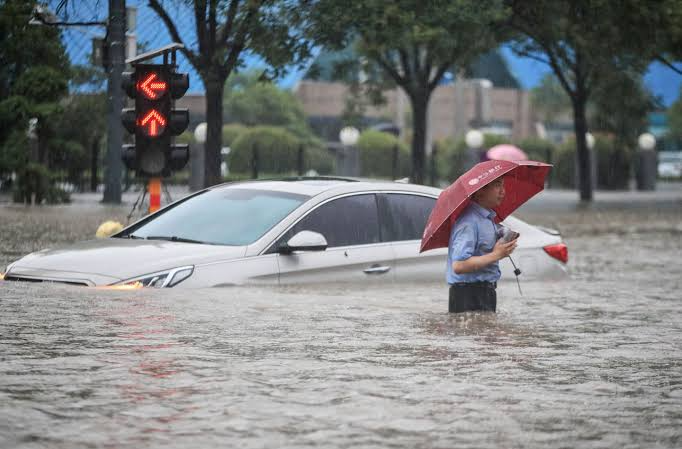
Projects will adopt elevated finished-floor levels, dry- and wet-floodproofing where relocation is not feasible and will relocate utility rooms outside floodplains. Site plans put nature solutions, such as restored wetlands, bioswales, retention landscapes, and permeable surfaces, of choice to minimize cloud-burst runoff. Riverine, pluvial and coastal drivers are combined to produce hydraulic models that take into account the impacts of debris, scour, and backflow.
Certified System Integrator Program
Set Yourself at the Forefront of the Global Vision Market
.jpg) Vision system integrators certified by A3 are acknowledged globally throughout the industry as an elite group of accomplished, highly skilled and trusted professionals. You’ll be able to leverage your certification to enhance your competitiveness and expand your opportunities.
Vision system integrators certified by A3 are acknowledged globally throughout the industry as an elite group of accomplished, highly skilled and trusted professionals. You’ll be able to leverage your certification to enhance your competitiveness and expand your opportunities.
- Strong cyclones:
A warmer ocean contributes to stronger cyclones, and more wet snow or ice is picked up in some locations. Designers are examining cladding attachments, rooftop equipment anchorage, backup power to critical systems and continuity-of-operations plans. Fire‑weather risk prompts ember‑resistant vents, defensible space, noncombustible exteriors, and compartmentation at the wildland‑urban interface.
- Durability and service life:
The materials survive more thermal cycling, humid swings and salt exposure. There are now specifications of heavier concrete cover in marine areas, fasteners which resist corrosion, drainage beneath claddings, moisture-resistant insulation and vapor-open assemblies that dry without problems. Service-life design aligns the anticipated climate with the lifetime of an asset, inspection, and maintenance schedules change to the anticipated climate.
- Digital processes:
BIM and GIS are incorporated with climate layers that allow teams to view heat islands, simulated flood areas and sea-level shifts in the model. Parametric studies compare freeboard levels, sizes of HVAC and envelope selections to future data to identify robust, low-regret options. The version control records the climate assumptions of major decisions.
Insurance, finance, and legal drivers
The minimum is established by codes; markets move the frontier. Insurers are reviewing risk in flood and fire-prone regions, either increasing premiums or ceasing to cover risks. The disclosure of climate risks and resilience measures has become the requirement of lenders and investors. Under the design of projects, owners are interested in having design teams prove that the projects satisfy not only existing codes, but also a design-life safety case, considering the likely near-term climatic conditions.
The amount of legal exposure increases when the reasonably foreseeable risks are disregarded, despite the standards and authoritative data available. Being in this environment, the recording of assumptions, why the elevations, fixings and the sizes of plants appear the way they do, is no longer an option, but professional due diligence.
Three practical scenarios:
1. Coastal wastewater plant: Under the FFRMS application, the team would be challenged to elevate critical electrical equipment above an enhanced flood elevation and shift chemical storage out of the floodplain. Wetland restoration combined with surge barriers dampen wave power, and provide habitat. The outcome: reduced cases of service interruptions, minimized contamination risk in case of storms and reduced lifecycle losses.
2. Expansion of a hospital in a hot city: ASHRAE climate tables revised show the 1% cooling-dry-bulb adding several degrees. The team incorporates exterior shading fins, spectrally selective glazing and a high-albedo roof to restrain peak loads, and then oversizes chillers with redundancy to operate during heatwave. A heat-action plan designates backup cooling areas to critical care and defines upgrades on filtration during smoke events.
3. Highway corridor: The DOT assesses emissions and resiliency in alignments and pavement choices with required CO₂ targets. Designs feature higher embankments over flood crossings, use of recycled-asphalt content to reduce embodied carbon, and culvert upgrades that are modeled to handle compound rainfall-surge events occurring in the mid-century. Procurement prefers EPD-verified building materials and construction stages with the minimal idling and detours.
What engineers should do now
I. Use prospective datasets. Substitute stationarity with projections of authority and with new design tables that are location- and service-life-appropriate.
II. Document the rationale. Demonstrate the reflection of loads, temperatures, and elevation in accepted standards and agency policies- not an ad-hoc assumption.
III. Design for adaptability. Favor modular systems, maintenance access, and space for future equipment upgrades. Freeboard, shading, passive cooling, drainage, and equipment elevation, which are low-regret measures, are paid across scenarios.
IV. Pair mitigation with adaptation. Minimise operations and fixed carbon and strengthen assets. Comfort, air quality, and durability can also be improved by the efficacy of envelopes, electrification, and low-carbon concrete.
V. Engage owners and communities. Performance objectives, siting and phasing should be determined considering risk tolerance, cost of downtime and social equity. Transparent risk residue encourages trust and aids in trade-offs.
CONCLUSION
Climate change is transforming all engineering decision making assumptions. Well-defined, standards-based practices should be returned to engineers in response to ensure that the responses are ready to face the future without incurring value losses in the present.
The landscape is evolving: flood regulations have been reinforced; federal funding must consider climate-based elevation; Eurocodes include resilience; HVAC data consider warmer weather; transport agencies monitor emissions; and management systems turn adaptation into a cycle of review and revision.
This does not require the oversized designs. It requires the utilization of current climate information, investigation of various hazard conditions, and selection of malleable, non-active, low-maintenance solutions. Mitigation combined with adaptation the reduction of carbon and increasing assets that can endure heat and floods and rising water—engineering in a manner that is beyond compliance towards continuity, equity and long-term value.
Asamaka Industries Ltd
Asamaka Industries Ltd specializes in providing comprehensive control automation solutions across multiple industries including automotive, power generation, and distribution. From electrical design to implementation of advanced technologies like robotics and vision systems, we cater to the unique needs of each sector, ensuring safety, quality, and efficiency in every project.
Discover how Asamaka Industries Ltd a can support your automation journey with their complete range of solutions and expertise.
Related Posts

DEVELOP LLC Joins TLMI to Bring End-of-Line Automation Expertise to the Label Industry
DEVELOP LLC Joins TLMI to Bring End-of-Line Automation Expertise to the Label Industry FANUC Authorized…
The Emerging Direction of ISO/IEC TS 22440
This excerpt was originally published as part of a full article on the SRES website. Introduction…
Mainstay Digital Announces Mainstay One 3D Digital Asset Program for Automation OEMs
Plano, TX, September 29, 2026 Mainstay Digital, an industrial product visualization studio specializing in complex…
Leave a Reply