
How Chitale Bandhu, Premisys, and Intel are turning manufacturing data into actionable insights—and what their experience means for Industrial AI
Key Takeaways from Intel's 2026 Webinar
What happens when a highly automated factory has all the data it needs but still struggles to turn it into timely decisions?
That was the challenge Chitale Bandhu brought to an October 13 A3 webinar featuring Intel and Premisys. Their conversation explored how agentic AI can help manufacturers unlock intelligence from existing systems, improve operational visibility, and empower engineers to make better decisions.
The webinar, “Scaling Industrial Agentic AI: From Proof of Concept to Production Value,” featured Ricky Watts of Intel, Prabhat K. Gupta of Premisys AI, and Janhavi Chitale of Chitale Bandhu.
A Real Problem, Not a Technology Experiment
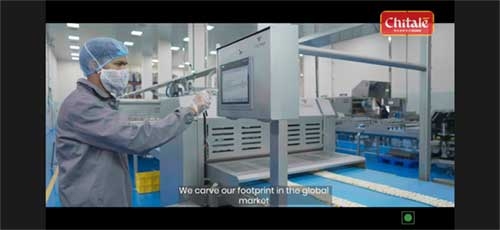
Chitale Bandhu, an Indian food manufacturer, runs highly automated production lines that produce products such as Bakarwadi. Cooking oil is one of its major production expenses. Its operations already include flow meters, load cells, and systems tracking oil movement throughout production.
With multiple fryers feeding a common output, it was difficult to determine how much oil each fryer consumed. Engineers and supervisors relied on manual reconciliation of production and consumption records, sometimes identifying discrepancies only after considerable delay.
The challenge was not a lack of data. The challenge was turning existing operational information into timely, actionable intelligence.
Bringing Intelligence to the Factory Floor
Working with Premisys and Intel, Chitale implemented an agentic AI solution designed to analyze existing manufacturing data and support operational decision-making. Two configurable assistants address fryer oil usage analysis and oil requirements forecasting.

Instead of manually searching across reports, supervisors can ask which fryer experienced unusual consumption, which anomalies occurred during a particular period, or what oil volume is needed for upcoming production.

Unlike a conventional chatbot, this agentic approach can consult multiple data sources and analytical tools to assemble relevant answers. The solution operates on-premises, helping keep sensitive manufacturing information within the factory.
Where Does the Business Value Come From?
Chitale described oil consumption of about 6,000 to 8,000 liters per day across the lines discussed, rising above 20,000 liters during peak periods. At that scale, even a hypothetical 1% reduction in consumption could represent meaningful savings. This is an illustrative opportunity, not a verified achieved savings figure.
Earlier anomaly detection can help engineers investigate discrepancies sooner. Better forecasting supports inventory and procurement planning. Faster visibility reduces time spent assembling reports and gives engineers more capacity to focus on operational improvements. Beyond reducing waste, better visibility into oil consumption can also help Chitale maintain the product consistency, crispiness, and quality its customers expect.
AI and People: Better Outcomes Together
At Chitale, the system supports operational analysis and decision-making, with engineers validating insights and retaining control over corrective actions. They investigate whether an anomaly reflects a sensor problem, equipment issue, or normal process variation before deciding what to do. The implementation was still being tested and validated at the time of the webinar.

Jan. 18-20, 2027 | Orlando, Florida
Your favorite three days of the year
Join executives and decision-makers to explore the forces shaping the year ahead, exchange insights, and build relationships that advance automation.
Related Posts

Darveen Partners with Global American to Expand Industrial Computing Solutions in the U.S.
Taipei, Taiwan, August 11, 2026 – Darveen, a global leader in industrial computing, today announced…
Reynolds & Moore Launches Training Path for Physical AI Safety Based on NVIDIA IGX™
As physical AI moves into factories, warehouses, homes, and other real-world environments, engineering teams need…

Safety Is The Shortcut: How Better Engineering Decisions Accelerate Product Development
Executive Summary Every innovative product eventually answers the same safety questions. The only difference is…
Leave a Reply