
Key insights from Intel’s Webinar
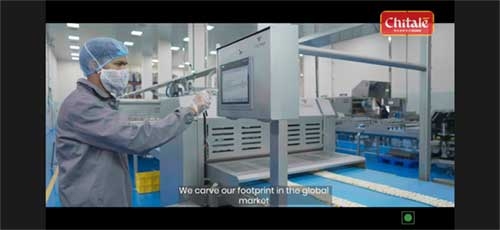
How Chitale Bandhu, Premisys, and Intel are turning manufacturing data into actionable insights—and what their experience means for Industrial AI.
What happens when a highly automated factory has all the data it needs but still struggles to turn it into timely decisions?
That was the challenge Chitale Bandhu brought to an October 13 A3 webinar featuring Intel and Premisys. Their conversation explored how agentic AI can help manufacturers unlock intelligence from existing systems, improve operational visibility, and empower engineers to make better decisions.
The webinar, “Scaling Industrial Agentic AI: From Proof of Concept to Production Value,” featured Ricky Watts of Intel, Prabhat K. Gupta of Premisys AI, and Janhavi Chitale of Chitale Bandhu.
A Real Problem, Not a Technology Experiment
Chitale Bandhu, an Indian food manufacturer, runs highly automated production lines that produce products such as Bakarwadi. Cooking oil is one of its major production expenses. Its operations already include flow meters, load cells, and systems tracking oil movement throughout production.
With multiple fryers feeding a common output, it was difficult to determine how much oil each fryer consumed. Engineers and supervisors relied on manual reconciliation of production and consumption records, sometimes identifying discrepancies only after considerable delay.
The challenge was not a lack of data. The challenge was turning existing operational information into timely, actionable intelligence.
Bringing Intelligence to the Factory Floor
Working with Premisys and Intel, Chitale implemented an agentic AI solution designed to analyze existing manufacturing data and support operational decision-making. Two configurable assistants address fryer oil usage analysis and oil requirements forecasting.

Instead of manually searching across reports, supervisors can ask which fryer experienced unusual consumption, which anomalies occurred during a particular period, or what oil volume is needed for upcoming production.

Unlike a conventional chatbot, this agentic approach can consult multiple data sources and analytical tools to assemble relevant answers. The solution operates on-premises, helping keep sensitive manufacturing information within the factory.
Where Does the Business Value Come From?
Chitale described oil consumption of about 6,000 to 8,000 liters per day across the lines discussed, rising above 20,000 liters during peak periods. At that scale, even a hypothetical 1% reduction in consumption could represent meaningful savings. This is an illustrative opportunity, not a verified achieved savings figure.
Earlier anomaly detection can help engineers investigate discrepancies sooner. Better forecasting supports inventory and procurement planning. Faster visibility reduces time spent assembling reports and gives engineers more capacity to focus on operational improvements. Beyond reducing waste, better visibility into oil consumption can also help Chitale maintain the product consistency, crispiness, and quality its customers expect.
AI and People: Better Outcomes Together
At Chitale, the system supports operational analysis and decision-making, with engineers validating insights and retaining control over corrective actions. They investigate whether an anomaly reflects a sensor problem, equipment issue, or normal process variation before deciding what to do. The implementation was still being tested and validated at the time of the webinar.
Ricky Watts challenged the familiar expression “human in the loop.” His point: the objective is not to treat people as temporary participants in an automated process, but to combine AI’s analytical capabilities with human experience and judgment to create better outcomes.
From Proof of Concept to Practical Deployment
Premisys described a phased approach: a proof of concept with synthetic data, an on-premises pilot connected to real factory data, and progression toward production after validation. This reduces risk in environments where operations cannot be disrupted.
The platform uses a domain-adapted small language model, retrieval-augmented generation (RAG), and tool access through Model Context Protocol (MCP). Intel edge computing provides local processing capabilities, including CPU and integrated GPU resources, along with optimized software.

One Factory, Many Possibilities
The Chitale example focuses on cooking oil, but similar questions arise across manufacturing: How can teams connect scattered operational data? Identify problems earlier? How can they improve resource planning, quality, maintenance, and equipment performance?
Chitale plans to expand to additional production lines and potentially other high-value ingredients, such as ghee and sugar. The broader lesson is that one well-defined operational challenge can lay the foundation for additional industrial AI applications.
Let’s Continue the Conversation
The most valuable part of the webinar was hearing directly from the people defining the problem, implementing the solution, and working with the results. We want to keep that conversation going.
What’s the next manufacturing challenge agentic AI should help solve? We would like to hear from manufacturers, engineers, software developers, and solution architects about the operational problems they face. Share your questions and experiences with A3 or join the discussion on LinkedIn. Your ideas could help shape future conversations with industry experts, customers, and technology partners exploring real-world Industrial AI applications.
Watch the Conversation
A3 webinar replay: https://events.zoom.us/ev/AicHX6_jq0IdbnvWUnKpuxb8RySLOrZqrBIn3L9WP1tSw1EbQtTL~Al9QLhX_6TqXSAm7zRUGPqvBnO6cO6coo6wGAJqlt8SFWO7EqS3NPQ4SCA
Download Chitale Bandhu's solution brief: https://www.automate.org/ai/webinars/scaling-industrial-agentic-ai-from-proof-of-concept-to-production-value
Participants: Ricky Watts (Intel), Prabhat K. Gupta (Premisys AI), and Janhavi Chitale (Chitale Bandhu).

Intel Corporation
Intel Corporation designs, manufactures, and sells integrated circuits for computing and communications industries worldwide.
Discover how Intel Corporation can support your automation journey with their complete range of solutions and expertise.
Related Posts
Reynolds & Moore Launches Training Path for Physical AI Safety Based on NVIDIA IGX™
As physical AI moves into factories, warehouses, homes, and other real-world environments, engineering teams need…
Safety Is The Shortcut: How Better Engineering Decisions Accelerate Product Development
Executive Summary Every innovative product eventually answers the same safety questions. The only difference is…
Cincoze’s New External EMC Solution Strengthens Equipment Stability and Production Efficiency
Rugged edge computing brand – Cincoze has launched its new external EMC solution, the Power…
Leave a Reply