


Researchers From Jilin University Capture Hidden Flaw in Flapping Wings Using SinceVision High-Speed Camera, Opening New Paths for Smarter Drones

In a Lab in China, a Flapping Wing and a High-Speed Camera Reveal Clues to Better Drones
SHENZHEN, China — Researchers from Jilin University teamed up with SinceVision, a manufacturer of high-speed cameras and industrial sensors. Together, they studied one of flight's most elusive movements: the flapping of a single artificial wing.
The SH3-502 high-speed camera is the heart of the experiment. It’s a precise tool made for analyzing fast motion. The project aimed to unlock the complex mechanics of flapping-wing flight. This has been a long-standing challenge in designing micro-aerial vehicles (MAVs) and in biomimetic robotics. The research team says the results could help design new lightweight drones. These drones may imitate the flight patterns of insects and birds.
A Wing in Motion: The Experiment
Inside the lab, a 12-centimeter-long wing was mounted to flap at 10 hertz with a 70-degree amplitude. The team used SinceVision’s high-speed camera to record important data. They measured velocity, acceleration, displacement, and strain on the wing’s surface. To ensure clarity in every frame, the setup incorporated 220-watt LED auxiliary lighting, casting uniform illumination to capture even the smallest structural deformations.
But the most striking finding emerged not from what the camera revealed, but from what briefly disappeared.
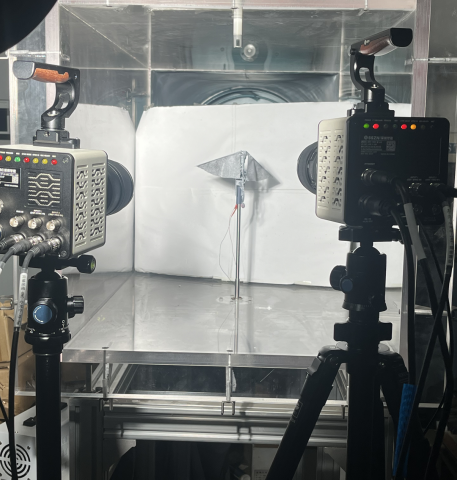
Figure: Wing flapping setup
At the apex of its motion, the wing exhibited a subtle but critical effect known as “inertial overshoot.” As the wing reached the limit of its upward stroke, inertia caused it to swing slightly higher than expected — a momentary upward arc that disrupted its intended trajectory. This movement caused the upper edge of the wing’s speckle pattern to vanish from view, momentarily obscuring deformation data at precisely the point of peak load.
Watch the full video here: Biomimetic Wing Flapping Experiment
Inertial Overshoot: A Hidden Challenge in Flight Mechanics
What might appear to be a small imaging flaw is, in fact, a major aerodynamic insight. The team identified this inertial overshoot as a key factor that can destabilize flapping-wing designs. The phenomenon, while fleeting, underscores how real-world mechanical inertia can complicate theoretical models of wing motion.
To address this, the researchers outlined specific next steps:
- Material Testing: Experimenting with wing materials of different stiffness could help dampen the inertial effect.
- Lighting Optimization: Adding a secondary light source from an alternate angle would ensure consistent illumination and eliminate data drop-out.
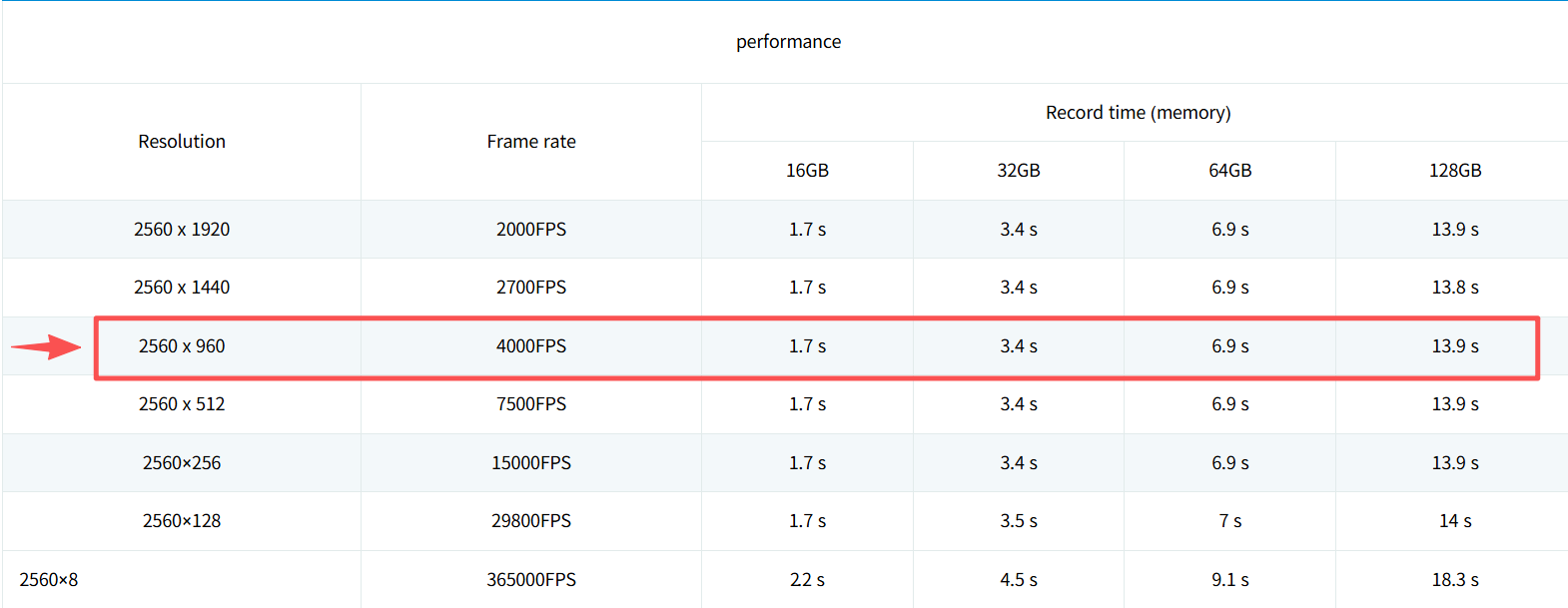
Figure: Technical parameters used during the research

Get the Training You Need for a Safer Workplace!
Autonomous mobile robots are one of the fastest-growing segments of the robotics industry. During this live virtual training, you'll be introduced to safety protocols and best practices for working with mobile robots in industrial settings.
Learn more and register now for upcoming training dates.
Related Posts

ABB Robotics launches PickMaster Lite to simplify & accelerate robotic picking
ABB Robotics launches simplified version of its PickMaster software for packaging OEMs and system integrators…

ABB Robotics launches new automated surface finishing cell
New, plug-and-play OmniVance Collaborative Surface Finishing Cell empowers small and medium-size enterprises to automate key…

Fraunhofer IPA certifies knife edge for Montech cleanroom belt conveyors
Charlotte, April 27, 2026– Montech brings its proven knife edge into the cleanroom: The product…
Leave a Reply