

Space Mining and the Next Industrial Revolution
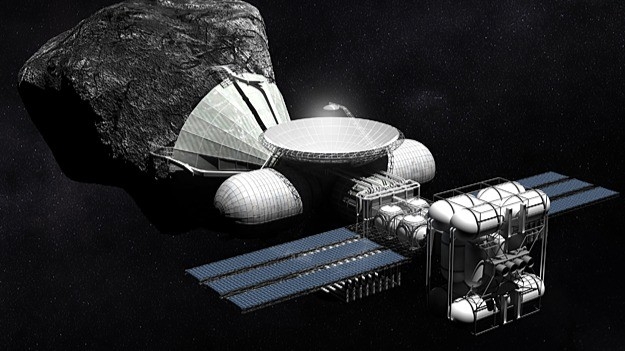
Human history has bound progress to the ground beneath our feet-from the iron that built early machines to the rare-earth metals powering the electronics of today, our whole industrial journey has depended on what we could dig out of the Earth.
That model has started to strain at the seams: resources are increasingly hard to access, geopolitical tensions define supply chains, and demand for advanced materials continues to rise. Amid this worldwide squeeze, a once-fanciful concept-one that has been the preserve of science fiction-is quietly beginning to make its way to the front lines of innovation: space mining.
In recent years, space agencies and private companies have started to look upward-toward asteroids, toward the moon, and even toward Mars, but not just as places to explore, rather as repositories of resources that could fuel the next great wave of human development. What was once the stuff of blockbuster movies now represents a very serious economic and technological conversation.
More importantly, the rise of automation, robotics, artificial intelligence, and advanced manufacturing has created perfect conditions for an industry able to operate far beyond Earth.
Understanding Space Mining: Definition, Scope & Key Resource Targets
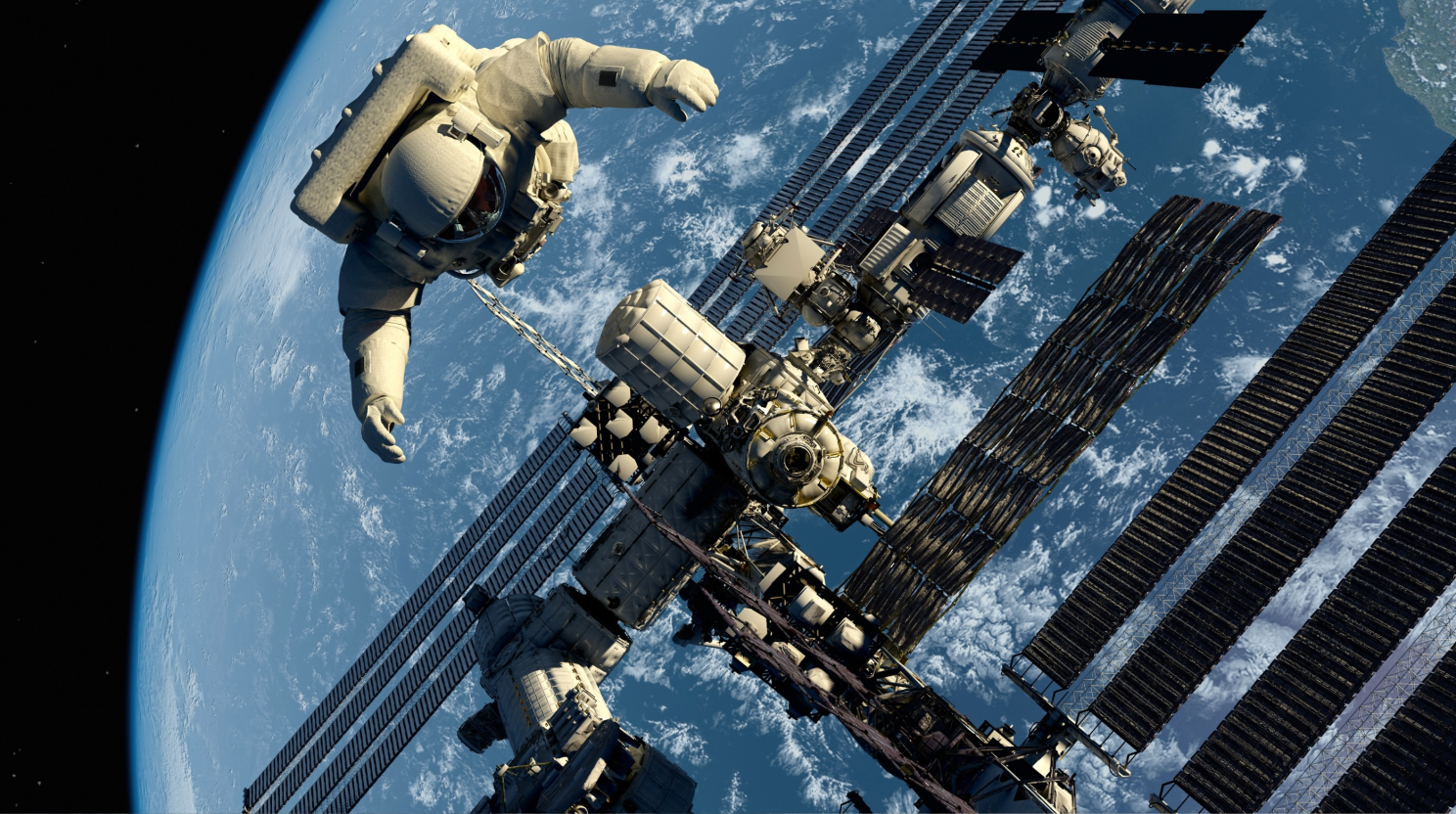
When most people hear the term space mining, they think of astronauts chipping metal off an asteroid with a hand tool. The real picture is far more sophisticated and far more ambitious. On a fundamental level, space mining represents a process of finding, extracting, and using resources from celestial bodies, mainly asteroids, the Moon, and eventually Mars. It is the concept that space is not just something we travel through, but a huge extension of our natural resource base.
Asteroids are usually the first target experts talk about, not because they are easy to reach, but because they are unimaginably rich. Some contain large amounts of nickel, cobalt, and rare platinum-group metals that are becoming expensive and harder to mine on Earth. A single medium-sized metallic asteroid could hold more precious metal than what humanity has extracted in over a century. That alone explains why countries and companies are paying attention.
The Moon, on the other hand, offers something different: water ice locked in permanently shadowed craters, helium-3 buried in its soil, and lunar regolith that can be turned into building materials for future bases. Water is especially important because it can be broken into hydrogen and oxygen to make rocket fuel, turning the Moon into a giant fueling station for deeper space travel.
Mars also offers a series of long-term applications: basalt for construction, subsurface ice for life support, and minerals that could support future colonies.
In a sense, space mining expands the map of industry from one planet to many, and that shift alone has revolutionary implications.
Technological Breakthroughs Making Space Mining Feasible
.png)
Ten years ago, mining space sounded intriguing but utterly impractical. The biggest hurdle wasn't imagination-it was technology. Launching machines into space was painfully expensive; robotic systems weren't smart enough to operate millions of miles from Earth, and we had no reliable way to process materials in space. But the last few years have rewritten the rulebook.
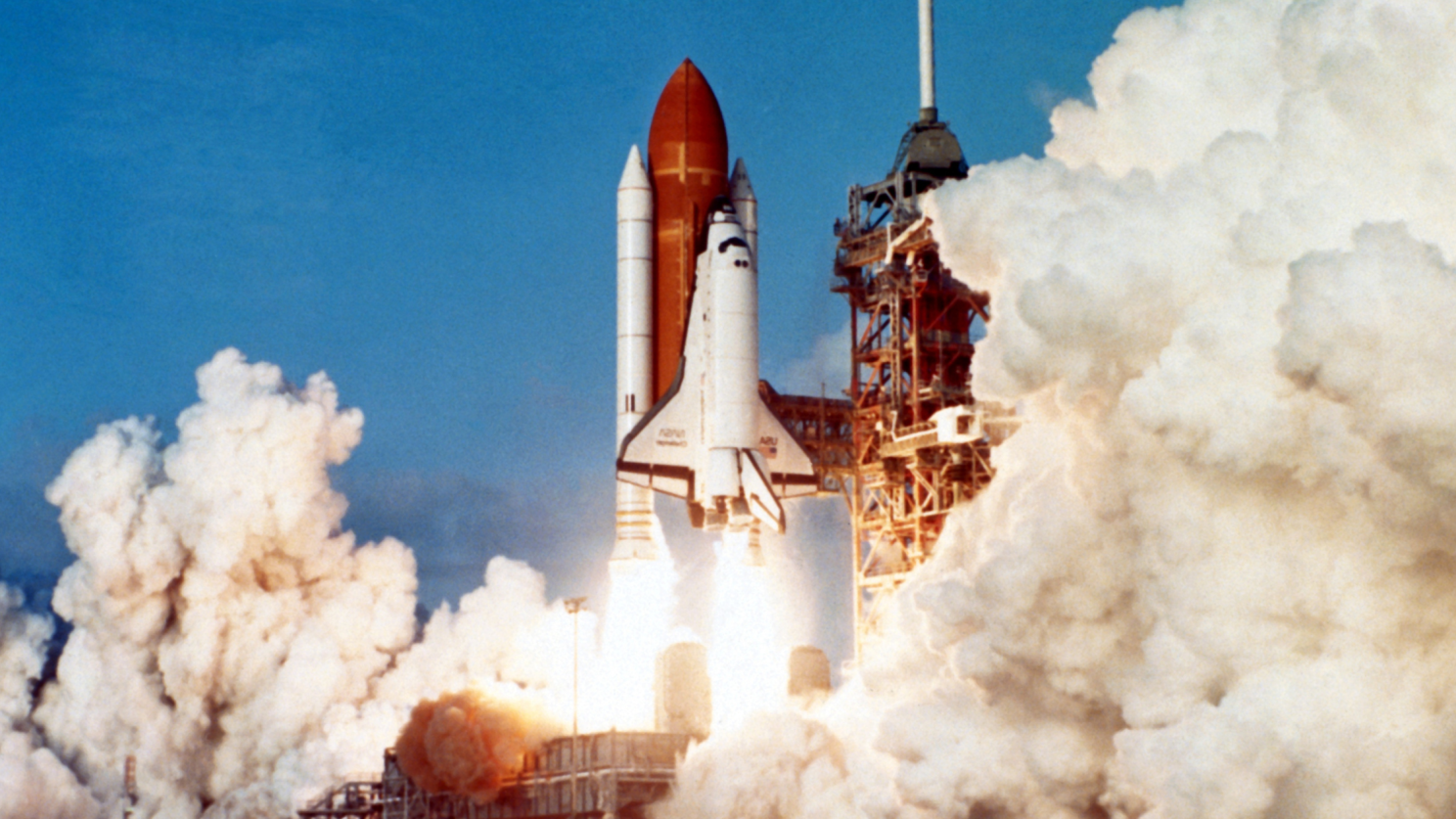
But the most dramatic shift came from reusable rockets. Companies like SpaceX and Blue Origin proved that a rocket doesn't have to be thrown away like a used matchstick. By landing and reusing boosters, they slashed launch costs and made routine space operations financially possible. What was once a billion-dollar mission can now cost a tiny fraction of that.
Along with cheaper launches came smarter machines. Robotics and artificial intelligence have progressed to the extent that independent mining robots can scan the terrain, identify valuable deposits, and perform precise extraction without human hands. These are not the big, slow-moving robots of the early 2000s; these are nimbler systems built to survive hostile environments with little if any input from Earth.
Then there is this quiet revolution called in-situ resource utilization. Instead of dragging heavy tools from Earth, ISRU focuses on using local materials: processing asteroid dust, melting lunar ice, or turning Martian regolith into bricks and metals. Combine this with 3D printing in zero-gravity, and suddenly, we can build equipment, repair structures, and even manufacture components directly in space.
Recent missions, such as NASA's OSIRIS-REx and Japan's Hayabusa, have also transformed prospecting: for the first time, we've collected asteroid samples and studied them, confirming that these objects really do hold the resources scientists predicted.
Put these breakthroughs together, and one thing becomes clear: space mining is no longer a pipedream; it is becoming technically feasible.
Space Mining and the Fourth Industrial Revolution
Industry 4.0, also better known as the Fourth Industrial Revolution, is the automation of the world through interconnected systems and intelligent machines. The same forces that people refer to when they talk about self-driving cars, predictive algorithms, smart factories, and quantum-level computing take space mining from theory into reality. In fact, space mining fits almost naturally into the DNA of Industry 4.0.
Behind Industry 4.0 is the concept that machines make decisions, communicate with each other, and operate independently, with little human interference. That is precisely what space mining needs. Robots on an asteroid cannot wait for instructions from Earth-something that may take as long as minutes or even hours if distances are great enough to send a signal back and forth. They have to analyze data in real time, adjust to unpredictable terrain, and make split-second decisions. That's where AI-driven autonomy passes from being a convenience to a requirement of survival.
This also includes the process of using virtual twins of physical systems, more commonly known as digital twins. Engineers might build digital models of a mining robot or an asteroid environment, testing thousands of possible scenarios well in advance of any actual machine ever leaving Earth. This reduces risk and accelerates innovation.
Even more interesting, however, is how these feed into one another: the challenges of deep space operation drive AI, robotics, material science, and advanced sensors toward faster evolution, while innovations developed for space find their way back into Earth industries, making factories, hospitals, and energy systems smarter and more efficient.
In many ways, space mining is more than just a product of Industry 4.0-it may become one of its most powerful accelerators.
Economic Potential: Market Outlook, Investment Trends & Major Players
A single metallic asteroid could hold trillions of dollars’ worth of usable metal. Of course, that doesn’t mean we would flood the market tomorrow, but it explains why governments and private companies are paying close attention.
Investment is on the rise, too. Major players like SpaceX, Blue Origin, Astroscale, iSpace, Off World, and the legacy trailblazers from Planetary Resources and Deep Space Industries are building technologies that lay the groundwork for resource extraction. Countries aren't so far behind, either-Luxembourg has established itself as a global hub for space resource companies, while NASA, ESA, China, and the UAE are all pursuing missions that quietly double as early prospecting exercises.
Those are not the only economic benefits: water mined in space could be used by fuel depots for spacecraft, drastically cutting the cost of exploration; construction materials mined on the Moon could sustain lunar habitats and manufacturing centers. And over the longer term, a working off-world resource economy might transform global trade, the energy sector, and even the balance of technological power.
Space mining is undoubtedly not just a business idea from science fiction; it is strongly developing to be the foundation of a new multi-trillion-dollar ecosystem.
Global Governance, Policy Trends & Legal Frameworks Shaping Space Mining
As space mining moves from imagination to industry, the next big question is not only how we do it, but who gets to decide the rules. In contrast to Earth, where centuries of legal framework guide who owns which resources, outer space is a shared environment with almost no precedent for commercial extraction.
The foundation of space law today is the Outer Space Treaty of 1967, which says that no country can "claim" the Moon, planets, and other celestial bodies. It was written a long time ago when private space companies did not exist, but its central message still holds today: space belongs to everyone, and it cannot be owned outright by anyone. However, the treaty has not clearly explained whether a nation or company can own the resources they extract. That ambiguity is now at the heart of global debate.
More recent initiatives, such as the Artemis Accords, try to fill in the gaps. These agreements, signed by a growing group of countries, support the idea that extracted resources can be legally owned, while still respecting the principle that no celestial body can be claimed as territory. Other countries, including Luxembourg and the United States, have passed national laws explicitly allowing companies to profit from space resources.
Nevertheless, according to many scholars, stricter international rules are needed with the purpose of preventing conflict, over-extraction, or monopolization. Organizations like COPUOS, a committee under the UN dealing with the peaceful use of outer space, and groups like the Space Generation Advisory Council push for clearer frameworks and shared standards.
Without cooperative governance, a race for space resources could become chaotic. With it, space mining might become a model for innovation that is fair and peaceful.
Environmental and Ethical Dimensions

But one of the most compelling arguments for mining in space has nothing to do with profit, or technology-it's the environmental pressure building here on Earth. Traditional mining is among the most destructive industrial activities we undertake, scarring landscapes and polluting water while being a major contributor to carbon emissions. As worldwide demand for advanced materials increases, the ecological cost continues to rise. Some scientists and thinkers on environmental issues view space mining as an opportunity to shift the burden away from our planet.
This would mean that extracting resources from either asteroids or the Moon could decrease our reliance on deep-sea mining, deforestation, and large-scale land disruption. Instead of ripping into fragile ecosystems, we may be able to derive materials from lifeless rocks that drift through space. Water mined off-world would also help power space infrastructure without recourse to Earth's limited supply.
But space mining raises a host of ethical and environmental questions in its own right. Increasing activity in space brings up space debris, orbital congestion, and the possibility of accidental contamination of other celestial bodies. Then there is the ownership question: who can lay claim to the benefits accruing from space resources? Must these always be the exclusive property of private companies, nations, or even humanity as a whole? These debates are real and pressing-not just theoretical-while more players enter the field.
Policymakers and scientists warn that, without clear rules set now, the next frontier could well become a battleground of legal disputes, ecological negligence, or monopolies on resources.
Therefore, while space mining brings forth enormous opportunities, it also requires considerate governance so as to ensure that exploration does not get converted into exploitation.
CONCLUSION
At first glance, space mining feels like one of those ideas people daydream about after watching a sci-fi movie. The actuality is much less fanciful and a lot more practical. It is the pressures we are under on Earth-rising demand for rare materials, straining ecosystems, and the need for cleaner technologies, that push scientists and innovators to look upward, not because of wishful thinking but because of need. And for the first time, we actually have the tools to make that leap believable.
The coming together of technologies today-smarter robots, rockets flying more than once, advanced modelling systems, and machinery that can build with whatever materials it finds- is changing the rules on what industry can be. They open doors to things which, even a decade ago, sounded impossible: mining an asteroid without sending a single human there, building structures in space instead of shipping every beam from Earth, or fueling deep-space missions using water found on the Moon.
Still, none of this means we should charge ahead with our eyes closed. Progress without responsibility has never fared well for humanity. If space mining really is going to be part of our future, it needs to be treated with fairness, in a transparent and caring manner, because this time, the playground is the entire solar system. Done right, it won’t just give us new materials; it could reshape the direction of industry itself and mark the beginning of a new chapter in human advancement.
Asamaka Industries Ltd
Asamaka Industries Ltd specializes in providing comprehensive control automation solutions across multiple industries including automotive, power generation, and distribution. From electrical design to implementation of advanced technologies like robotics and vision systems, we cater to the unique needs of each sector, ensuring safety, quality, and efficiency in every project.
Discover how Asamaka Industries Ltd can support your automation journey with their complete range of solutions and expertise.
Related Posts

DEVELOP LLC Joins TLMI to Bring End-of-Line Automation Expertise to the Label Industry
DEVELOP LLC Joins TLMI to Bring End-of-Line Automation Expertise to the Label Industry FANUC Authorized…
The Emerging Direction of ISO/IEC TS 22440
This excerpt was originally published as part of a full article on the SRES website. Introduction…
Mainstay Digital Announces Mainstay One 3D Digital Asset Program for Automation OEMs
Plano, TX, September 29, 2026 Mainstay Digital, an industrial product visualization studio specializing in complex…
Leave a Reply