


The End of EMCCD Dominance? SinceVision’s Solis B518 Sets a New Benchmark for Ultra-Low-Light Science
In labs with low light and high precision, the detector choice often decides the experiment's success. Fields like quantum physics, life sciences, and materials science rely on sensors. These sensors catch single photons. They track subcellular structures and follow molecular changes in real time. For years, EMCCD cameras served as the main tool for this work. But their limits—like aging, noise from multiplication, slow sampling, and high costs—have slowed down long-term studies and high-resolution analysis.
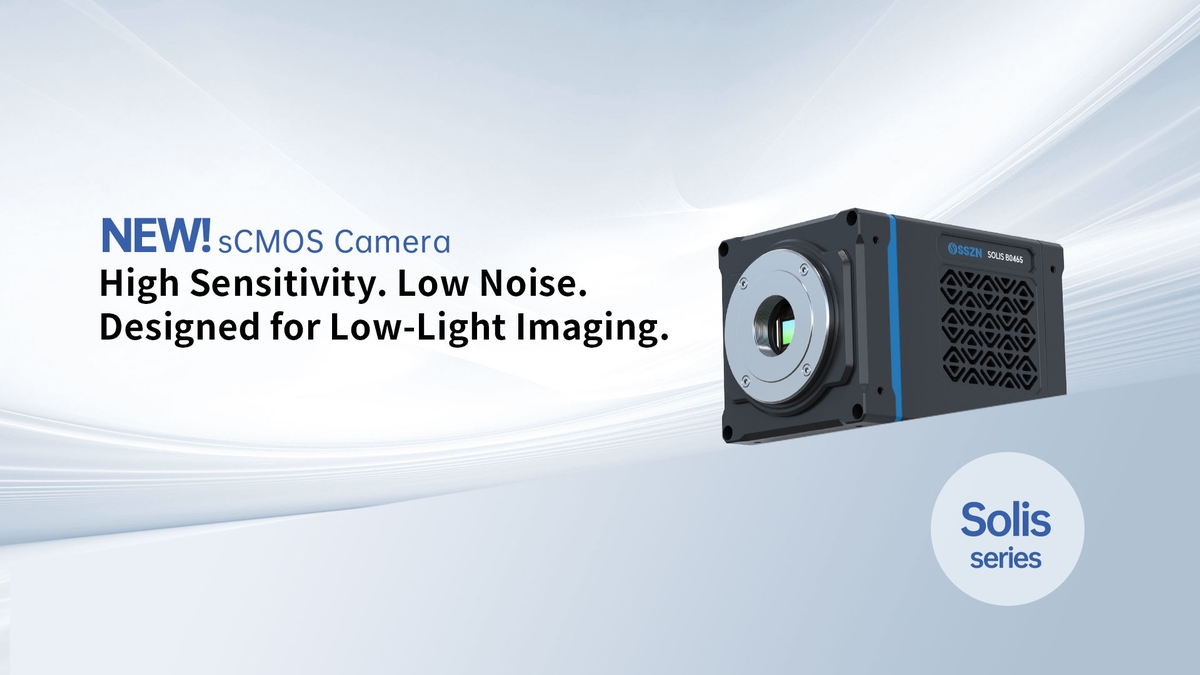
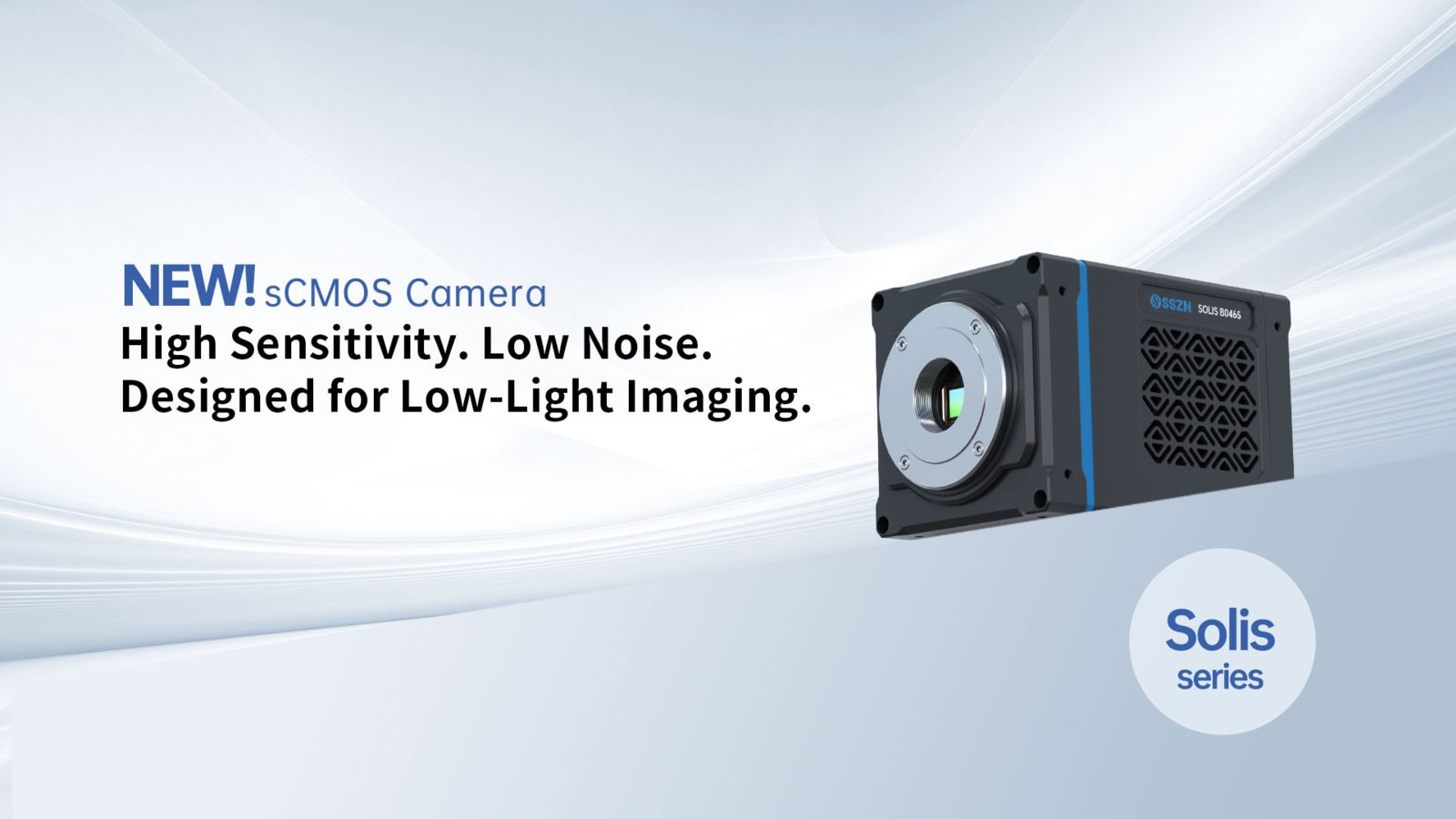
The SinceVision Solis B518 is a scientific sCMOS camera designed for tough environments. It provides a direct solution to these challenges. Its chip design, low-noise electronics, vacuum sealing, cooling system, and image correction pipeline show a new way to approach low-light imaging in various fields.
Original technical data and analysis here: Solis B518 Is Replacing EMCCD Technology
Extreme Sensitivity
The Solis B518 uses a custom back-illuminated CMOS chip. The back-illuminated design lets more light hit the sensor. It also keeps high quantum efficiency for both near-infrared and ultraviolet light. This design boosts signal quality in low light. It also allows for faster readout and uses less power.
Its large 18×18 μm pixels expand the light-collecting area. In a flame test at 890 nm, the Solis B518 created a brighter image. It needed just one-tenth of the exposure time compared to a camera with 6.5 μm pixels. The result underscores its sensitivity advantage at this wavelength.
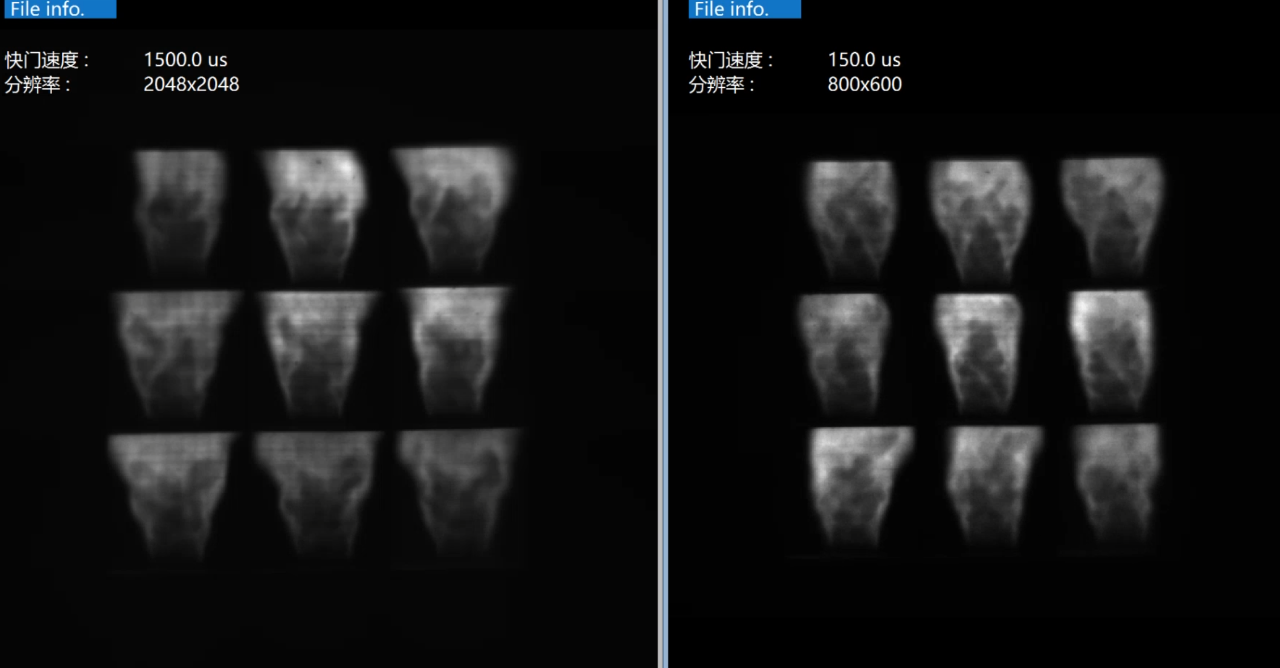
Image: Left: 6.5μm pixel, 1500μs exposure; Right: 18μm pixel, 150μs exposure
Sub Electron Readout Noise
The designers built the camera’s architecture—from sensor layout to electronic processing—to manage the demands of ultra-low light. Under EMVA 1288 testing, the Solis B518 shows readout noise close to 0.5 electrons. This noise control puts the camera in a group ideal for experiments where every photon counts.
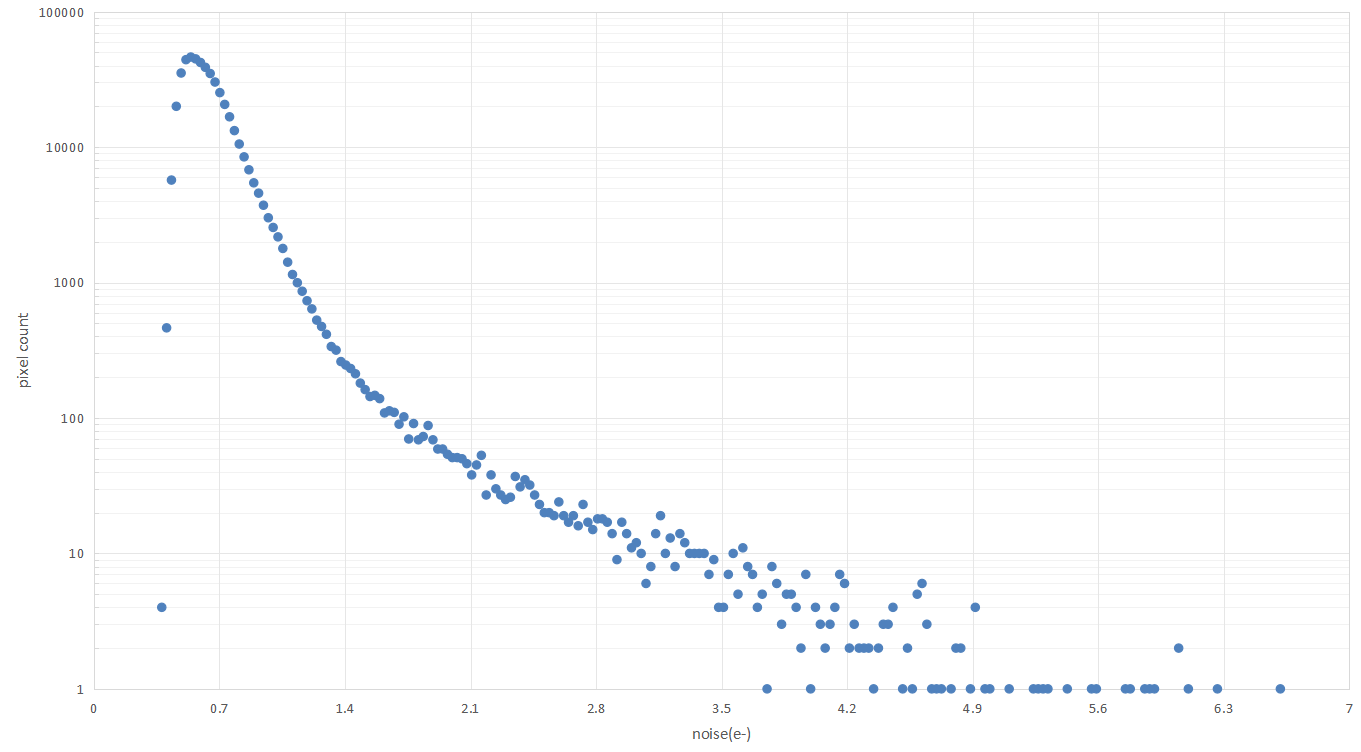
Image: Readout noise statistics
Spatial Photon Number Resolution
Many sensors struggle to detect small changes in photon count. This happens because their readout noise hides the signal. The Solis B518 has lower noise. This allows for clear photon counting and better spatial photon number resolution. Tests show an average output of about 3 electrons per pixel. The camera’s imaging noise shows a Poisson pattern. This matches photon statistics in low light.
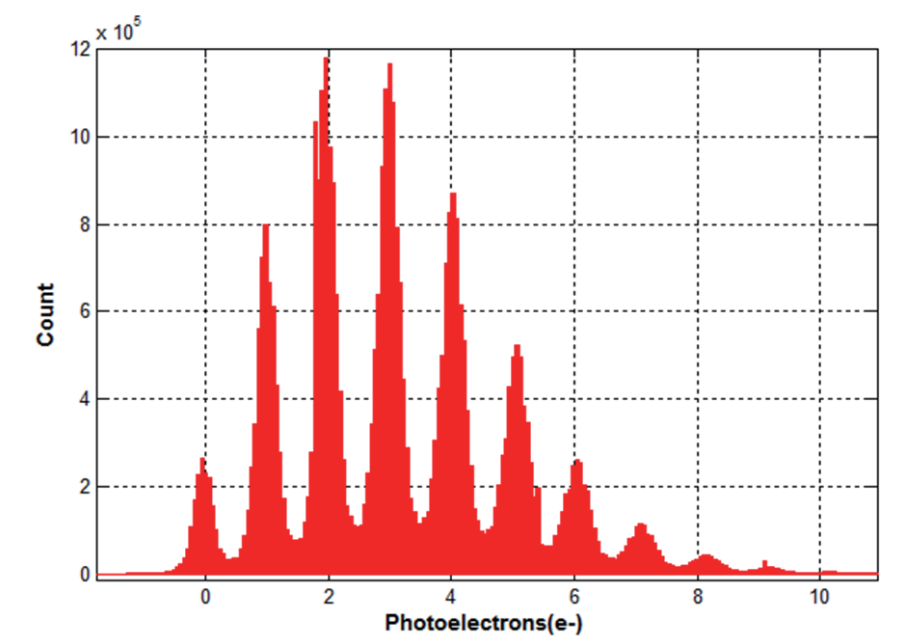
Image: Photo-electron probability distribution
Very Low Dark Current Noise
Dark current rises with temperature and long exposure. This affects the baseline gray value of an image and increases noise. Cooling reduces dark current, and a drop of 6 to 8 degrees can cut it in half.
The Solis B518 features multi-stage cooling. It can drop temperatures by at least 60 degrees Celsius. It also uses a vacuum sealing process with a leakage rate of 10⁻⁹ Pa·m³/s or lower. At minus 30 degrees Celsius, the dark current is 0.007 electrons per pixel per second. This rate ranks the camera among the best in its class.
The camera uses a patented algorithm to stabilize the gray value during long exposures. This keeps the mean gray value steady. It also improves consistency across frames.
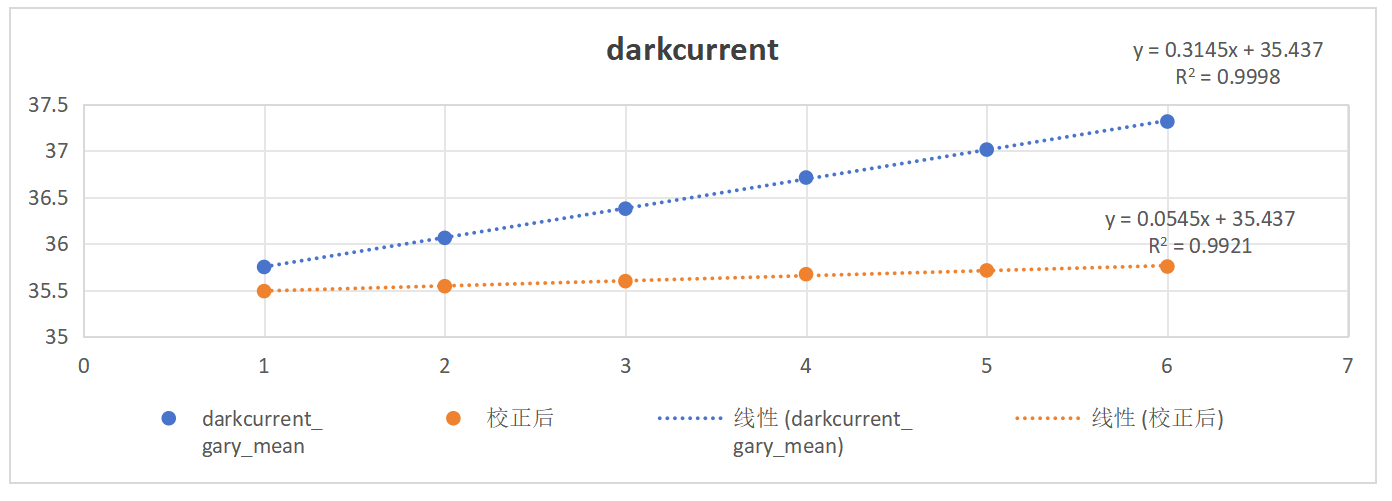
Image: Dark current and correction effect at -10°C
Strong Uniformity and Linearity
Dark signal nonuniformity, or DSNU, measures the consistency of pixel behavior in complete darkness. Smaller values mean less pixel-to-pixel variation and more stable images. The Solis B518’s correction algorithms reduce DSNU to 0.3 electrons. This boosts uniformity, reduces random noise, and keeps the linear response. This is key for accurate scientific measurement.
All performance results follow EMVA 1288 testing standards.
 Right After correction (0_2 e-).png)
Image: Left: Before correction (1.6 e-); Right: After correction (0.2 e-)
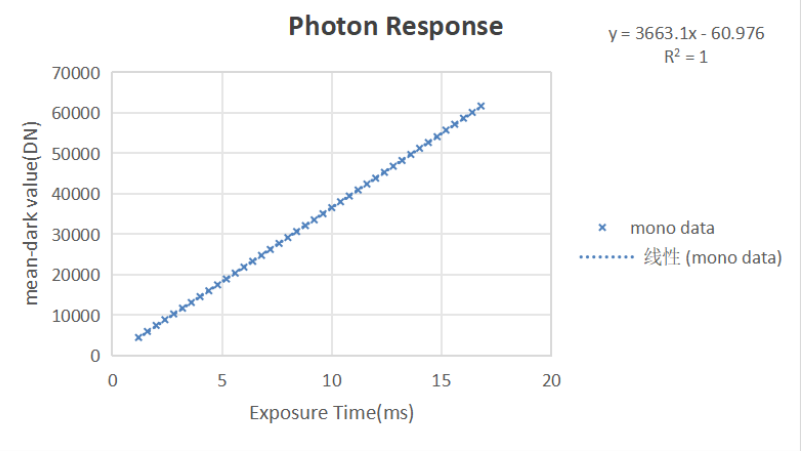
Image: Linearity curve under CMS 16-bit mode
A Foundation for Trace Level Imaging
The Solis B518 sCMOS camera offers a firm base for capturing faint scientific signals with clarity and stability. Researchers who need test units or specs can contact SinceVision Intelligence or check the official website.
For press media, product inquiries, research collaboration, or customization services:
Media Contact:
Bhandari Pujan, Business Development Manager
SinceVision
Email Address: [email protected]
Website: www.sincevision.com

Shenzhen SinceVision Technology Co. Ltd.
SinceVision is a world-class sensor technology manufacturer for 3D laser profilers, high-speed cameras, laser displacement sensors, spectral confocal displacement sensors, full-spectrum sensors, and through-beam edge sensors.
Discover how Shenzhen SinceVision Technology Co. Ltd. can support your automation journey with their complete range of solutions and expertise.
Related Posts

ABB Robotics launches PickMaster Lite to simplify & accelerate robotic picking
ABB Robotics launches simplified version of its PickMaster software for packaging OEMs and system integrators…

ABB Robotics launches new automated surface finishing cell
New, plug-and-play OmniVance Collaborative Surface Finishing Cell empowers small and medium-size enterprises to automate key…

Fraunhofer IPA certifies knife edge for Montech cleanroom belt conveyors
Charlotte, April 27, 2026– Montech brings its proven knife edge into the cleanroom: The product…
Leave a Reply