

AI and Functional Safety: Understanding ISO/IEC TS 22440
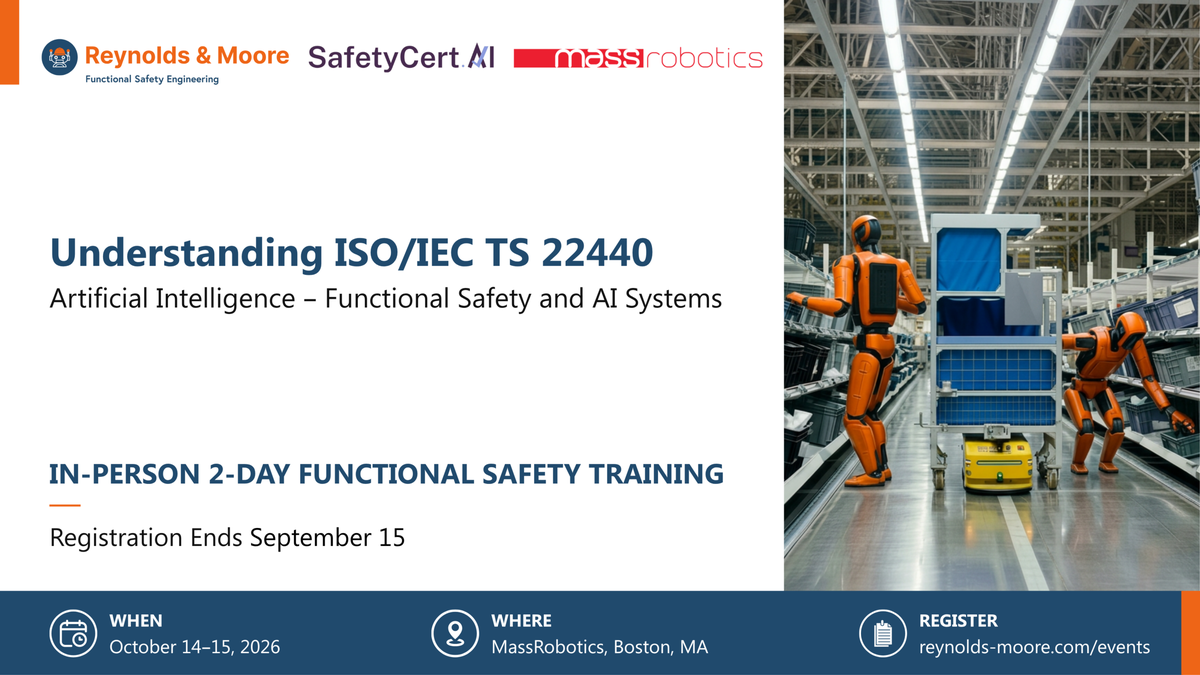
Artificial intelligence is rapidly becoming part of industrial automation and robotics from machine vision and object detection to predictive diagnostics and autonomous decision-making. But as AI takes on safety-relevant functions, traditional approaches to functional safety face new challenges.
Unlike conventional software, AI and machine learning systems can be data-driven, adaptive, and non-deterministic. This creates new questions around how these systems should be assessed, verified, validated, and integrated into safety-critical applications.
ISO/IEC TS 22440 addresses this emerging challenge by providing a framework for applying functional safety principles to AI-enabled systems in industrial applications. The technical specification considers the AI lifecycle alongside the traditional functional safety lifecycle, including areas such as hazard analysis, AI-specific failure modes, risk reduction, etc.
Why does this matter for automation?
As manufacturers increasingly introduce AI into automation systems, understanding how to manage AI-related safety risks will become increasingly important. Applications can include:

Jan. 18-20, 2027 | Orlando, Florida
Your favorite three days of the year
Join executives and decision-makers to explore the forces shaping the year ahead, exchange insights, and build relationships that advance automation.
Related Posts

DEVELOP LLC Joins TLMI to Bring End-of-Line Automation Expertise to the Label Industry
DEVELOP LLC Joins TLMI to Bring End-of-Line Automation Expertise to the Label Industry FANUC Authorized…
The Emerging Direction of ISO/IEC TS 22440
This excerpt was originally published as part of a full article on the SRES website. Introduction…
Mainstay Digital Announces Mainstay One 3D Digital Asset Program for Automation OEMs
Plano, TX, September 29, 2026 Mainstay Digital, an industrial product visualization studio specializing in complex…
Leave a Reply