

How Civil Engineers are Tackling Road and Bridge Deterioration
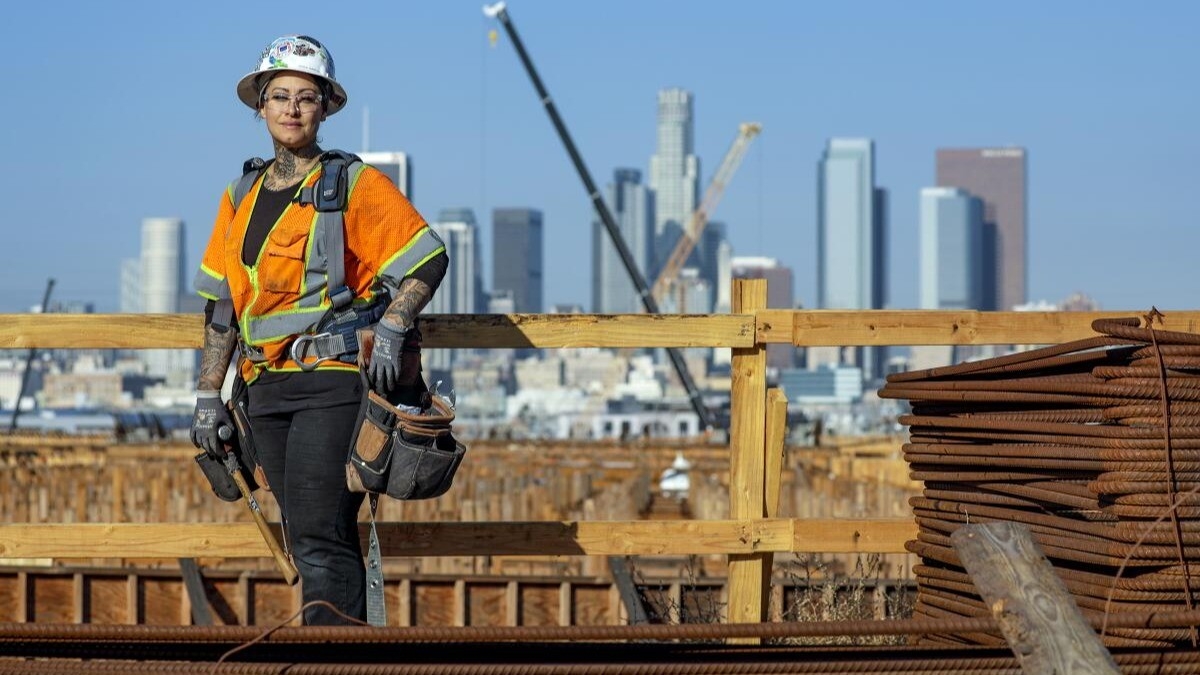
Our physical landscape has roads and bridges that are the blood vessels of our built environment, which move people, goods and services. But time has its way: cracking, corrosion, wear and weather tear away safety, performance, and longevity. This is also an opportunity for civil engineers.
The maintenance and repair tools, materials and methods are changing rapidly because of the demand of durability, cost-effectiveness, minimal disruption, and sustainability.
This article describes why roads and bridges wear out and demonstrates why civil engineers today stop the decay with innovative approaches, data-driven maintenance, and high technologies.
This is aimed at providing you with a clear image of how the field is evolving, and why such changes are important to communities, governments, and the day-to-day users of infrastructure.
Why do bridges and roads deteriorate?
We have to know the reasons before coming up with solutions. The major causes of infrastructure decay are:
– Traffic loads and fatigue.
– Environmental and climatic stresses.
– Corrosion of reinforcement.
– Water infiltration and poor drainage.
– Aging and unmaintained maintenance.
– Design restrictions, and deterioration of materials.
- More traffic congestion accumulates and the process of loading and unloading undermines the materials creating microcracks, fatigue and structural damage.
- Concrete, steel, and foundations are worn away by thermal expansion, intrusion of moisture, exposure to salt and chemicals and scour. In reinforced concrete bridges, corrosion of steel bars may occur as a result of water and chlorides infiltration; rust spreads and results in cracks and spalling.
- Lack of drainage allows water to penetrate bridge decks and pavements, which hasten the rate of deterioration and substructures. Most of the systems were constructed decades ago and when they are not maintained promptly or in bits, the small defects develop into significant structural issues.
- Age can cause old bridges to be constructed with smaller safety margin or that their construction materials were old and thus subject to vulnerability with shifting traffic, climatic and loading requirements.
The identification of such a cause allows the engineers to pick the right intervention before the damage is beyond repair.

Response of Civil Engineers: approaches and innovations
Various methods are currently used by engineers to fix, lengthen and maintain life of infrastructure:
Below are several of the modern techniques and approaches that engineers use to repair, extend, and manage infrastructure life.
1. High-Technology Repair and Retrofitting Materials
Ultra-High-Performance Concrete (UHPC) has superior strength, low permeability and longevity. UHPC can substantially increase service life when used in repair patches, overlays or jackets. It is resistant to the infiltration of chlorides, freeze-thaw and fatigue in contrast to normal concrete.
A non-proprietary UHPC mix was tested by Arizona State University and county transportation agencies in Arizona to repair bridge joints and critical connections in a cost-effective and fast manner.
Fiber-reinforced polymers (FRP), carbon fiber or glass fiber – are becoming commonplace as a wrap or jacket to beam, column, and bridge components to reinforce or strengthen them. They are lightweight, corrosion-resistant and do not add much weight. Weak concrete or steel can be bonded with carbon-fiber strips or wraps to regain strength, manage cracking and provide ductility.
Installing these composites in a project is what makes them very popular in strengthening projects, as one can install them with minimal disturbance and minimal added weight.
2. Surface cleaning and intelligent scraping processes
Repairing starts with good removal of damaged or loose material. Two revolutionary methods can be distinguished:
- HYDRODEMOLITION (water-jet removal):
Hydro demolition is the technique of removing wrecked concrete with water, occasionally containing abrasives, without causing vibrations as jackhammers do. The low mechanical stimulus level lowers the micro cracking and forms a clean bonding surface.
- COLD-SPRAY METAL DEPOSITION: Cold, or spray metal deposition, pioneered in 2025, sprays high velocity particles of powdered steel onto corroded beams to add thickness without heat, to restore or upgrade steel in situ.
3. Rapid inspection, tracking and anticipation maintenance
Modern engineers operate based on data, automation, and artificial intelligence so as to identify issues early and prioritize maintenance where it is most needed. The cameras on the unmanned aerial vehicles (UAVs), LiDAR, infrared and environmental sensors survey bridge decks, understructures and difficult to reach places in a safe and quick way.
There have been innovations such as autonomous robots gliding on bridge decks, which conduct nondestructive tests, including ultrasound, resistivity, and crack mapping to save money and cover more. Engineers are designing sensors, strain gauges, accelerometers, displacement, corrosion, into bridges and roads and transmitting continuous data into digital-twin models which simulate behavior, identify the unusual, and predict damage.
These systems can predictively maintain equipment, schedule work based on predicted wear, and avoid work schedules that are based on a fixed cycle but use AI and machine learning to predict deterioration. This saves money, decreases downtimes and avoids crises. The outcome is better priority: the resources are put on the assets in the highest risk rather than evenly distributed budgets.
Certified System Integrator Program
Set Yourself at the Forefront of the Global Vision Market
.jpg) Vision system integrators certified by A3 are acknowledged globally throughout the industry as an elite group of accomplished, highly skilled and trusted professionals. You’ll be able to leverage your certification to enhance your competitiveness and expand your opportunities.
Vision system integrators certified by A3 are acknowledged globally throughout the industry as an elite group of accomplished, highly skilled and trusted professionals. You’ll be able to leverage your certification to enhance your competitiveness and expand your opportunities.

4. Structural Reinforcement and Retrofits
Engineers reinforce or retrofit components whose capacity has been lost or whose requirements have risen to newer loads or codes.
- Wrapping or jacketing is the coating of UHPC or FRP around columns, piers, beams, or even whole substructures.
- External post-tensioning is installed to tension steel tendons externally on a member so that it can achieve strength or deflection reduction.
- Selective replacement involves the removal of damaged components (beams or deck slabs) and the replacement with prefabricated or cast-in-place components.
- Water ingress: No failures that are frequent as bearings and expansion joints are replaced or upgraded to avoid failure and minimize structural forces.
- Earthquake-resistant structures are obtained by seismic retrofits (where necessary), the addition of dampers, use of base isolation, and additional structural bracing.
In fact, engineers use multiple methods; they select the combination that aims at tackling each problem area.
5. Better design, materials, and preventive strategies
The best defense is good design from the start. Some of the preventive or design innovations include:
- Better Concrete: adopt internal curing, shrinkage reducers, additional cementitious materials, corrosion inhibitors or mixes that are not permeable.
- Durable Overlays And Surface Treatments: sealants or membranes and coating high-performance are used to keep chloride and water out.
- Geosynthetic Reinforcement Of Pavements: geotextiles/geogrids are used to stabilize the layers, regulate moisture and use of geosynthetic in pavements increases road life. As an example, MIRAFI H2Ri product will ensure subgrade intrusion is avoided and roads will last not a season but a century.
- Drainage and Water Management: it is important to remove water efficiently on decks, subgrades and foundation zones. Drainage is poor, which accelerates aging.
- Preventive Maintenance: even minor steps such as closing joints, closing cracks, washing surfaces when the damage is only minor give great payoffs when compared to significant repairs in the future.
With enhanced design, reinforcement, and preventive maintenance, the civil engineers will be able to switch to a proactive longevity by fixing at the same time, which is a reactive strategy.

Illustrative case & challenges
In a recent repair in Arizona, more sophisticated methods are demonstrated to be combined: engineers poured in a non-proprietary UHPC mix to fill failing grout joints in a concrete bridge to promptly reinstate load transfer and remain within budget.
On the local level, there are a number of challenges to be addressed:
- Budget Vs. Life-cycle Cost: New inspection systems or advanced materials are more expensive in the short term, but will save money in the long term due to reduced maintenance and increased life.
- Disruption of Traffic: Most of the repair strategies are forced to restrict closures or detours; the use of faster-curing materials and prefabrication can alleviate it.
- Fitting in with Old Structures: Older bridges might be unknown ( or in bad condition), the retrofit requirements need to bond up without causing new stress.
- Technical Capacity: Local agencies should be knowledgeable of more recent techniques; training and transfer of standards and technology are essential.
- Risk and Uncertainty: It is hard to forecast the degradation. Models and inspections assist, but risk should be. Bayesian networks or Markov decision processes are decision models that are being used to optimize, under-inspection and under-maintenance.
Nevertheless, these difficulties do not stop the pace: civil engineers are now accepting data, materials science, and automation to develop safer and more lasting infrastructure.
Conclusion
The deterioration of roads and bridges is unavoidable, yet it is changing fast in terms of its management.
The toolbox of engineers is becoming increasingly large: new materials (UHPC, FRP), clean technologies (hydro demolition), intelligent sensors and predictive maintenance, and retrofit (recovery of capacity).
These innovations, when utilized with improved design, good water control and preventive maintenance, enable communities to operate infrastructure in safer, cheaper and sustainable ways.
The coming challenge is to combine these aspects, the digital twins, robotic inspection, and optimization of maintenance planning and make them affordable to small municipalities and low-resource environments.
To engineers, planners and the community stakeholders, the gist is that a proactive, holistic approach to infrastructure health is no longer desired, but a necessity.

Asamaka Industries Ltd
Asamaka Industries Ltd specializes in providing comprehensive control automation solutions across multiple industries including automotive, power generation, and distribution. From electrical design to implementation of advanced technologies like robotics and vision systems, we cater to the unique needs of each sector, ensuring safety, quality, and efficiency in every project.
Discover how Asamaka Industries Ltd a can support your automation journey with their complete range of solutions and expertise.
Related Posts

DEVELOP LLC Joins TLMI to Bring End-of-Line Automation Expertise to the Label Industry
DEVELOP LLC Joins TLMI to Bring End-of-Line Automation Expertise to the Label Industry FANUC Authorized…

The Emerging Direction of ISO/IEC TS 22440
This excerpt was originally published as part of a full article on the SRES website. Introduction…
Mainstay Digital Announces Mainstay One 3D Digital Asset Program for Automation OEMs
Plano, TX, September 29, 2026 Mainstay Digital, an industrial product visualization studio specializing in complex…
Leave a Reply