


Safety Standards for Humanoid and General-Purpose Robots: A Practical Guide
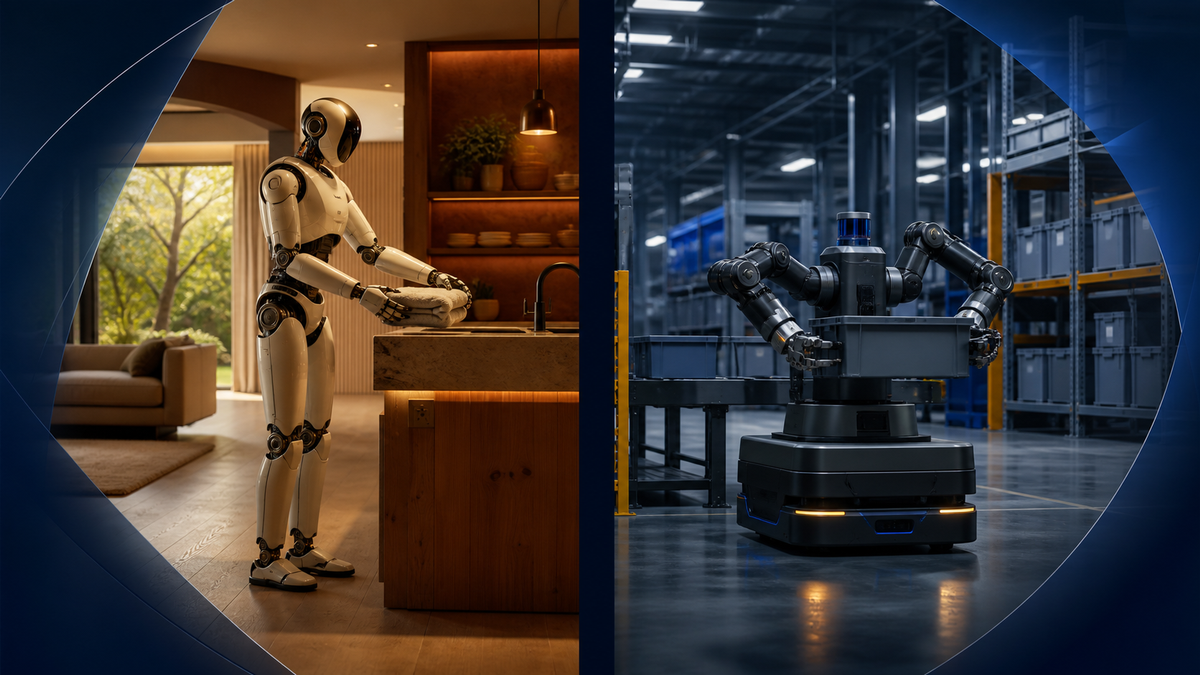
Humanoid and general-purpose robots are entering factories, warehouses, commercial environments, public spaces, and homes. These systems can combine mobility, manipulation, perception, AI-enabled behavior, and direct interaction with people.
SRES has published a practical guide mapping the safety standards that may apply to humanoid and general-purpose robots across industrial, commercial, public-facing, and residential applications. It explains how intended use, mobility, human access, AI-enabled behavior, operating environment, and target market shape the applicable framework, with four example pathways illustrating how these standards may be combined.
No single standard comprehensively addresses every such system. The applicable framework depends on the robot’s intended tasks, operating environment, human-robot interaction, mobility, manipulation capabilities, use of AI, and target market. The central question is therefore not only which standards may apply, but how they fit together, what each one does and does not address, and what additional engineering evidence and design controls are needed for safe intended use.
Summary of key takeaways
-
ISO and IEC standards form the global baseline for robot safety. They are recognized across regions, directly referenced in the EU Machinery Regulation, and widely adopted in Asia and other markets. ANSI and UL standards serve as U.S.-centric overlays, not foundational frameworks. As humanoid and general-purpose robots increasingly ship worldwide, targeting ISO/IEC first—and layering ANSI/UL only where needed—offers a more scalable, defensible, and future-proof approach.
-
The applicable robot-safety framework depends on the application. The guide addresses risk assessment; industrial robots; industrial mobile robots and emerging mobile-manipulator standards; dynamically stable industrial mobile robots; service and public-facing robots; and functional safety. ISO 12100 provides the foundational risk-assessment process, but it does not provide a complete robot-specific safety architecture.
-
Functional safety must be evaluated across the integrated system. Stopping a mobile base, for example, may not control hazards created by an extended arm, unstable posture, moving payload, or energized tool. For robots with integrated sensing, decision-making, and coordinated motion, IEC 61508 can provide a system-level functional safety framework that ties diverse safety functions into a coherent safety argument.

Jan. 18-20, 2027 | Orlando, Florida
Your favorite three days of the year
Join executives and decision-makers to explore the forces shaping the year ahead, exchange insights, and build relationships that advance automation.
Related Posts
 October 7, 2026
DEVELOP LLC Joins TLMI to Bring End-of-Line Automation Expertise to the Label Industry
DEVELOP LLC Joins TLMI to Bring End-of-Line Automation Expertise to the Label Industry FANUC Authorized…
 October 7, 2026
The Emerging Direction of ISO/IEC TS 22440
This excerpt was originally published as part of a full article on the SRES website. Introduction…
 October 7, 2026
Mainstay Digital Announces Mainstay One 3D Digital Asset Program for Automation OEMs
Plano, TX, September 29, 2026 Mainstay Digital, an industrial product visualization studio specializing in complex…
Leave a Reply